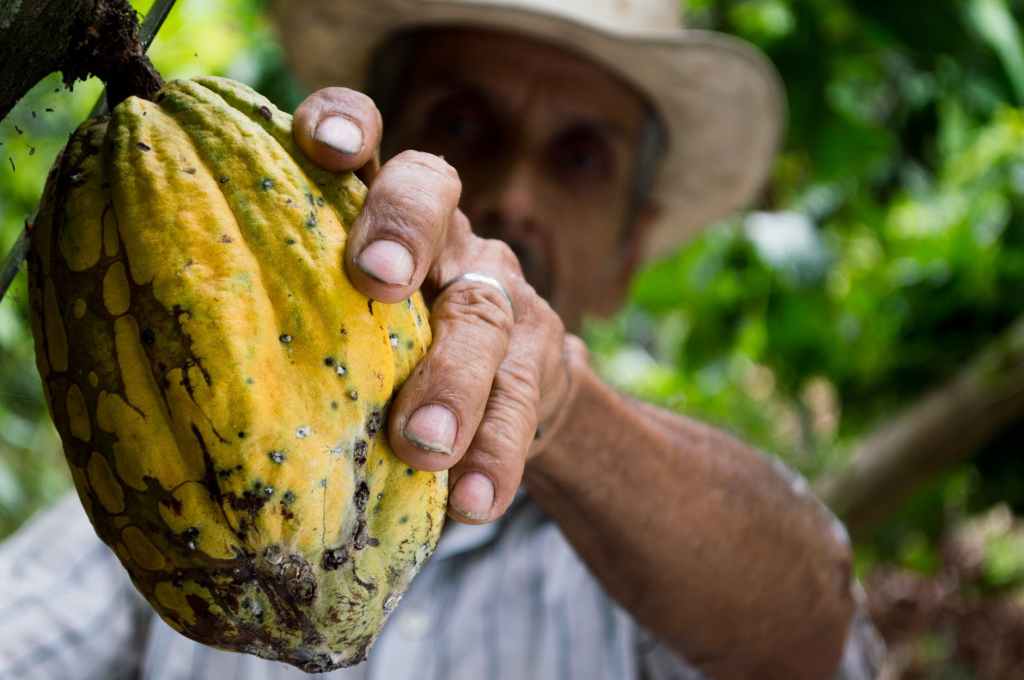
When you think of luxury chocolate, think Jamaica! Jamaica is a tiny dot on the map yet most people around the world have heard of this country. This may be due to our reggae and dancehall music, athletic prowess, infectious culture and accent, our food, rum and Blue Mountain coffee. However, a lesser known fact is that Jamaica produces some of the world’s best chocolate bars! Jamaica is one of 17 countries recognized as producers of fine or flavoured cocoa by the International Cocoa Organization, and only one of 8 countries to do so exclusively. The flavours of fine cocoa beans range from fruity and floral to herbal, woody, nut and caramel notes. Cocoa trees yield approximately 20-30 pods per year, with each of the pods containing only 30-40 beans. It takes 400 beans to make one pound of chocolate, which explains why Jamaican chocolate bars may fetch high prices comparatively.
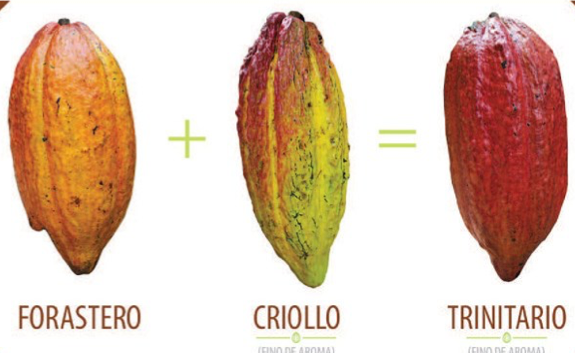
Did you know that the difference between cacao and cocoa is the temperature at which the dried, fermented beans are processed? Cacao refers to the unroasted or lightly roasted bean which allows it to retain more antioxidants, while cocoa is roasted at higher temperatures. This damages its nutrients but makes it taste sweeter.
Source: Healthline
Get exclusive Jamaican travel content delivered straight to your inbox.
Cocoa was first domesticated along the Yucatán peninsula where it was regarded as “food of the gods.” For most of its 4,000-year history, it was consumed as a bitter invigorating beverage for its mood-enhancing and aphrodisiac properties, rather than as a sweet edible treat. Chocolate was reserved for warriors, priests and nobles at religious ceremonies and the Mayans worshipped a god of cacao. In the 1500s, Spanish conquistadors sought precious metals in Mexico, but returned instead with chocolate. It was seen as a delectable symbol of luxury, wealth and power, but only Spanish aristocracy could afford the expensive commodity. Thus, the Spanish set up cocoa plantations throughout Mexico and the Caribbean, including Jamaica, because they recognized cocoa for its economic value as ‘liquid gold’.
Its popularity eventually spread through Europe which fueled the Caribbean’s cocoa and sugar industry to satiate the European appetite for chocolate. African slaves were imported to work on the plantations and maintain the production of chocolate after Spanish diseases, cruelty and overwork decimated the Amerindian population. When England took ownership of Jamaica in 1655, they continued cocoa production in Jamaica.
Advertisements
In 1850, a severe import duty imposed in England discouraged the growing of the crop except for local use. Discouraged by the fall in price and diminishing yields, many farmers abandoned their farms or switched to other crops. One century later, the Jamaican government began centralizing the cocoa industry with its launch of the Cocoa Industry Board in 1957. The core function of the Cocoa Industry Board was the marketing of Jamaica’s fine and flavoured cocoa internationally, which involved promoting the growing of cocoa, providing technical support to farmers, purchasing and processing wet cocoa beans and selling dried fermented beans.
Did you know that chocolate milk was invented in Jamaica?
Between 1957 and 1962 the Board established four fermenteries to serve all cocoa growing areas and the Board became the sole purchasing agent for cocoa. Processing took place at two strategically located fermenteries located at Morgan’s Valley in Clarendon, and Richmond in St. Mary. They provided warehousing and sorting/packaging facilities for export. The highest production periods for cocoa took place in the late 1980’s to the mid 1990’s, during which exports measured approximately 2,000 metric tonnes annually. This period also coincided with an estimated 12,000 farmers, along with strong outside support, particularly from the United States Agency for International Development (USAID). However on the turn of the century, the Government of Jamaica took a policy decision to exit the commercial operation of the Cocoa Sector and continues only with its regulatory function through the Jamaica Agricultural Commodities Regulatory Authority (JACRA) Act which came into effect on January 1, 2018.
Advertisements
Currently Jamaica exports 500 metric tonnes of cocoa per year, earning some $225 million, with approximately 6000 registered farmers, most of whom are small farmers and based throughout Portland, St. Mary, Clarendon and St. Catherine. We export 98 percent of our cocoa to Europe, Japan and the USA. The industry’s biggest threats are regional and foreign competition, hurricanes, droughts and of course, pests. The major diseases currently affecting cocoa in Jamaica are the Black Pod disease and the Frosty Pod Rot disease. A project to eliminate the Frosty Pod Rot disease is now being undertaken, spearheaded by the Regional Agricultural Development Agency (RADA).
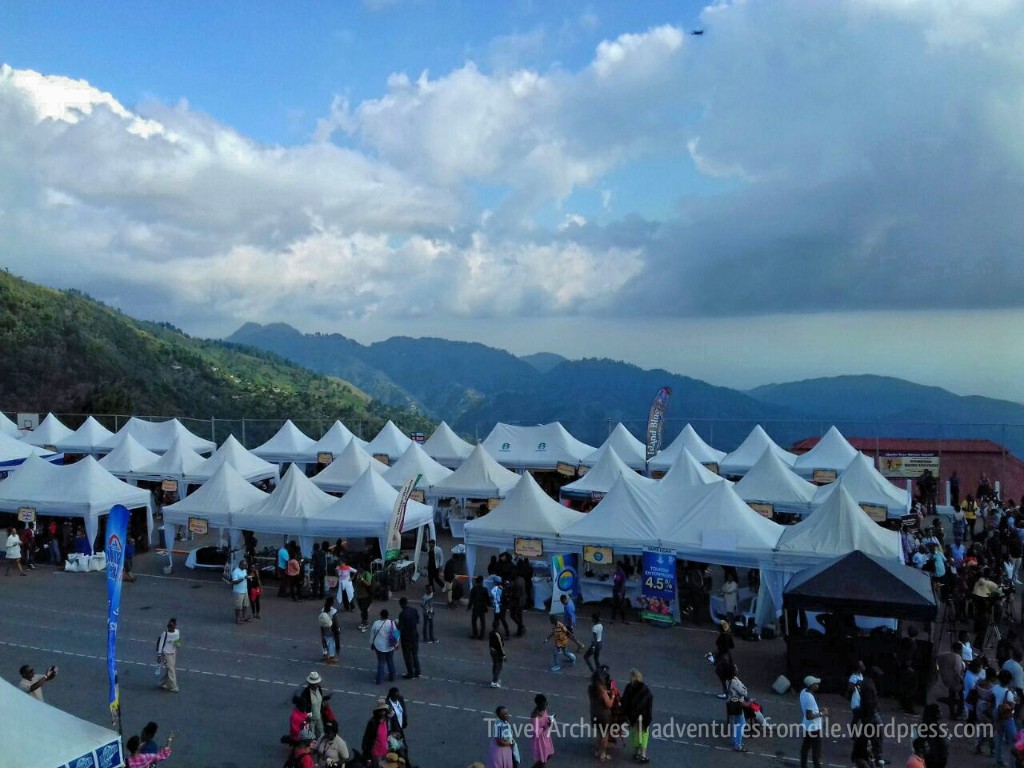
We are living in exciting times. Currently, Jamaica’s tourism is undergoing transformation with an emphasis being placed on food festivals! Soon to join the list will be a Jamaican Chocolate Festival, as announced by Minister Edmund Bartlett at the 2020 rum festival. Jamaica is looking to set up a modern, viable cocoa industry that will flourish and enhance rural livelihoods. Jamaican artisan chocolate is an ever-expanding industry with a large proportion of female entrepreneurs.
The inaugural Jamaica Blue Mountain Coffee Festival in Newcastle (2018)
Advertisements
Jamaican Chocolate Brands
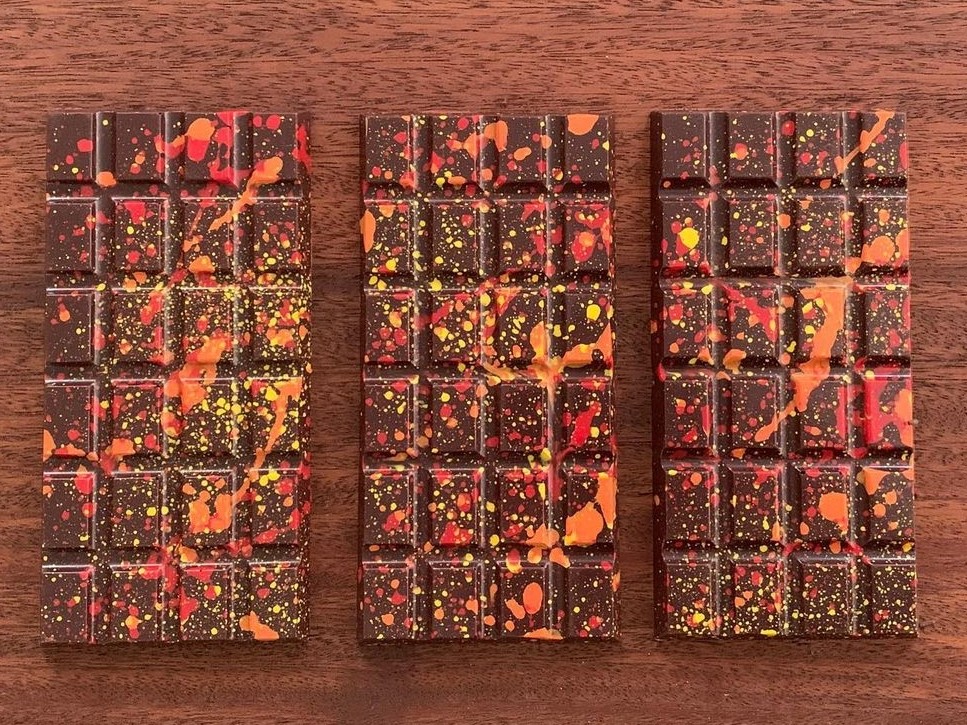
I don’t proclaim to be a chocolate connoisseur but I do love chocolate. As of 2025, I have tried four of the seven local chocolates and chocolatiers listed below and I love them all! I won’t state a favourite publicly, but do give them all a try and share your favourites with me. Thanks to the reader who shared Cloud 9 Chocolates with me! They remain on my list to try. Look out for these lovely Jamaican chocolates in most major supermarkets and pharmacies islandwide.
Likkle More Chocolate
Find them on Instagram at @likklemore.chocolate
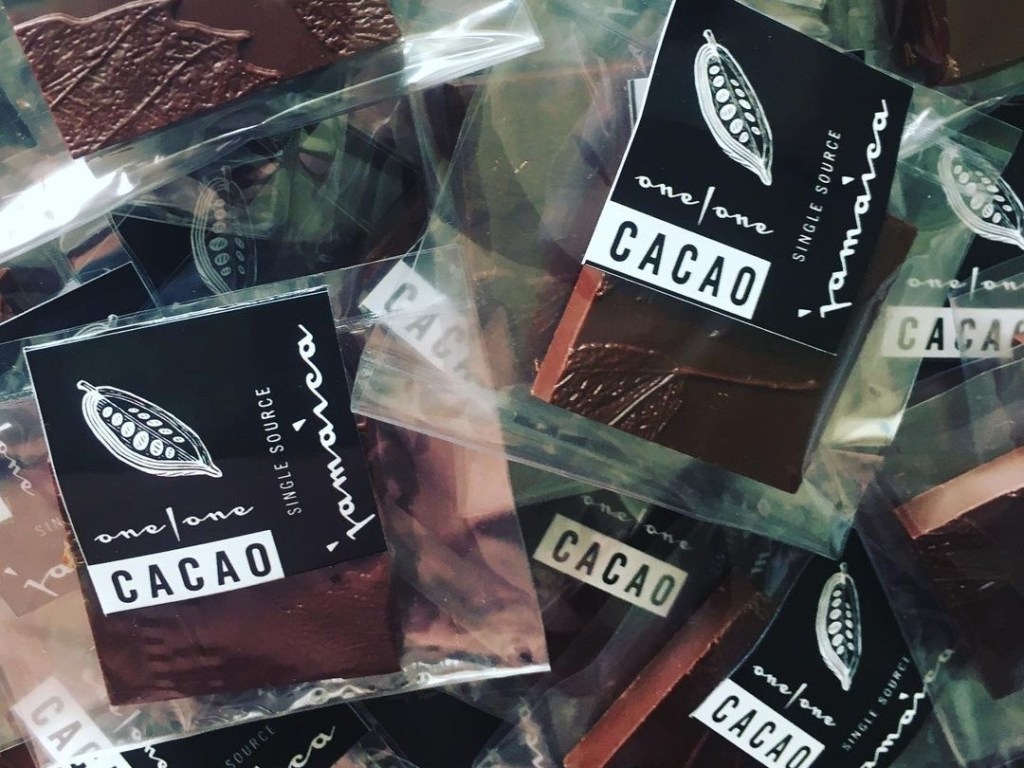
One One Cacao
Find them on Instagram @oneonecacao
Pure Chocolate Jamaica
Find them on Instagram @purechocolatecompany
Advertisements
Mount PleasantChocolatiers
Find them online @mountpleasantchocolatiers
Chocollor
Find them online @chocollorchocolate
For Goodness Graze
Find them on Instagram @forgoodnessgraze
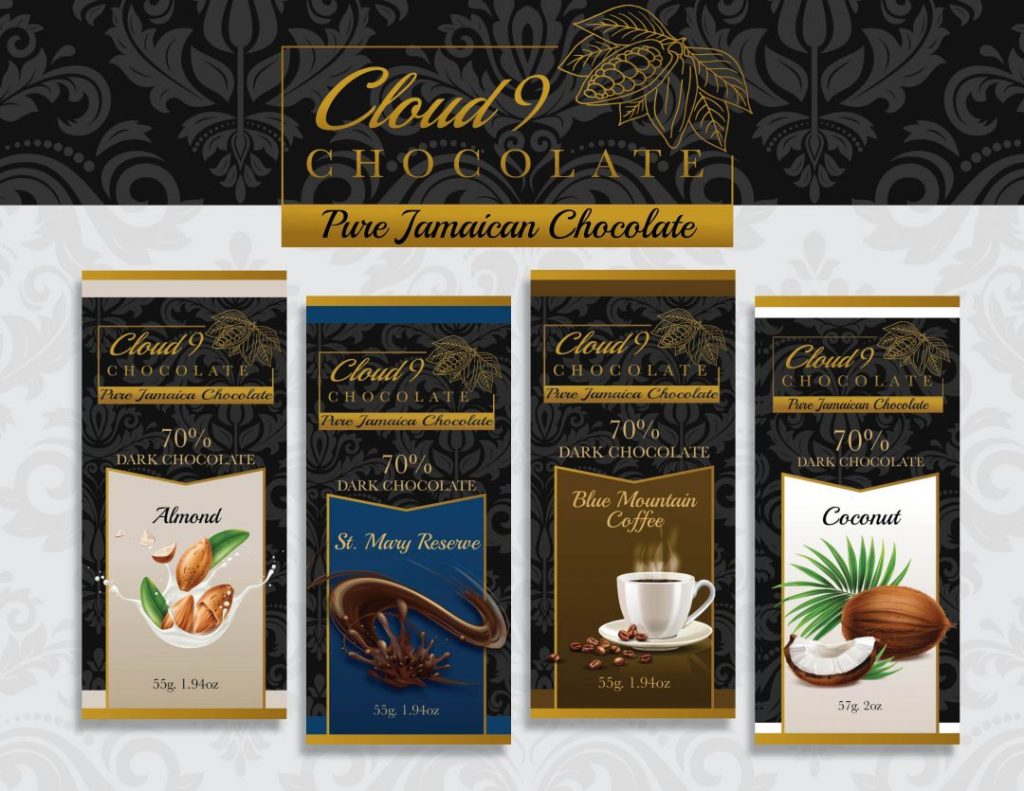
Cloud 9 Chocolate
This woman-owned and operated microbusiness is based in Highgate, St. Mary and run by single Jamaican mothers.
Advertisements
Chocolate Tours in Jamaica
Stock Photo
If trying Jamaican chocolates from the nearest supermarket or pharmacy isn’t enough for you, feel free to try one of these three Jamaican chocolate tours! Currently, Cloud 9 Chocolates, One One Cacao and Pure Chocolate Jamaica offer tours and chocolate making workshops. I still have these tours on my bucket list, and will eventually cross them off just as how I have crossed off this Blue mountain coffee tour and these three Jamaican rum tours over the years.
Advertisements
Wrap Up
I hope you’ve enjoyed this article. Did you realize that Jamaica has so many local chocolate offerings? Well, now you do! 🙂 Sound off in the comment section below, and subscribe to stay in the loop. Pin this post for your trip to Jamaica! ‘Til next time.
Adventures from Elle is a travel blog for locals & visitors who want to experience the best of Jamaica, one adventure at a time. The blog is curated by Dr. Rochelle Knight, an internal medicine specialist and published author. She began the blog in 2016 as a medical student & wants to see the world, starting with her home country. Purchase her book 'SIGHTSEE JAMAICA' on Amazon and join her in Jamaica!
View all posts by Rochelle | Adventuresfromelle
18 thoughts on “Why Jamaica is the Ultimate Destination for Chocolate Lovers”
So many new interesting facts I didn’t know! You’re awesome for taking the time to provide us with these great posts 🥰
Wow! What an amazing article! As a chocolate lover, the history behind it was so fascinating. Also, YES YES YES to a Jamaican Chocolate Festival, Sign me up now. I also really want to do a chocolate tour and when I asked around they said no.
Thank you for the big up!! *super excited and jumps and runs around *
I do agree with you about having more local products that can be readily available at the supermarket. Jamaicans should support more locally made products than “foreign” things.
Thank you so much! I’m a chocolate lover too, and after Instagram made me start discovering some new local brands, I HAD to research the industry more + give a shout out. Glad you enjoyed 🙂
Maybe when this pandemic is over we can try getting a chocolate tour together, and I can’t wait for the chocolate festival too! Hopefully late 2021 or 2022? Who knows based on this pandemic when “normalcy” will return?
Also, thanks for the Dm on Instagram letting me know where I can find a few local brands. Will be updating this post soon accordingly 🙂
That plug is well appreciated! I’m afraid my search for this brand didn’t turn up much , but I did find a website and sent them an email via their contact page to find out if they’re available locally etc..
Thank you so much again! 🙂 I’ll be updating the article soon with their information.
Lovely article! I didn’t know chocolate milk was invented in Jamaica, that’s so cool. Also learned there’s a slight difference better cocoa and cacao. Loved this post!
Chocolate is delicious, that’s for sure. I love learning about how it’s made, as it’s fascinating that it comes from a fruit. I love trying out different types from all over the world, so it looks like I’ll have to go to Jamaica to do so!
Sweet article! Packed with lots of vital information. A Jamaican Chocolate Festival is right up my alley! Thank you for this.
General Foods, Sovereign Supermarket and Fontana all stock Cafe Blue Chocolates. Think I’ve seen some more local chocolates in Gen Foods too. Pure Chocolates can be found in Fontana and I’ve seen One One Cacao in a coffeeshop somewhere. There needs to be more representation… like all of them, but they are there.
Yup, they all can be found here and there but not consistently. I remember finding Mount Pleasant somewhere once, then went back a few weeks later. Couldn’t find it… when I asked the workers, no one had any clue what I was talking about. And in stores, they usually have them on a separate shelf with Jamaican souvenir items, not mixed with the regular foreign chocolate brands like Charles, Snickers etc. But hopefully one day. And that chocolate festival cyaaa miss us, whenever it is 🙂 Thanks for reading & sharing!






 Adventures from Elle
So many new interesting facts I didn’t know! You’re awesome for taking the time to provide us with these great posts 🥰
LikeLiked by 1 person
Thank you so much! 🥰🥰 I appreciate it. I’m always happy to share the random things I find out or research
LikeLike
How about sending everyone who comments some chocolate ? 🙂
LikeLiked by 1 person
Hahaha sounds like a good idea 🤣
LikeLike
Wow! What an amazing article! As a chocolate lover, the history behind it was so fascinating. Also, YES YES YES to a Jamaican Chocolate Festival, Sign me up now. I also really want to do a chocolate tour and when I asked around they said no.
Thank you for the big up!! *super excited and jumps and runs around *
I do agree with you about having more local products that can be readily available at the supermarket. Jamaicans should support more locally made products than “foreign” things.
LikeLiked by 1 person
Thank you so much! I’m a chocolate lover too, and after Instagram made me start discovering some new local brands, I HAD to research the industry more + give a shout out. Glad you enjoyed 🙂
Maybe when this pandemic is over we can try getting a chocolate tour together, and I can’t wait for the chocolate festival too! Hopefully late 2021 or 2022? Who knows based on this pandemic when “normalcy” will return?
Also, thanks for the Dm on Instagram letting me know where I can find a few local brands. Will be updating this post soon accordingly 🙂
LikeLike
Let me put a plug in for Cloud 9 Chocolate from St Mary!
LikeLiked by 1 person
That plug is well appreciated! I’m afraid my search for this brand didn’t turn up much , but I did find a website and sent them an email via their contact page to find out if they’re available locally etc..
Thank you so much again! 🙂 I’ll be updating the article soon with their information.
LikeLike
Lovely article! I didn’t know chocolate milk was invented in Jamaica, that’s so cool. Also learned there’s a slight difference better cocoa and cacao. Loved this post!
LikeLiked by 1 person
Thank you so much! 🙂
LikeLike
Chocolate is delicious, that’s for sure. I love learning about how it’s made, as it’s fascinating that it comes from a fruit. I love trying out different types from all over the world, so it looks like I’ll have to go to Jamaica to do so!
LikeLiked by 1 person
Jamaica is definitely a great place to learn more about chocolate and cocoa, but our tours aren’t as well established as other nations as yet.
LikeLiked by 1 person
I just suddenly had a craving for Jamaican chocolate! 😍
LikeLiked by 1 person
Haha that’s great! Satisfying that craving can be arranged 🙂
LikeLiked by 1 person
Indeed! 👏👏
LikeLiked by 1 person
Sweet article! Packed with lots of vital information. A Jamaican Chocolate Festival is right up my alley! Thank you for this.
General Foods, Sovereign Supermarket and Fontana all stock Cafe Blue Chocolates. Think I’ve seen some more local chocolates in Gen Foods too. Pure Chocolates can be found in Fontana and I’ve seen One One Cacao in a coffeeshop somewhere. There needs to be more representation… like all of them, but they are there.
LikeLiked by 1 person
Yup, they all can be found here and there but not consistently. I remember finding Mount Pleasant somewhere once, then went back a few weeks later. Couldn’t find it… when I asked the workers, no one had any clue what I was talking about. And in stores, they usually have them on a separate shelf with Jamaican souvenir items, not mixed with the regular foreign chocolate brands like Charles, Snickers etc. But hopefully one day. And that chocolate festival cyaaa miss us, whenever it is 🙂 Thanks for reading & sharing!
LikeLike
Sighhh
LikeLiked by 1 person