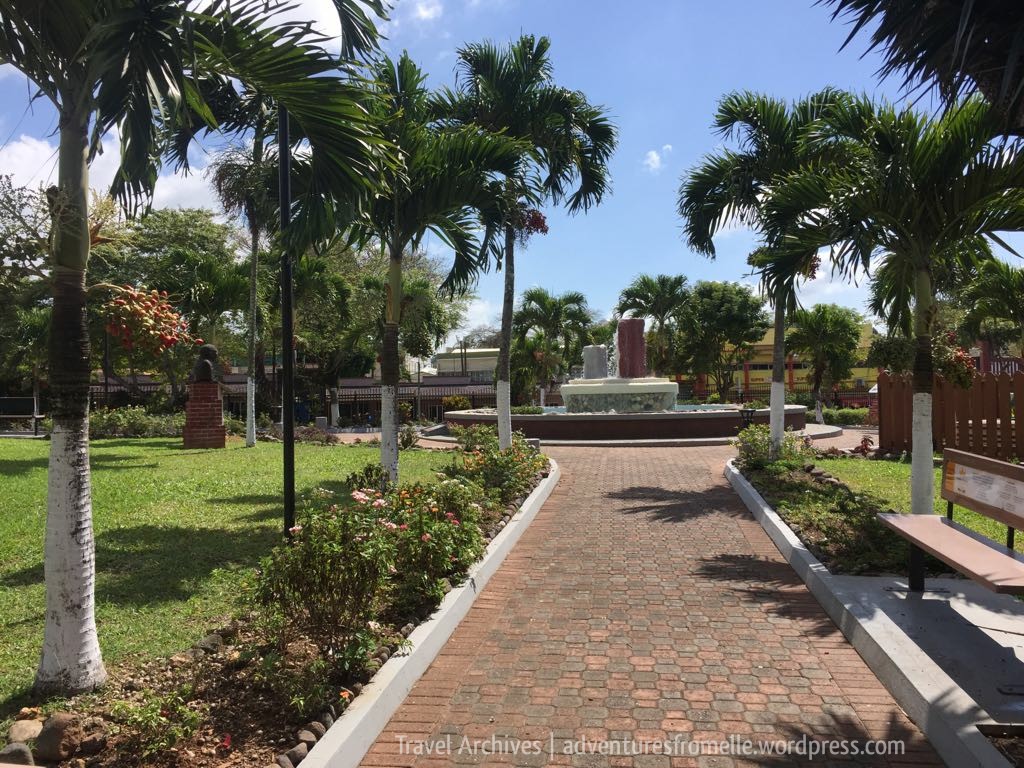
Mandeville is one of Jamaica’s more developed towns. The town is peaceful and laid-back compared to Montego Bay and Kingston, Jamaica’s two cities. I’m sure the residents like that a lot since Mandeville and by extension the cool cool parish of Manchester is a popular settlement for Jamaica’s returning residents. Named for former Mayor of Mandeville the late Cecil Charlton, the park’s transformation has been an ongoing initiative of the Manchester Parish Council since 2012. In these few years, the park has transformed from a mere refuge of the homeless to one which is worthy of civic and even national pride. Lying smack in the middle of the town square, this tiny attractive park brings a breath of fresh air and offers a great opportunity to learn more of Mandeville’s history. If you’re ever in this neck of the Jamaican woods, take a stroll here and even a seat for a few minutes.
Before we get into the article, please subscribe for new adventures.
Also, please support the writer by purchasing her books on Amazon.

How to Find Cecil Charlton Park

This tiny, attractive green space blends into the heart of the town, a place known as Mandeville Park. It’s really hard to miss. The park is enclosed by several popular fast food chains, Captain’s Bakery & Grill, Scotia Bank, the St. Elizabeth taxi stand and Mandeville Courthouse. They’re open weekdays from 9am to 6pm on only Mondays, Wednesdays and Fridays, while weekends are from 11am to 7pm. In way of amenities, the renovation plans mentioned restrooms but I saw no functional ones here today. Benches are scattered around the park allowing one to sit and enjoy people-watching. The park gets crowded by midday so if you’d like peace and quiet, visit early on the weekend. Weekdays are busy due to hordes of people commuting to and from school, work and business.
Cecil Charlton Park
The park is graced by tall palms and neatly trimmed hedges bordering terra-cotta paved walkways. The walkways in turn border lush green lawns. The air was cool, the atmosphere leisurely. Relaxing in a bench for some minutes could’ve turned into hours if I weren’t careful. In fact, minutes would have likely become an hour if I wasn’t time-pressed as usual.


However, I wouldn’t have allowed time to make me miss out on learning the following historical tidbits of Cecil Charlton’s Park:
1. The Mandeville Courthouse

The Mandeville Court House was built in 1817. It was constructed in Georgian style with two storeys, the top floor having columns, louvres and sash windows (compare Georgian styles with this mansion here). A double spiral staircase leads from the lower storey on to a portico and the top storey. Limestone blocks were used to build the court-house. The original structure has not been changed over time and is still used as a court house with supporting offices on the premises today. The court-house is actually the oldest building in the Mandeville Square. Slave labour was used in its construction, sad irony perhaps?
2. St. Mark’s Anglican Church


Jamaica’s parish churches are all Anglican or Church of England as they’re also called due to our former British rule. The St. Mark’s Anglican Church was built from stone, completed and consecrated in 1820, five years after the establishment of Mandeville. This church features classic gothic details such as pointed arch windows and doors. The church yard was closed so I had to make do with getting a photo through the fence.
3. Bust of Cecil Charlton

4. Bust of the Rt. Excellent Norman Manley, National Hero

The Rt. Excellent Norman Manley was born and raised in Roxborough, a former estate and now small community south of Mandeville in Manchester. For the pivotal role he played in national development, it’s most fitting that a tribute to him was included in this park.
5. A Cenotaph for Jamaica’s fallen soldiers

6. Even the water fountain itself had historical significance!

The park’s central highlight is a beautiful fountain with three colored pillars, known as a water rockery feature, to represent the parish’s main economic activity: bauxite mining. The red represents the raw bauxite ore, the white depicts the intermediate alumina product and the silver illustrates the finished product of aluminium, even though aluminium manufacture itself is not done locally due to economic feasibility. Collectively, the varying shapes and colours of the stones signify past strengths and seek to encourage and inspire the progress and development of the parish of Manchester and its citizens.
Wrap Up
I enjoy visiting new parks and urban green spaces! They do so much to uplift and beautify the surroundings. I’m glad a stroll of Mandeville led me to the Cecil Charlton Park today. I only hope that they continue to maintain the park at its current standard or even improve it further with functional restrooms and other features.
‘Til next time. ✌🏼
Find Elle on Facebook, Pinterest, Instagram and now on YouTube.







Leave a Reply