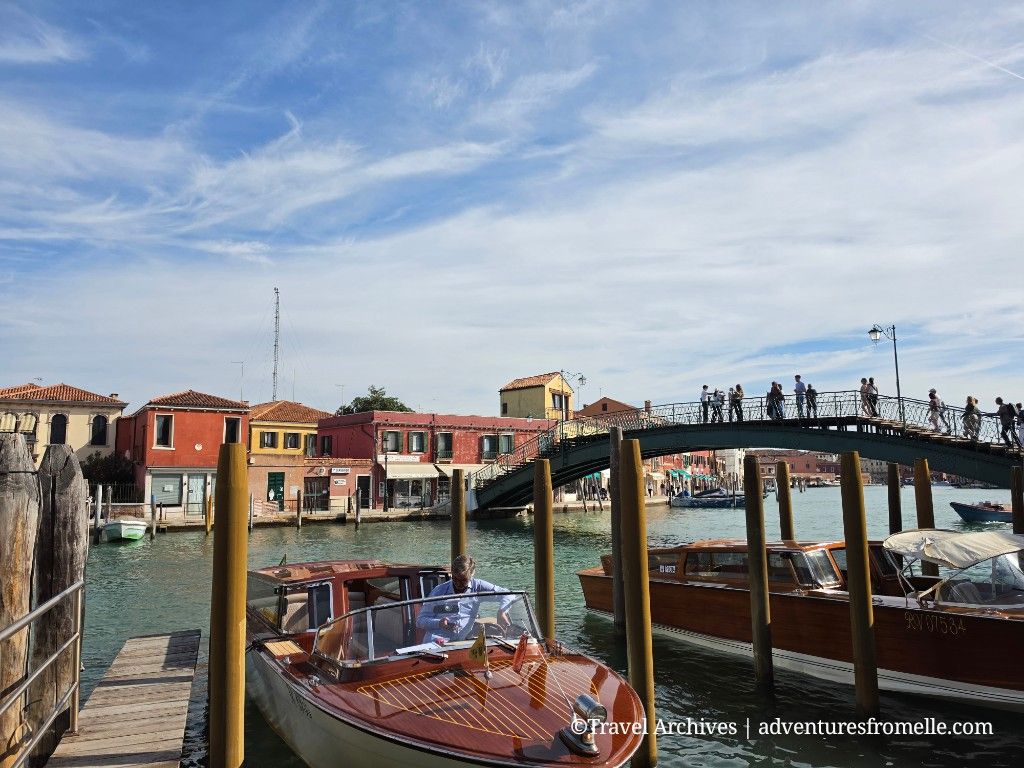
If you’re visiting Venice, Italy, and have an extra day to spare, I highly recommend taking a trip to Murano and Burano. These two islands in the Venetian Lagoon offer a different experience from Venice itself, with centuries-old artisan traditions, colourful waterfront houses and a slower pace of life. My husband and I booked a guided excursion, and it was one of our favourite experiences in Venice. From watching Murano’s glassblowers transform molten glass into beautiful creations to exploring Burano’s picturesque streets on our own, it was the perfect way to round off our three days in Venice. Here’s what to expect when visiting Murano and Burano, and how to plan a visit.

Before we get into the article, subscribe for new Adventures from Elle.
Also, check out my books and GetYourGuide storefront for more travel ideas.

How to Visit Venice’s Islands

The Venetian Lagoon contains 118 islands, but only about ten of these are particularly worthwhile for tourists. The best Venetian islands to visit are:
- Murano for glassblowing and handmade glass
- Burano for colourful houses and handmade lace
- Torcello for its historical basilica, Byzantine mosaics and Devil’s Bridge
- Lido for excellent beaches and exploring ancient villages like Malamocco
- Pellestrina for beaches, colourful houses and a nature reserve
- San Lazzaro degli Armeni for Armenian history
- San Michele for its cemetery and elaborate tombs
- Sant’Erasmo for farms, vineyards, gardens and slow travel
- Mazzorbo for its vineyards which produce rare Venetian wine and,
- San Giorgio Maggiore for its church, bell tower and beautiful waterfront.
You can visit Venice’s islands independently using public water buses known as vaporettos. Google Maps will let you know which line to take. This is the cheapest option but the boats can be crowded, and navigating the routes, waiting for connections and coordinating your schedule can take time. Booking an excursion to the two most popular Venetian islands made my experience much smoother. Rather than worrying about multiple water-bus journeys and waiting in long queues, we could enjoy the trip without hassle. Some excursions include presentations and additional stops, so compare the itinerary with your interests.

We left out early on our final day in Venice as we had a 30 minute walk to our guide’s meeting point. On the way, we spotted the Basilica Santa Maria della Salute but getting up close would’ve required a water taxi. We also passed the Bridge of Sighs and a leaning bell tower which was quite interesting! After a quick briefing, we had an on-time departure to Murano.

Murano: Discovering the Art of Glassmaking

After a 30-minute sail, we arrived at Murano, an island internationally renowned for its glassmaking tradition. Although Venice had a thriving glass industry centuries ago, the Venetian Republic ordered glass furnaces to move to Murano in 1291 to reduce the risk of devastating fires in Venice’s densely built-up centre. The island subsequently became a major centre of glassmaking, developing techniques and designs that earned its products a reputation across Europe. One of the highlights of our visit was watching a glassblowing demonstration. It was fascinating to see the artisans work with molten glass, using specialized tools and practiced movements to shape it into a decorative object. I would have loved a longer demonstration but nevertheless, seeing the craft in person gave me a greater appreciation for the work involved in producing Murano glass.
Murano glassmaking is a family craft with techniques and trade secrets passed from experienced artisans to younger generations, rather than conventional school-based education. After the demonstration, we had the opportunity to browse finished glass products in a shop where pictures weren’t allowed. From intricate chandeliers to colourful vases and jewelry, the craftsmanship was impressive. As you can imagine, prices were steep.
Pro Tip: Book travel insurance before your trip.
Burano: Colourful Houses and a Dying Lace-Making Tradition

After Murano, we sailed for 35 minutes to Burano, an island famous for its brightly coloured houses and traditional handmade lace. Burano’s roots stretch back to the early medieval period. Over time, fishing and lace-making became important parts of local life, with the island’s needle-lace tradition gaining prominence from the Renaissance onward. One of the first things you notice in Burano is the extraordinary range of colours. Houses painted in bright shades of pink, yellow, blue, green and orange line the canals, creating a postcard-worthy scene at almost every turn. It is said that fishermen painted their homes in these distinctive colours so they could recognize them when returning from fishing trips, particularly in foggy weather. The colourful homes and buildings reminded me of Guatapé in Colombia.

Burano is also known for its intricate handmade lace, traditionally created using fine thread and needle. The craft became highly prized across Europe, and lace made on the island was sought after by wealthy families and members of royal courts. Today, Burano’s lace-making heritage faces challenges because the work is time-consuming, requires years of practice and struggles to compete with cheaper, mass-produced alternatives. With fewer people pursuing the craft, preserving these skills has become increasingly important. Tours such as these help to keep handmade lace alive. If you are interested in learning more, visit the Lace Museum which showcases historic examples and documents the evolution of the tradition. After 75-minutes to explore the island independently, we boarded our boat for a 50-minute sail back to mainland Venice.
Wrap Up
Murano and Burano are exactly the kind of places I enjoy travelling to: beautiful, distinctive and rich in history and culture. Visiting these Venetian islands was one of my favourite experiences in Venice and the perfect way to round off our three-day itinerary. If you are planning a trip to Venice, I would definitely recommend setting aside a day to visit. The islands offer a wonderful contrast to the main city and a chance to experience some of the Venetian Lagoon’s most distinctive traditions. Have you ever visited Murano and Burano, or would you like to visit? Sound off in the comments section below.
If you enjoyed this post, you may also like:
- A Day Trip to Vatican City
- How to Spend 3 Days in Rome
- How to Spend 3 Days in Venice
- A Day Trip to Padua from Venice
- Colosseum, Rome: Tips For Your First Visit
Find Elle on Facebook, Instagram & lend your support to keep me on the road.





Leave a Reply