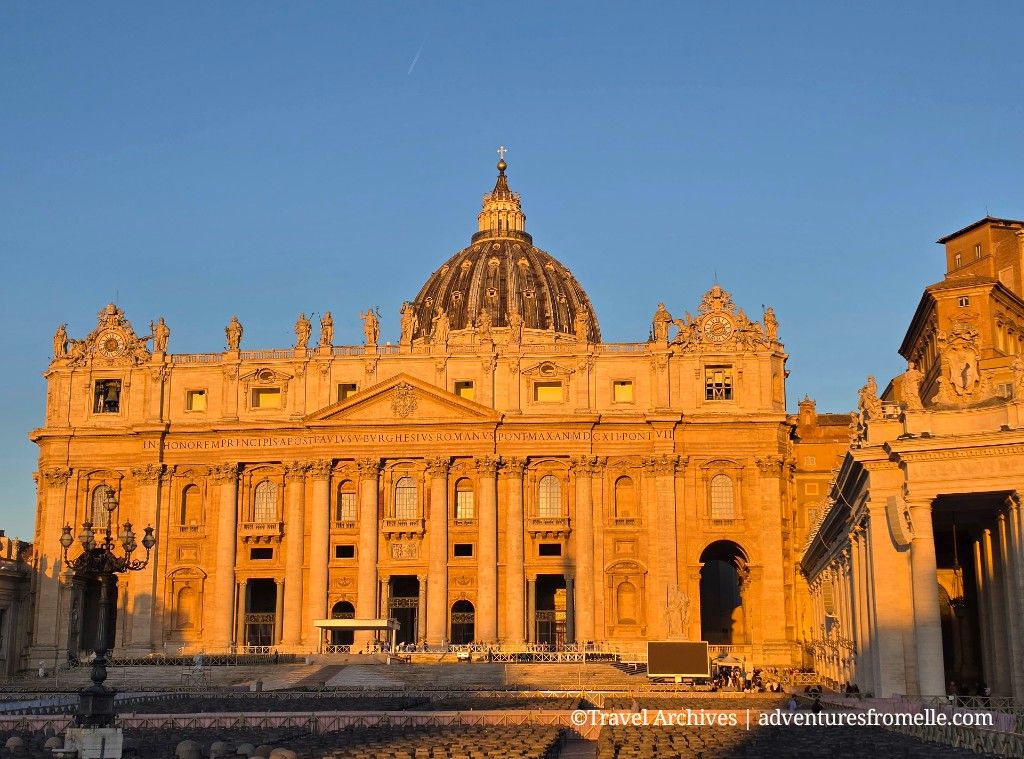
Visiting Vatican City was one of the highlights of my 3-day trip to Rome, Italy last month. From ancient sculptures and elaborate museums, to Michelangelo’s breathtaking frescoes in the Sistine Chapel and the grandeur of St. Peter’s Basilica, there was so much to see. Even cooler, my six hours spent within the Vatican City’s walls means I’ve visited the world’s smallest country! Here’s what my experience was like, why I recommend a skip-the-line ticket, what I thought of the artwork, and how you can plan your own half-day visit.

Before we get into the article, subscribe for new Adventures from Elle.
Also, check out my books and GetYourGuide storefront for more travel ideas.

What’s Inside
- Why Is Vatican City A Country?
- The Vatican Museums
- Sistine Chapel
- St. Peter’s Basilica
- Tips to Plan Your Vatican City Visit
Why Is Vatican City A Country?

Vatican City is the smallest independent country in the world, covering approximately 0.44 square kilometres within Rome, Italy. It serves as the headquarters of the Catholic Church and the sovereign territory of the Pope. Although the papacy has a much longer history, Vatican City as we know it today was established in 1929 through the Lateran Treaty between the Holy See and Italy. The agreement resolved a longstanding dispute following the annexation of the Papal States by the Kingdom of Italy in 1870, formally recognizing Vatican City as an independent state. Parts of Vatican City are enclosed by imposing walls pictured above, separating it from Rome.

The Vatican also has an interesting defensive history. The Passetto di Borgo is a fortified elevated passage connecting the Vatican to Castel Sant’Angelo, a fortress that served as a refuge for popes during times of danger. Pope Clement VII famously used this escape route during the Sack of Rome in 1527. Today, visitors can explore the Vatican Museums, Sistine Chapel and St. Peter’s Basilica, three attractions that showcase the Vatican’s artistic, religious and political history.
The Vatican Museums

My visit began at the Vatican Museums, which houses an extensive collection of artwork, historical objects and archaeological treasures accumulated by successive popes over centuries. I had an 8am tour yet the queues to get inside were already super long with hundreds of people standing in the sun. Waits of up to three hours are possible during busy periods, so I’m grateful I’d splurged on a 3-in-1 skip-the-line ticket for the Vatican Museums, Sistine Chapel and St. Peter’s Basilica ahead of time which allowed me to enter in five minutes without joining the main queue. You will still need to pass through security, but that process was quick.


There was so much to see that I hardly knew where to look first. The collections include classical sculptures, tapestries, painted galleries and elaborately decorated rooms reflecting centuries of papal patronage. The Gallery of Maps, with its detailed depictions of the Italian peninsula, and the Gallery of Tapestries are among the highlights. I was particularly struck by the number of ancient sculptures on display. However, I also found some of the pagan statues strange to encounter in the headquarters of the Catholic Church. Many depict Greek and Roman gods, mythological figures and nude human forms. Their presence reflects the Vatican’s long history of collecting and preserving classical antiquities, even when these objects originated in pre-Christian religious traditions.
Pro Tip: Book travel insurance before your trip.

Another feature worth looking out for is the famous spiral staircase near the museum exit. Designed by Giuseppe Momo in 1932, this elegant double-helix staircase has two separate paths that create a striking architectural effect. It is a popular photo opportunity that is often missed on combined tours which end at the Basilica. As such, ask your guide to show it to you at the beginning.
Sistine Chapel

After exploring the museums, I continued to the Sistine Chapel where we spent 30 minutes. The chapel takes its name from Pope Sixtus IV, who commissioned its renovation in the late 15th century. Michelangelo painted the famous ceiling frescoes between 1508 and 1512 under Pope Julius II. He later returned to paint The Last Judgment on the altar wall, completing it in 1541. The Sistine Chapel is where cardinals gather to elect a new pope.
The scale, detail and artistry of the ceiling murals were incredible! The ceiling depicts nine scenes from the Book of Genesis, including the iconic Creation of Adam, in which God reaches toward Adam with an outstretched finger. Another fascinating detail is the depiction of God in The Creation of the Sun, Moon and Plants. Michelangelo portrays God in a dramatic pose, with one view showing him from behind. The chapel also contains The Last Judgment, a monumental fresco depicting Christ presiding over the fate of humanity. My guide taught us about the frescoes before we went inside as we’re not allowed to speak loudly in the chapel. Photography is also prohibited.
St. Peter’s Basilica

My last stop was St. Peter’s Basilica, the world’s largest church by interior floor area. The present basilica was built between the 16th and 17th centuries, and is traditionally associated with the burial place of St. Peter, one of Jesus’ apostles. Stepping inside, I was immediately struck by the building’s enormous scale. The towering ceilings, marble floors, monumental columns and elaborate artwork make it an architectural marvel. The basilica houses remarkable works of art, including Michelangelo’s Pietà, a marble sculpture depicting Mary holding the body of Jesus. Bernini’s monumental bronze baldachin above the papal altar is another defining feature.


However, I had mixed feelings about some of the interior decorations. The extravagant black-and-gold altar details and gold-covered ceilings felt gaudy to me and at odds with what I’d expect from a place of worship. I appreciate the craftsmanship and historical significance of the designs, but the sheer opulence was difficult to ignore. There’s an option to climb to the top of the dome which offers panoramic views across Rome. However, the climb involves narrow staircases, and some enclosed sections can feel hot, cramped and claustrophobic. Long waits are also possible when visitor numbers are high, so I opted to skip this experience and explore the basilica at ground level instead.
Tips to Plan Your Vatican City Visit

Fun Fact: The Pontifical Swiss Guard is a 135-member military unit founded in 1506 and recognized as the world’s smallest army. Their sole duty is to protect the Pope and Vatican City, and yes, all members are Catholic Swiss (not Italian) nationals. Now for my top tips on planning a visit to Vatican City:
- Book ahead if you want to visit the Vatican Museums, Sistine Chapel and St. Peter’s Basilica without spending hours in the general admission queue. The tour I booked allowed me to enter the Basilica via a connecting passage from the Sistine Chapel, which saved me from having to exit the museum, walk around St. Peter’s Square and join the basilica’s exterior queue. My tour guide, Lorenzo, was also excellent and super patient with members of the group who had mobility issues.
- Obey the Vatican City dress code. Visitors must have their shoulders and knees covered. Avoid low-cut clothing and remove your hat indoors. You’ll have to purchase a shawl if you’re not correctly attired, or you’ll be denied entry.
- Wear comfortable walking shoes. The museums are extensive, so you will spend hours on your feet.
- Food & drink isn’t allowed, but you can take water and light snacks (just don’t eat inside the church or museums).
- Carry government-issued ID like your passport (technically you’re visiting another country).
- Getting to Vatican City from Rome is very straightforward. These are your options:
- By Metro: Take Metro Line A to Ottaviano or Cipro, both of which are within walking distance of the Vatican Museums. Check the daily route and service information before leaving your accommodation. This is the option I took.
- By Bus: Several bus routes serve the Vatican area. Bus 49 stops near the Vatican Museums, while routes including 32, 81 and 982 serve Piazza del Risorgimento. Tram 19 also serves the area.
- By Car or Taxi: You can travel by taxi or car to the Vatican area, but I would not recommend renting a car solely for this visit. Rome has busy roads, restricted traffic zones and limited convenient parking near major attractions. A taxi can be useful if you have mobility concerns or are staying somewhere poorly connected to public transport.
- On Foot: Walking is a lovely option if you are staying in central Rome. Use Google Maps to check the distance from your accommodation.
Wrap Up
My visit to Vatican City was a memorable mix of breathtaking art, fascinating history and architectural grandeur. If you’re visiting Rome for the first time, you can experience the Vatican’s main highlights in as little as four hours with careful planning, especially if you book your ticket(s) in advance. Have you ever visited the Vatican City, or would you like to visit? Sound off in the comments section below!
If you enjoyed this post, you may also like:
- A Day Trip to Padua, Italy
- How to Spend 3 Days in Rome
- Colosseum, Rome: Tips For Your First Visit
- How to Apply for a Schengen Visa in Jamaica
Find Elle on Facebook, Instagram & lend your support to keep me on the road.






Leave a Reply