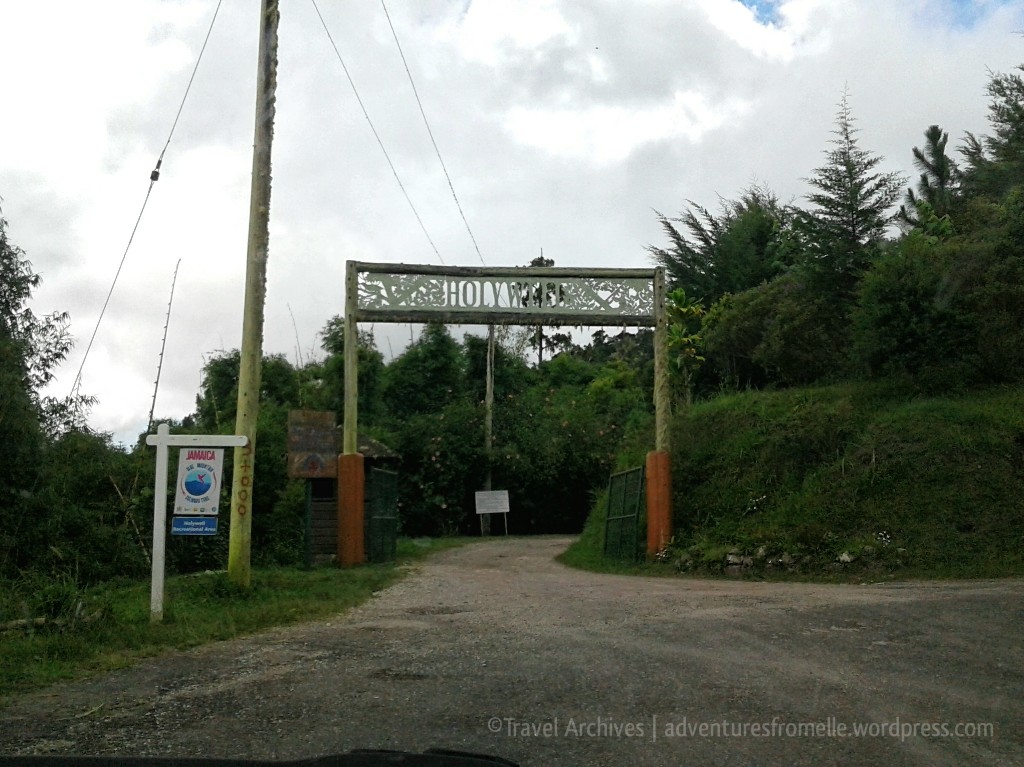
Located in the tropical mist forests of the Blue and John Crow Mountains National Park (BJCMNP), Holywell (pronounced Hollywell) is a cool escape from Kingston’s heat. This 330-acres “park within a park” is blessed by the fragrance of fresh mountain air and pine trees, and at 900m (3,000 ft.) above sea level, the cool temperature allows Holywell’s ecosystem to support a wide variety of ferns, flowers, and trees which are rarely seen in other parts of Jamaica. Many Jamaican birds call this forest home, including all 30 of Jamaica’s endemic birds!

Holywell is suitable for all ages and features five nature trails, gazebos, benches, a picnic area, canteen, BBQ pit facilities, restrooms, a campsite and three cabins for overnighting. Above all, I love the park’s focus on sustainability. There’s a tree nursery which supplies trees for reforestation projects and its staff are mostly residents of the surrounding rural Portland and St. Andrew communities.
Before we get into the article, subscribe for new adventures from Elle.
Also, check out Elle’s debut Jamaican travel guide on Amazon. It’s available in eBook and paperback, ships worldwide.
How to Get to Holywell
Starting from Papine, take Gordon Town Road (B1). After about 10 minutes of driving, there’s a left turn to take with a large green sign marking it as the route to Holywell along with some other smaller signs featuring popular spots. You’ll pass landmarks such as Café Blue, Strawberry Hill Resort, Rafjam B&B, EITS Cafe, the Redlight and Middleton districts then the military base of Newcastle.

The road quality is great for the first half of the drive then becomes bumpy as you near Newcastle. It remains this way for the rest of the journey, but is navigable by an ordinary car. Eventually you’ll pass Gap Cafe, the nearest restaurant to Holywell, then voila!

The overall drive from Papine to Holywell lasted about an hour. Private transport may be the only means by which to access Holywell since public transport doesn’t seem to go beyond Irish Town. Of course, one could hike the rest of the distance up but that would take a while. It’s best to do this only if your group is overnighting. Admission to Holywell costs JM$400 and $100 for residents with local ID, while non-residents pay US$10 and $5, adult and child prices respectively. Interpretive signs near the main picnic area entrance provide information about the site including a useful map. There are 10 gazebos – each named after a plant or bird found in the National Park. Six gazebos are in the main picnic area and two are hidden away along trails; one is just across from the Visitors’ Centre and one is near the Car Park.

Wear sneakers, bring food for a picnic unless you plan to stop at a café along the way and take rain gear just in case. Don’t forget to stay hydrated too despite the cool temps!
Holywell Nature Walks


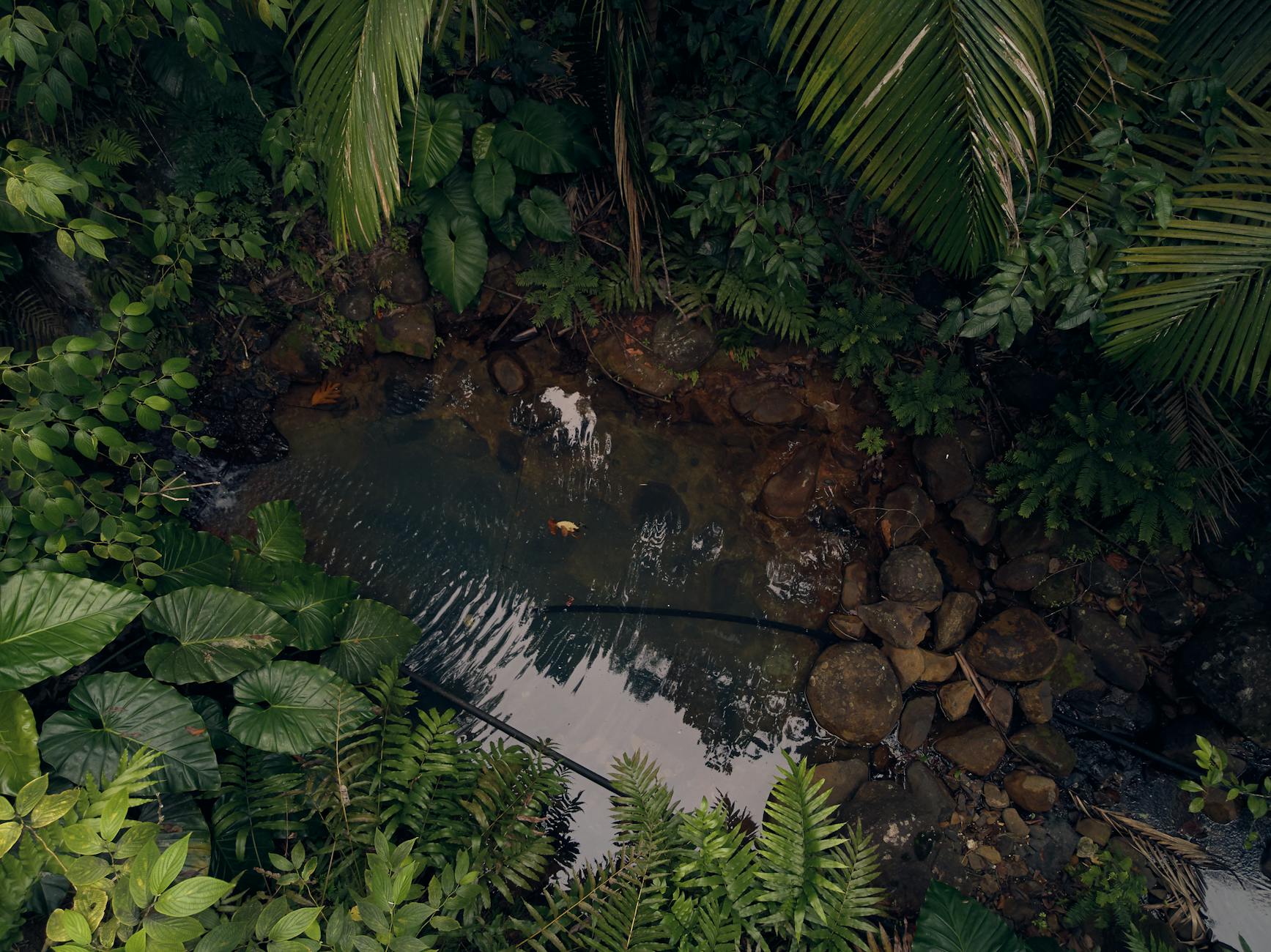
The five trails are the Blue Mahoe (350m), Oatley (1.2 km), Waterfall ( 1.3 km), Shelter (600m) and the Wag Water (630m) Trails, each with varying levels of difficulty. I chose the Blue Mahoe, Waterfall and Wag Water trails, the latter two of which are listed as moderately difficult with steep elevation gain but my friend and I of ordinary fitness managed fine. The shortest trail, Blue Mahoe, was a gentle walk making it the most suitable for the whole family. Everything was lush and green, from the tall trees forming the canopy overhead to the lowest shrubs and mosses. Ferns are some of my favourite plants and those were everywhere in all the various stages of the life cycle– unfurling baby ferns, young ferns, tall adult tree ferns and a few nearing the end of their 100-year lifespan.


The views from the waterfall trail and the main picnic areas were the best. Admiring the rugged topography of the Blue Mountain range, its mist-covered slopes and seeing the contrast of urban development out on the plains was delightful. I really couldn’t capture all that splendour with an ordinary cameraphone. You could see the Mona Reservoir, largest water supply to the Kingston metropolitan area, and all the way out to the Kingston Harbour, the world’s seventh largest natural harbour.


Holywell got its name from the typical Jamaican legend where a slave was severely beaten by his master, ran away, then was quickly healed of his injuries after bathing in a therapeutic stream which he stumbled across. He subsequently returned to his master who was amazed at how quickly his wounds had healed, then asked for the location of the spring to be revealed in exchange for some gain. If this sounds familiar, then yes. You’ve heard it before in my Bath Mineral Spring post and will likely hear it again when I visit and post about our other mineral springs. Who knows? There could be a grain of truth in these legends but the exact location of this “holy well” is unknown today.
Also, remember the cabins for overnighting which I mentioned earlier? They’re rather rustic to suit the environment but still, cabin fever! 😍 The flower gardens at the front are a nice touch.


Wrap Up
I really enjoyed my day trip to Holywell but I must return for an overnight stay. I imagine it gets very cold at nights in a cloud forest but that’s the best time to go birdwatching. The Holywell National Park is a refreshing affordable break from city life. Find additional information about Holywell from the Jamaica Conservation & Development Trust (JCDT). They offer organized birdwatching tours at 6am as well as a 4-hour nature and coffee tour in the neighbouring coffee farms. Blue Mountain coffee is one of the most expensive and sought after coffees in the world, and is a globally protected trademark.
Just like that, place #5 from 2018’s list is down. Will I get around to the others this year? Only time will tell. 🤔
‘Til next time! ✌
______
Pssst!… Holywell would look great in your pins: 😉

Find Elle on Facebook, Pinterest, Instagram and now on YouTube.








Leave a Reply