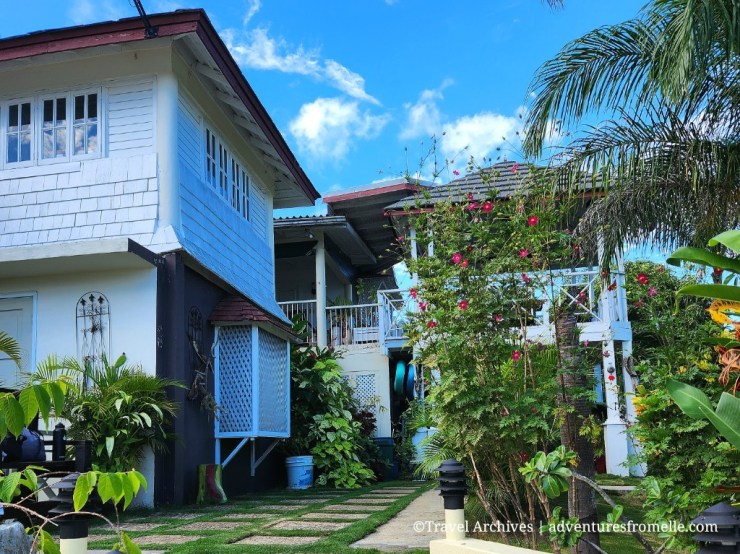
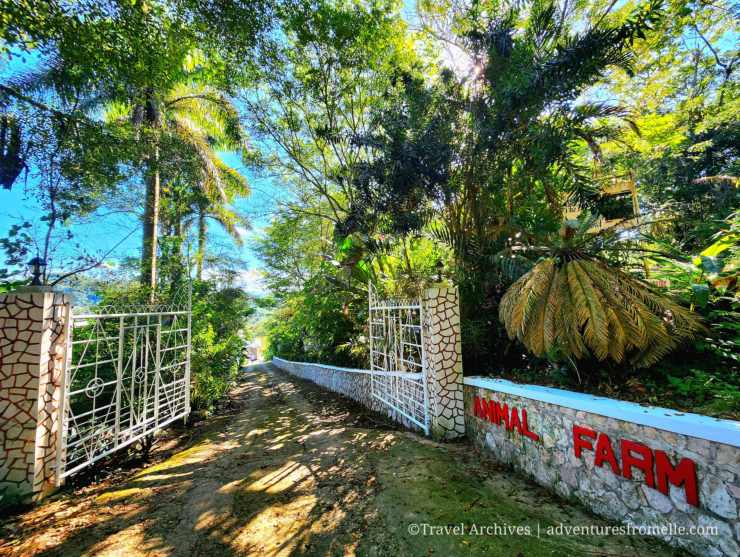
Nestled in the Montpelier Hills near Montego Bay, Jamaica lies the alluring Animal Farm and Nature Reserve. This 40-acre sanctuary sits in a lush rainforest valley which is supplied by the Great River, one of Jamaica’s fastest flowing rivers. Dr. Geoffrey Williams, the owner of Animal Farm, acquired the thickly wooded land in the 1990s and transformed it into a beautiful off-the-grid farm. Animal Farm is solar-powered, harvests water from the Great River and uses bio-gas for refrigeration and cooking. Animal Farm opened to guests in 2000 and quickly became a naturalist and ecotourist’s paradise, teeming with ferns, towering trees, flowering plants and beautiful exotic birds. Today, one can escape the hustle and bustle of city life with a stay in one of the farm’s eco-cottages, or enjoy an edutaining farm tour, hiking, birdwatching, bamboo rafting excursion or even a self-guided tour through the farm at one’s own pace. In this article, I recap my weekend getaway and share why Animal Farm deserves a spot on your Jamaican bucket list.
Continue reading “Experience Life Off the Grid at Animal Farm”Jamaican Sorrel Drink (Recipe + Health Benefits)
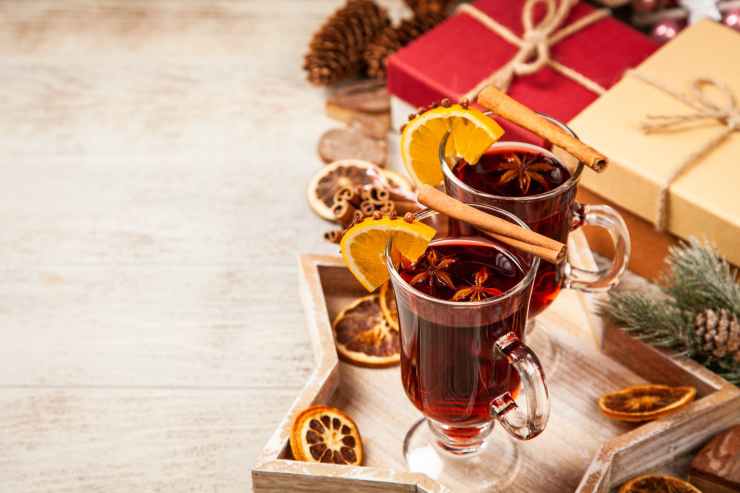
Sorrel (Hibiscus sabdariffa), also known as Jamaican hibiscus, flor de Jamaica or roselle, is one of my favourite drinks. This brightly coloured spiced beverage was traditionally consumed at Christmas, but it’s so delicious and nutritious that it’s now available commercially year round in Jamaican supermarkets and restaurants. However, sorrel is still consumed more often at Christmas and you’ll find that sorrel drink and fruitcake are the standard offerings to guests at Christmas in Jamaican homes. Thus, I thought it fitting to share our recipe and the nutritional benefits of sorrel with you all.
Continue reading “Jamaican Sorrel Drink (Recipe + Health Benefits)”Jamaica Coffee 101: Is It Worth The Price Tag?
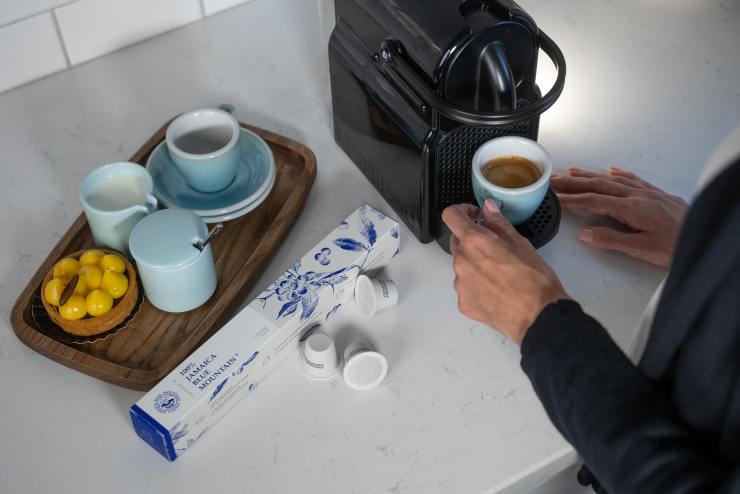
Coffee is the world’s most popular hot drink, prepared from roasted coffee beans. According to the International Coffee Organization (ICO), coffee is the second most traded commodity in the world after oil, with consumption listed at half a trillion cups per year. Humans have been drinking coffee for its stimulant properties for over one thousand years. Coffee beans were first introduced to Jamaica in 1728, and since then has had a long and intricate relationship with Jamaica’s culture and economy. Today we take a look at Jamaica’s coffee industry and figure out if Jamaican coffee is worth the price tag or not.
Continue reading “Jamaica Coffee 101: Is It Worth The Price Tag?”Glamping & More at Hidden Springs, Saint Ann
Last month, I was invited on a special road trip sponsored by Red Stripe. Red Stripe is a refreshing lager beer best enjoyed cold and on hot sunny days. This beer has become a Jamaican cultural staple, and is generously splashed onto jerk chicken during its preparation. Thus, there was no better company than Red Stripe to gather local talents on a ‘Jamaicanness Tour‘ to celebrate Jamaica’s unique food and adventure spots. They promised a day filled with fun, food and Jamaican experiences– and delivered. Our first stop was at Hidden Springs, an idyllic gem on Jamaica’s north coast which offers several accommodation options for the discerning traveler and nature-lover. These include two guest suites, glamping tents as well as a campground where you can pick a spot, and pitch a tent. Today, let’s recap my visit to Hidden Springs.
Continue reading “Glamping & More at Hidden Springs, Saint Ann”16 Photos Showcasing Manchester, Jamaica
Manchester is one of Jamaica’s south central parishes. It’s often said that the north coast in Jamaica is for the tourists, while the south coast is for the locals. Of course, no parish is out of bounds for tourists, but it’s just that tourists seldom visit our quiet south coast when it’s more exciting up north. Manchester was formed in 1814 and is named for the Governor of Jamaica at that time. Manchester is primarily mountainous. Over 90% of Manchester’s surface is limestone which gives it an abundance of cockpits, sinkholes, caves and underground passages. That’s why most of the parish’s rivers run underground but form delightful swimming holes during the wet season. The longest and deepest caves in Jamaica are found in Manchester, namely the Gourie Cave near Christiana and the Smokey Hole Cave in Cross Keys. Manchester has large bauxite deposits, the raw material for aluminium production. Important crops in the parish are coffee, potatoes and citrus. Ortanique, a cross between the orange and tangerine, was developed here in Manchester, Jamaica.
Continue reading “16 Photos Showcasing Manchester, Jamaica”10 More Interesting Jamaican Place Names
A few weeks ago I posted an article entitled ‘Interesting Jamaican Place Names.’ So many funny Jamaican place names didn’t make the cut, so I had to write a sequel. Jamaican place names are influenced by its previous Spanish and British colonizers, as well as other groups of people who have inhabited the island at various points in history. Therefore, it’s not odd that Jamaica has its own Madras and Bengal, having received indentured servants from India after slavery was abolished in 1838. Other places are inspired by the land such as Cedar Valley due to the cedar trees, Annotto Bay because annatto trees were planted there, and Bath in St. Thomas because it has a mineral bath. However, we aren’t here to discuss those basic place names. Today we discuss ten more funny and interesting Jamaican place names which I’m sure you won’t hear anywhere else across the world.
Continue reading “10 More Interesting Jamaican Place Names”16 Photos Showcasing the Beauty of St. Mary, Jamaica
The St. Mary parish is located on Jamaica’s northeastern coast. You may know the parish for Port Maria, Annotto Bay, Oracabessa or Jamaica’s third international airport named for Ian Fleming. St. Mary has a long history and was one of the parishes inhabited by Tainos. Its parish capital, Port Maria, was the second town built by the Spanish in Jamaica. Many pieces of history lie in St. Mary such as the Rio Nuevo Battle Site which was the site of the final battle between the British and Spaniards for control of Jamaica in 1658. In 1760, Tacky led the most serious rebellion against slavery in the Caribbean at that time. You can visit the waterfalls named for Tacky and his fellow warrior Kwame today. After Emancipation, free villages were formed in St. Mary. As the price for sugar dropped, banana cultivation replaced sugarcane in the 1900s which explains why St. Mary is now known as Jamaica’s banana parish. Nonetheless, St. Mary is a very beautiful parish with several attractions and places to visit such as free rivers, beaches, historic forts, churches and even a maroon town (Scott’s Hall). Here are 16 photos to showcase the attractions and things to do in St. Mary.
Continue reading “16 Photos Showcasing the Beauty of St. Mary, Jamaica”Galina Lighthouse, Saint Mary
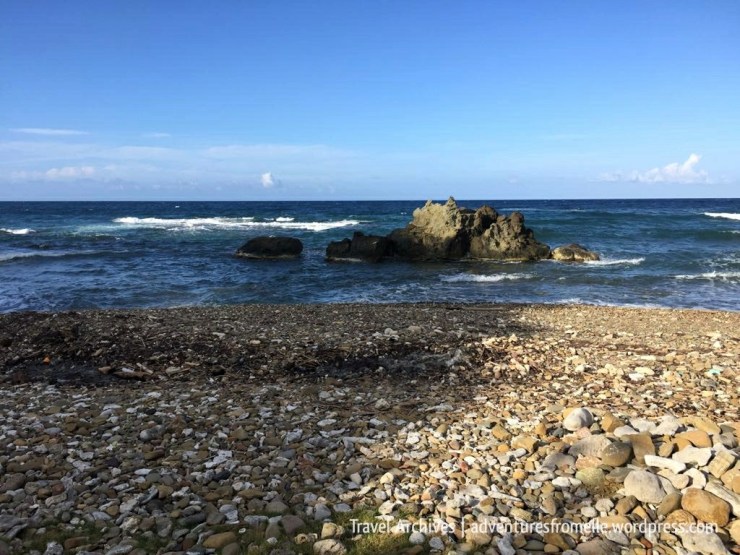
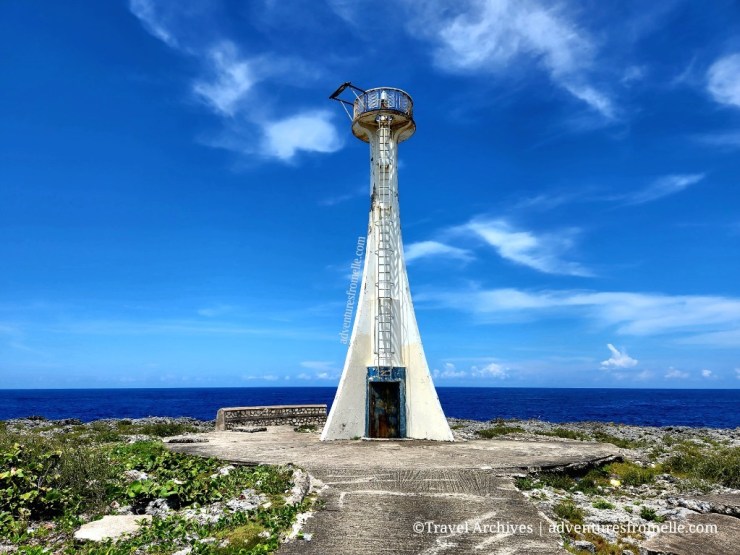
The only time it’s acceptable to combine business with pleasure is on a business trip, of course. St. Mary is home to several beaches, waterfalls, swimming holes and historic sites. I visited the parish recently for a practical reason, but stopped at the Galina Lighthouse on my way home. Jamaica is home to eleven lighthouses, nine on land and two offshore. These lighthouses are all operational, and maintained by the Port Authority of Jamaica. Lighthouses are erected close to navigable waters in order to guide incoming sea and aircraft. They serve as visual guides based on their physical characteristics in the day, then deliver characteristic flashes of light by night.
Continue reading “Galina Lighthouse, Saint Mary”4 Haunted Places to Experience Jamaican Folklore
Every country has its fair share of legends and haunted stories, and Jamaica is no different. Jamaican history and culture is steeped in legends dating back to its pre-Colombian ancestors. Plantation society and the imported beliefs and practices of the enslaved Africans added another dimension to Jamaica’s supernatural. Jamaica does not celebrate Halloween, however the island has adopted some of its celebrations in recent years due to popular culture and globalization. Jamaicans need little excuse to party, but if we’re being honest– Jamaica has its own fair share of paranormal activity and characters. In this article, I’ll delve into Jamaica’s spooky folklore creatures and four haunted places in Jamaica where one can visit and have a paranormal experience– if you dare.
Continue reading “4 Haunted Places to Experience Jamaican Folklore”10 Interesting Jamaican Place Names
Jamaicans are very matter-of-fact when naming towns and communities. If the community is on the side of a hill, it may be called Hillside such as in St. Thomas– the community with the beautiful Reggae Falls. There are several districts across Jamaica named Lookout, all providing panoramic views of the valleys below. Cooperage is so-called because it was the workshop of coopers in the 1800s, and these Irish coopers lived further up the road in– you guessed it– Irish Town. Many of the towns and rivers in Jamaica bear Spanish names because the Spanish were the first Europeans to colonize Jamaica: Ocho Rios, Port Maria, Port Antonio, Rio Grande and Santa Cruz, to name a few. Other towns got their names from British people and places such as Mandeville, Roxborough, Blenheim, Warsop, Devon and Maidstone. However, some Jamaican place names are much more interesting. Here are ten funny and interesting Jamaican place names which I’m sure you won’t hear anywhere else across the world. Check out part 2 here.
Continue reading “10 Interesting Jamaican Place Names”