‘Rona has forced me re-evaluate the purpose of Adventures from Elle, the kind of content I want to produce and how I want to engage with my small but vibrant community going forward. I started this blog in December 2016 to inspire and show others, mainly locals, how to explore my beautiful island home of Jamaica on a budget. Traveling off-the-beaten-path in Jamaica and writing about those experiences has grown my love and appreciation of Jamaica and our culture, introduced me to a loving positive community of local, regional and international bloggers, given me some memorable experiences I wouldn’t have had otherwise, grown my confidence, nurtured my creativity and developed into a hobby I thoroughly enjoy. I’ve also become an unofficial Jamaican ambassador of sorts!
Before we get started, subscribe for new adventures from Elle.
Also, check out my book and GetYourGuide storefront for travel ideas.

For those reasons, I’m here to talk about the Jamaican national dish of ackee and saltfish today. Last week a friend shared a picture of his lunch with me consisting of ackee and saltfish with boiled food (yam, dumplings etc.). The green eyed monster paid a visit as I stared at the picture for a few seconds longer than I cared to let him know. I realized I hadn’t had ackee in months, let alone ackee and saltfish. I don’t see any ackee trees or ackees selling in Mandeville, and it’s not on the menu of the restaurants I know. I longed for this delicious misunderstood fruit unique to Jamaica, I thought of how the saltfish I had in my fridge for a month would be the perfect accompaniment then shrugged and moved on with life. Then this happened!

A coworker of mine went home last weekend to visit her family in rural St. Andrew. She came back with a huge bag of the stuff and made my day by offering me a little over a dozen. I couldn’t wait to come home to make my ackee and saltfish, and I decided I’d write a whole blog post to savour the memory and share this interesting controversial DELICIOUS fruit and dish with you all.
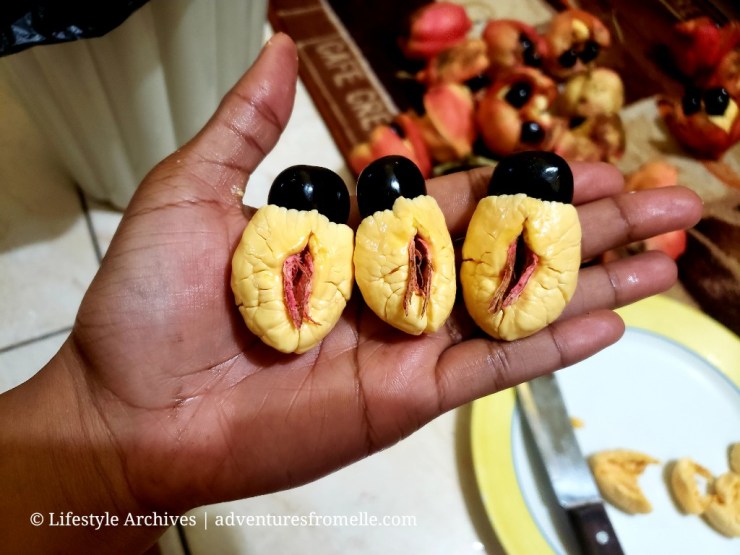
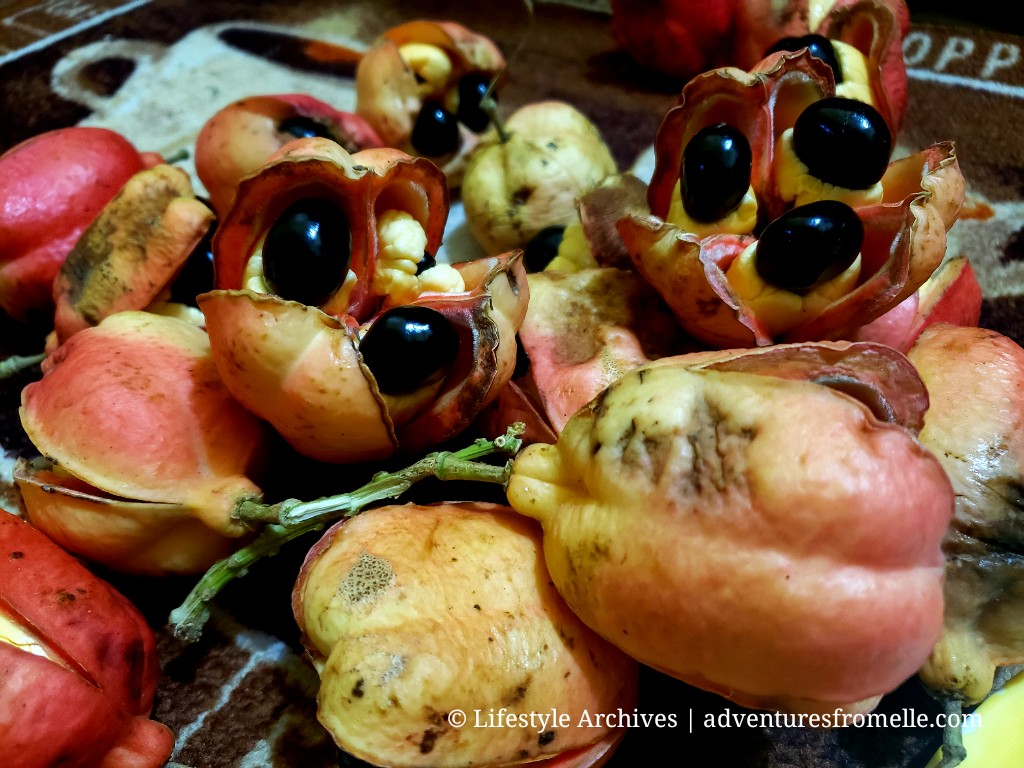
Ackee, a small misunderstood red pear-shaped fruit which splits when ripe to reveal 3 yellow arils with black shiny seeds.
The unripened fruit, its seeds and arils contain the hypoglycin A and B toxins. These two molecules are converted in the body to a potent poison which depletes blood glucose levels to the point of hypoglycemia, causing a condition called known in medical literature as “Jamaican vomiting sickness” and even coma and death. However, I’ve scarcely heard of anyone coming down with these symptoms or even dying from ackee poisoning. Why? Every Jamaican knows never to pick the unripened fruit and how to safely prepare the ripe ones.
Funny enough, we call ackee a fruit yet it requires cooking, and its nutrient composition is mostly fats. In fact, the US FDA lists ackee under fats and oils as a food group.

It’s safe to say that ackee is easily the world’s most controversial fruit!
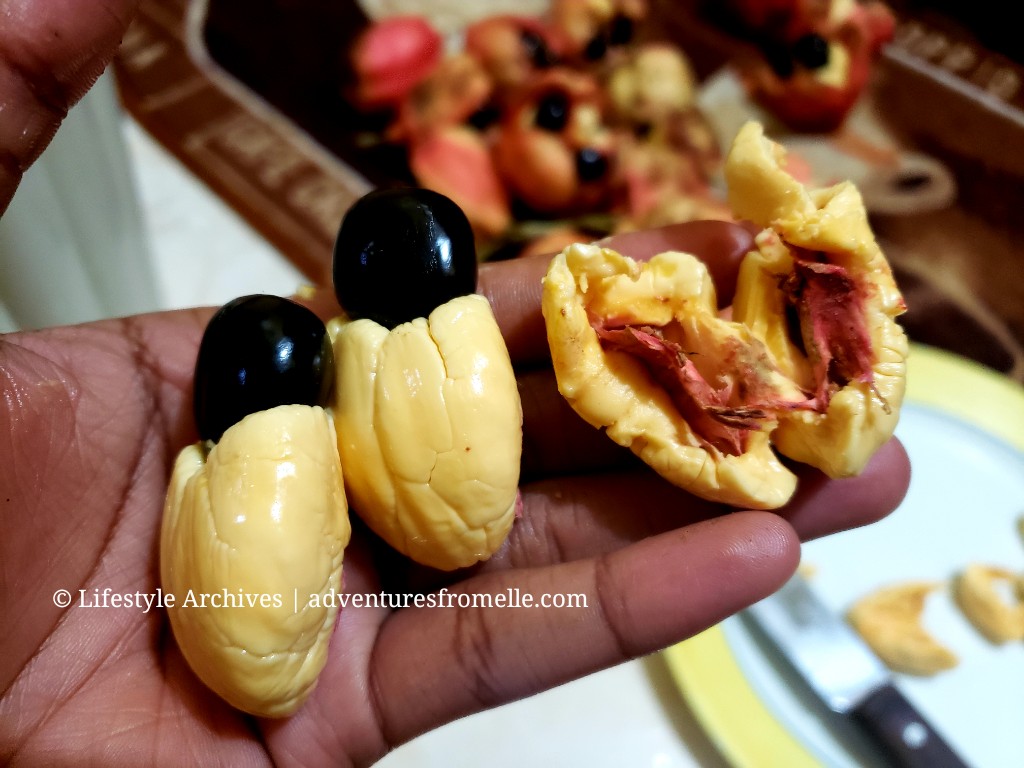
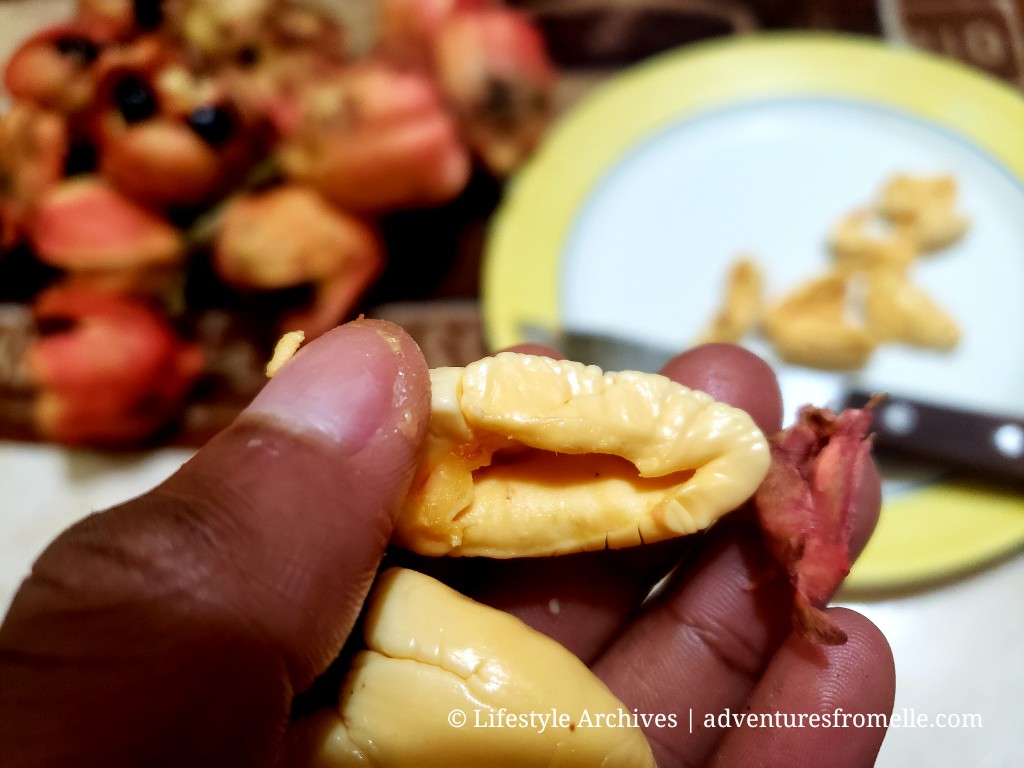
Here is my step-by-step pictorial on how to safely prepare ackee and Jamaica’s national dish. You need not fear the ackee!



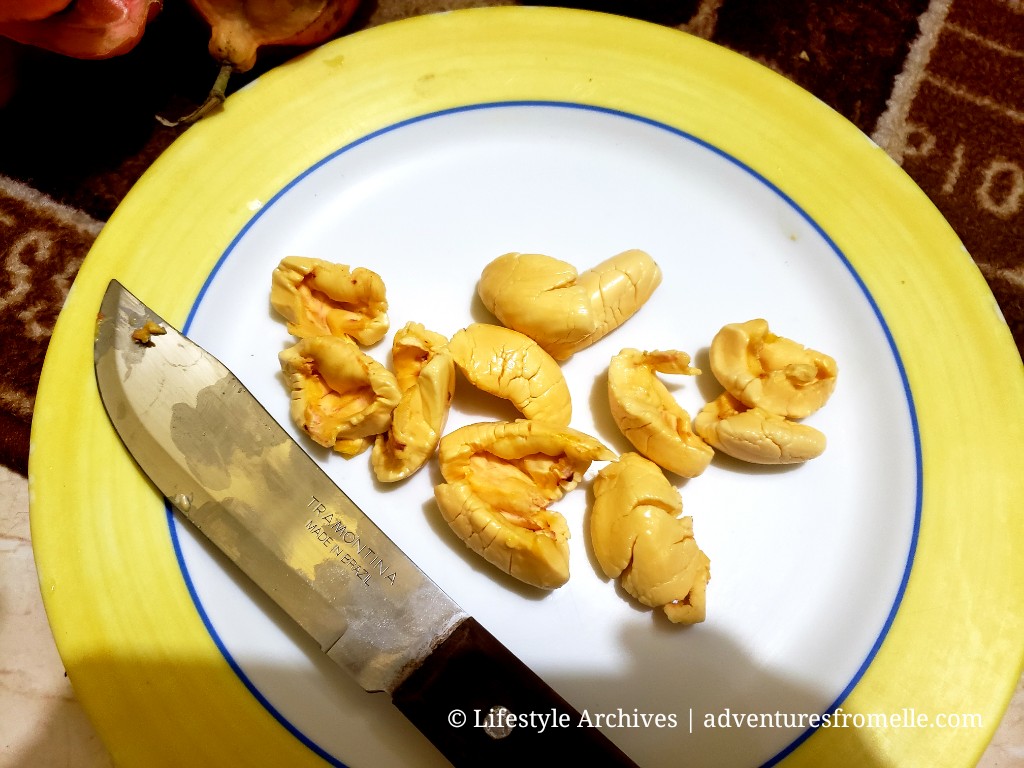
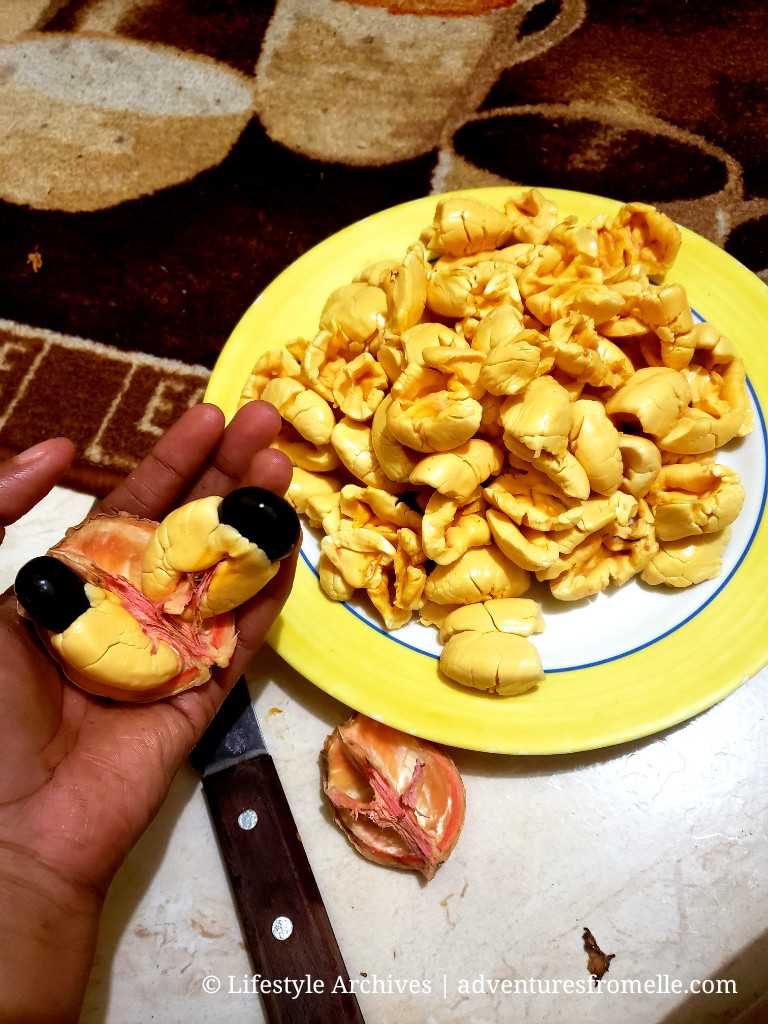

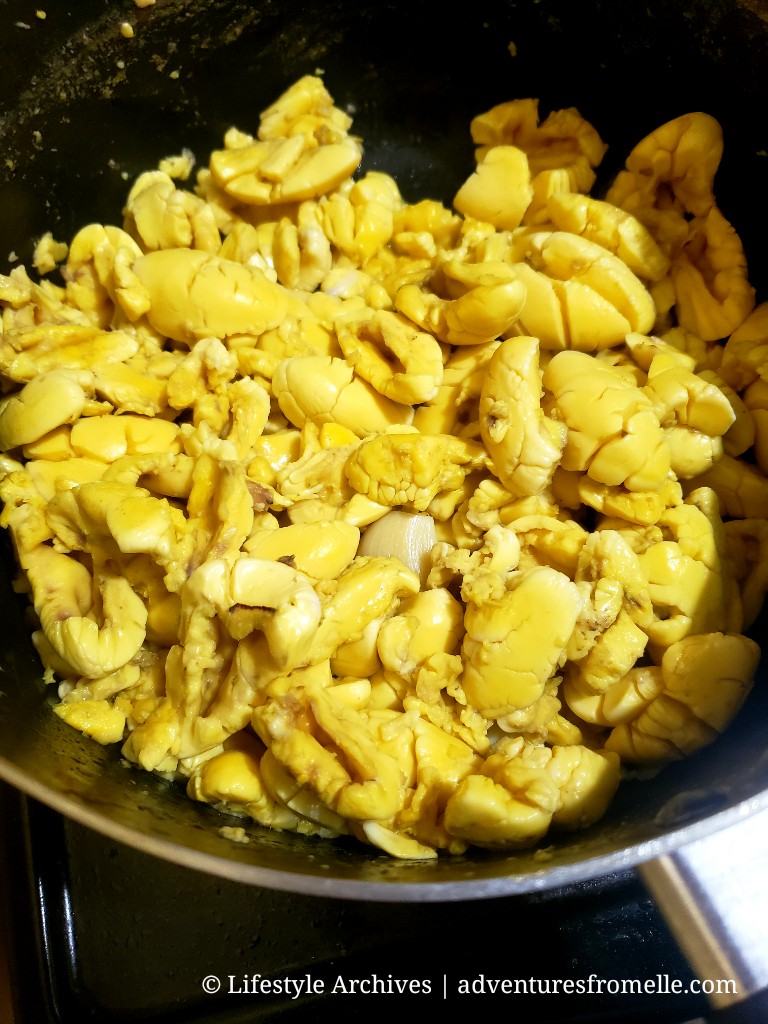
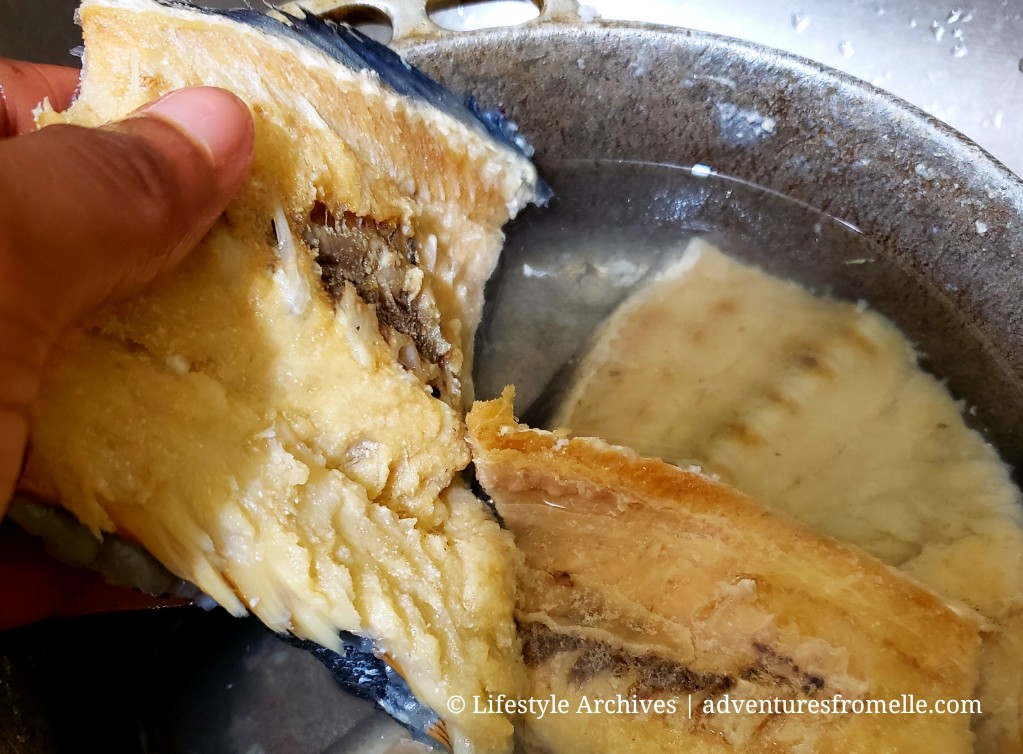
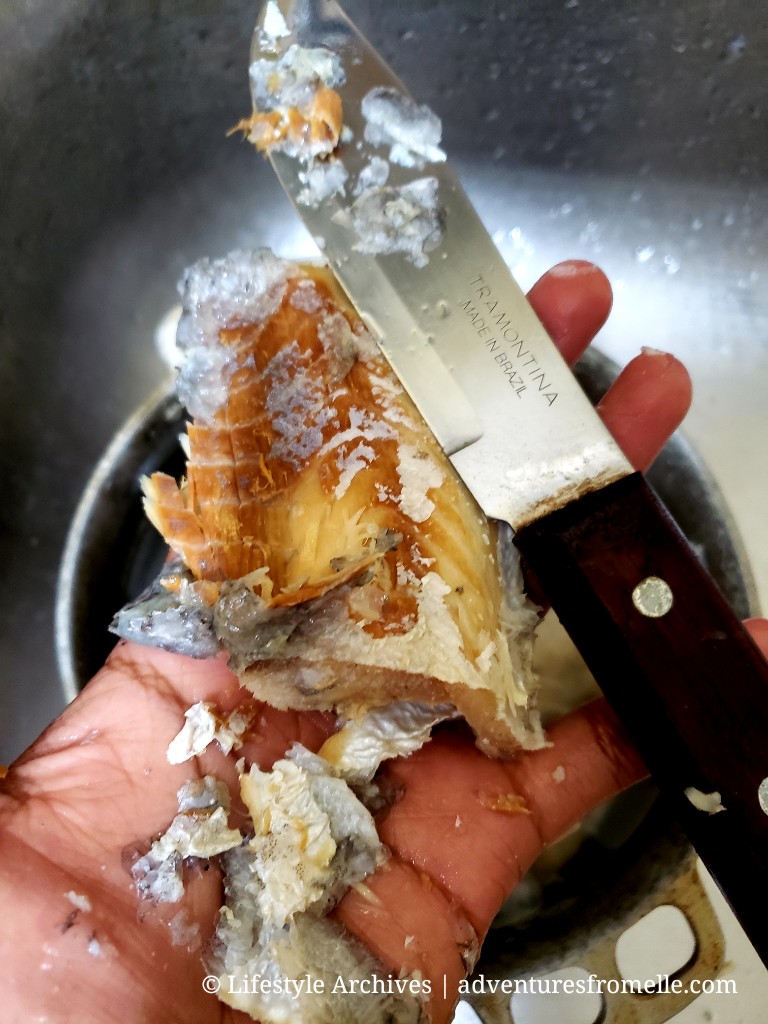
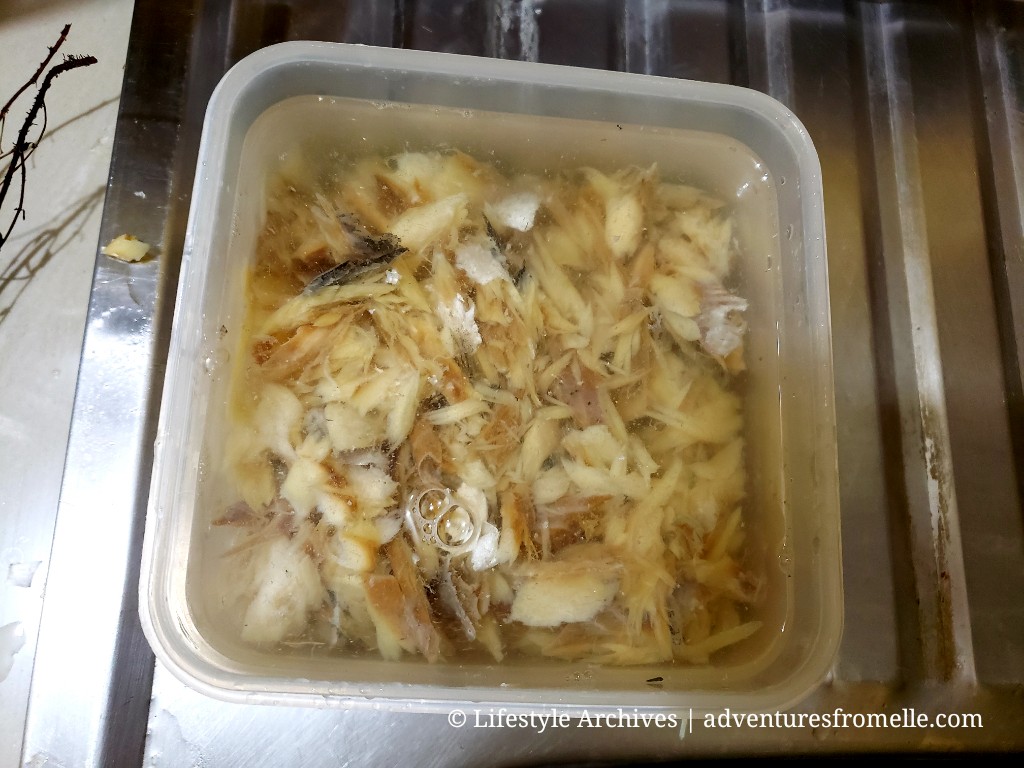
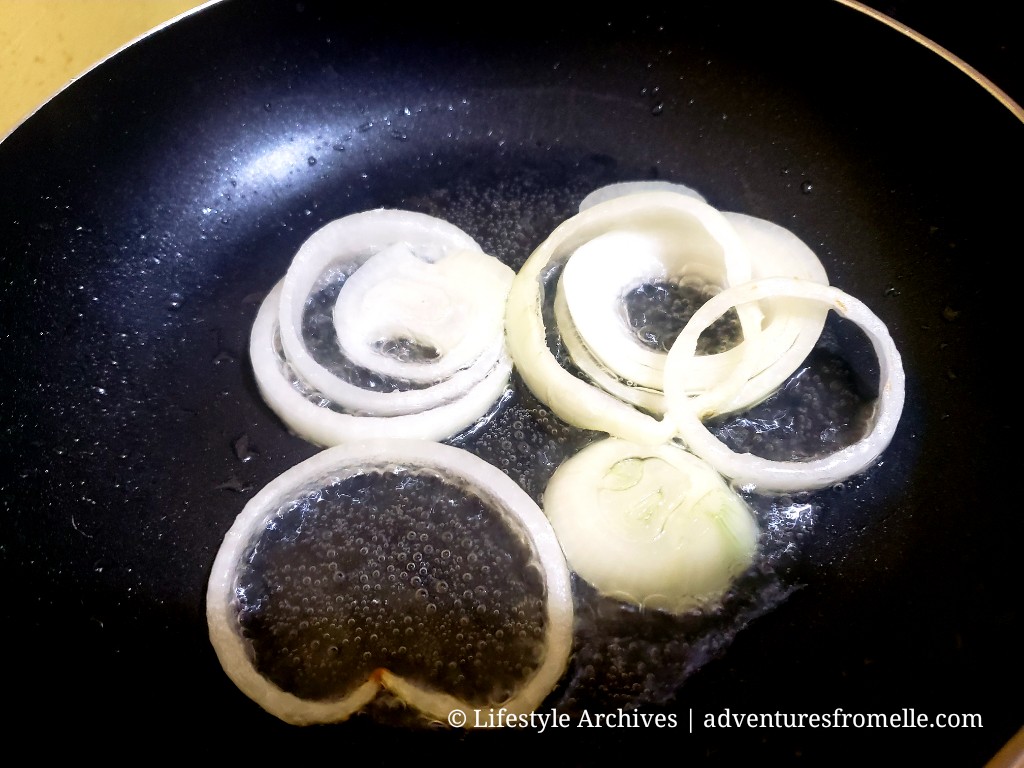
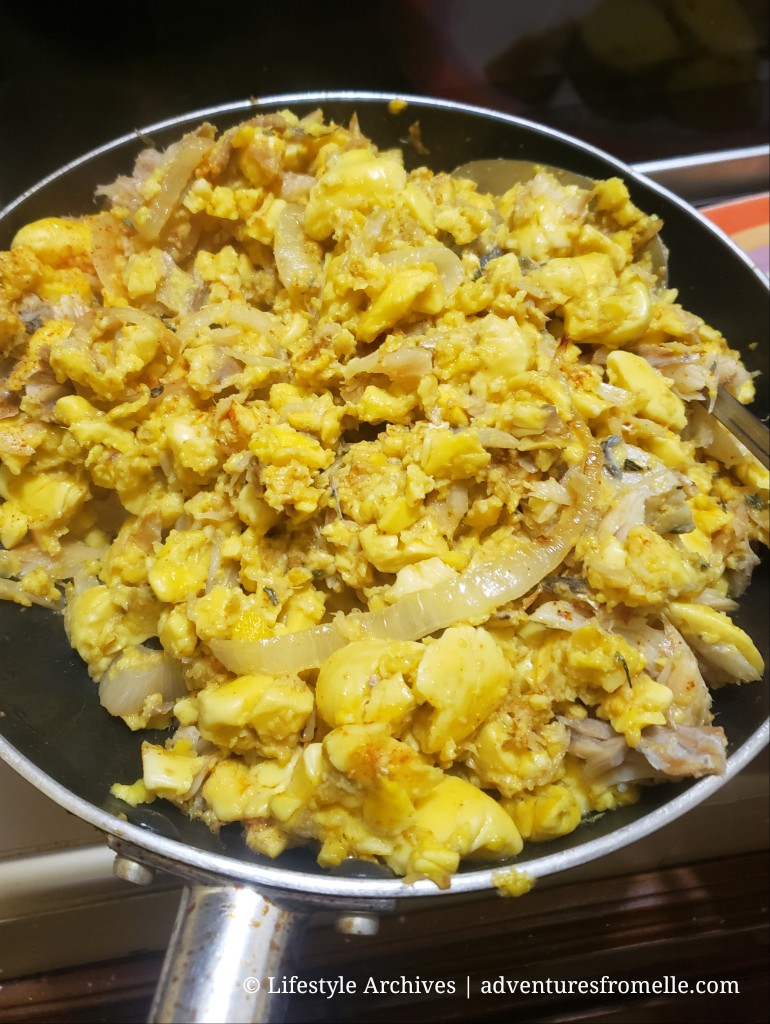
Ackee goes well with nearly everything! Disclaimer: We usually add more than onions and thyme but that’s all the seasoning I had at home, folks! It also calls for diced tomatoes, sweet pepper, scotch bonnet pepper and even black pepper, but I had to use cayenne pepper instead as a poor substitute.
Wrap Up
I hope you enjoyed this pictorial. I may do it again someday to continue sharing more of home with you. Thanks for stopping by, and stay safe! ‘Til next time, walk good! 👣
Find Elle on Facebook, Instagram & lend your support to keep me on the road.


 Adventures from Elle
I enjoyed reading this so much!
LikeLiked by 1 person
Yay! I’m glad to hear it. Thank you 🙂
LikeLiked by 1 person
I am curious about the taste and what it’s comparable to. What does ackee taste like? It looks like egg but I am hoping it doesn’t taste like egg.
LikeLiked by 1 person
Well, it looks like egg but doesn’t taste like it. It’s sort of buttery but the flavour is subtle. It takes on the flavour of whatever you cook it with e.g. saltfish etc.
LikeLiked by 1 person
I have never had ackee! 😦 doesn’t grow on my island
LikeLiked by 1 person
Oh no, I hope you get to try it one day. It’s a lovely fruit and very versatile 🤗
LikeLiked by 1 person
Elle, your article on preparing Ackees was really well written. Thanks for the tips. I do have one question which I can’t seem to find any comments on. “If Ackees fall off the tree when still closed but then open naturally on the ground, are they safe to be used?”
LikeLiked by 1 person
Thank you! 🙂 And yes, they are safe. It’s the chemical changes which happen as they naturally ripen that make them safe(r) to eat, so even if it happens on the ground it should still be OK.
LikeLike
Very interesting and inspiring article. Great looking food!
LikeLiked by 1 person
Yummy.
LikeLiked by 1 person
Wow didn’t know that ackee had that much prep to it.
Fun fact I’ve tried ackee once and didn’t like it. Never tried it again. Can’t even blame it being from a can because it came from Jamaica. And what’s weird is that I like a lot of Jamaican dishes, including salt fish. Just not ackee
LikeLiked by 1 person
Oh no, well there are many Jamaicans who dislike ackee too so I won’t hold it against you. 🙂 And yup, it’s a fruit that needs a lot of attention. Thanks for stopping by!
LikeLike
Thanks for this tutorial. I know how to cook it, but not how to remove the red strings. Enjoyed this, thanks!
LikeLiked by 1 person
You’re most welcome! 🙂
LikeLike
Ackee and saltfish is one of my prefered dishes, when I feel “homesick”. But we can’t get fresh ackee here, so I use canned fruits. With this pictorial I feel well equiped to make ackee and saltfish from scratch, if we are next time in Jamaica. And if I should have any questions, I will call you 😁 Thank you so much!
LikeLiked by 1 person
I love salt fish but have never tired it this way. Love this unique way of creating a classic amazing dish!
LikeLiked by 1 person
Thank you!
LikeLike