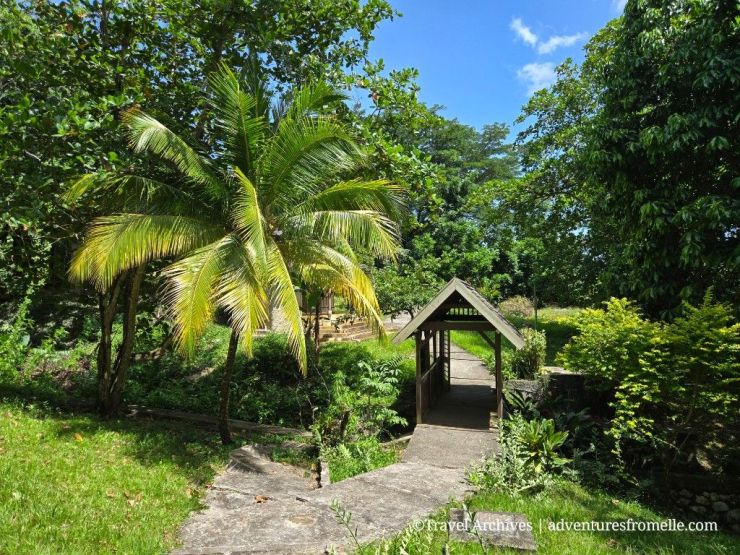
Walking through Stony Gut is like walking on Jamaican holy ground. Stony Gut, a tiny village located in St. Thomas, was the birthplace of the Rt. Excellent Paul Bogle, a Jamaican National Hero who led an uprising in 1865 that revolutionized the quality of life of Black people in Jamaica. There isn’t a lot to see there, but the site holds sentimental value. Here’s the history of Stony Gut and what to expect at this National Heritage Site.

Before we get started, subscribe for new adventures from Elle.
Also, check out my book and GetYourGuide storefront for more travel ideas.

History of Stony Gut

Stony Gut, a small village located in the parish of St. Thomas, is the birthplace of one of Jamaica’s seven National Heroes, the Right Excellent Paul Bogle. Bogle was born in Stony Gut on the cusp of Emancipation circa 1820. He became a friend of the Right Excellent George William Gordon, a wealthy bi-racial landowner, Assembly representative and fellow Baptist. Gordon opened churches across St. Thomas in Sunning Hill and Bath, and was instrumental in Bogle being appointed deacon of the Stony Gut Baptist Church in 1864. Both men noted that despite the emancipation of enslaved Blacks in 1838, very little had changed about their deplorable social and economic condition. Originally, Stony Gut was a sugar estate owned by John M. Collard, Esq.

In 1865, Paul Bogle, his brother Moses and the people of Stony Gut walked 45 miles to Spanish Town, then-capital of Jamaica, to advocate for themselves to the governor but were denied a meeting. This aggravated the Stony Gut residents and eventually led to a series of riots known as the Morant Bay Rebellion. For this, Paul Bogle and hundreds of his followers from Stony Gut were arrested and hanged without trial under martial law. Sadly, the services of the Moore Town Maroons were enlisted in suppressing the rebellion and they assisted in the capture and murder of fellow Blacks, as well as the destruction of their crops, livestock and property.
George William Gordon was also arrested and executed on suspicion of conspiracy in planning the rebellion. This gruesome rebellion caught the attention of England, and brought about constitutional changes in colonial government. This also uplifted the social and economic conditions of Blacks, not only in St. Thomas but islandwide. For this reason, both Bogle and Gordon were appointed with Jamaica’s highest honour in 1969. How fitting then, to visit the community of Stony Gut on Independence Day 2025. Stony Gut was declared a National Monument on November 5, 1992.
Where is Stony Gut Located?

Stony Gut is inconspicuously located in central St. Thomas next to the community of Spring Garden. Once we passed the sign and left turn pictured above, paved road quickly became a dirt track. That being said, it’s possible to drive all the way to the heritage site and ample parking was available. Perhaps because we visited on a Public Holiday, the small museum was closed but the gate was open and inviting. I’m not sure if there’s usually a charge as no staff was at the property, but I don’t imagine it would cost more than a nominal fee.
Exploring Stony Gut

There isn’t much to see or do in sleepy Stony Gut today, but it’s clear the grounds are still lovingly tended as the hedges and lawns were well manicured. Paul Bogle’s chapel was long destroyed by the militia in 1865, but its foundation is still visible. This foundation was unearthed by the Jamaica National Heritage Trust in 2002. There’s also a small cabin, a pavilion and the tomb of his grandson. Paul Bogle’s remains are buried at the National Heroes Park in Kingston, Jamaica but a few signboards tell the story of his life and village. I would’ve enjoyed having a tour guide to bring Stony Gut to life, but instead I wandered and enjoyed the tranquility of the grounds. I’m sure its residents would’ve longed for that tranquility in the 1800s. I’m grateful for their sacrifice.
Wrap Up
Whenever I visit these historical communities, I can’t help but imagine how different life would’ve been for people of African descent in that era. Like everywhere else, life in Jamaica can be fraught with hardship but it’s important to pause and acknowledge the work of our forefathers in shaping modern day Jamaica. Some may argue that we’re not fully free but that’s a talk for another day. Have you ever heard of Stony Gut and its history? Sound off in the comments section below!
If you enjoyed this post, you may also like:
- 5 Jamaican Museums Worth Visiting
- Lyssons Beach in St. Thomas
- Cunha Cunha Pass in St. Thomas
- Nanny Falls & Moore Town in Portland
Before you go, don’t forget to subscribe. ‘Til next time.
Find Elle on Facebook, Instagram & lend your support to keep me on the road.

 Adventures from Elle
What a terribly sad (but also, sadly, unsurprising) piece of history. But like you said, it can’t and shouldn’t be ignored.
LikeLiked by 1 person
Agreed, it’s definitely sad. Jamaican history between the 1500s-1800s was quite depressing, but knowing our history is so important despite the pain. Thanks for reading!
LikeLiked by 1 person
Wonderful photos of such a significant place!
LikeLiked by 1 person
Thank you! And thanks for reading 🙂
LikeLiked by 1 person
Always great when you share a bit of Jamaican history!
LikeLiked by 1 person
My pleasure! Thanks for reading
LikeLike
Can’t say I’ve ever heard of Stony Gut but I have heard some mentions of Paul Bogle and the Morant Bay rebellion through reggae music, (Steel Pulse, Bob Marley) We should always remember not to squander the opportunities given to us by our ancestors who fought and died so we could live a better life.
LikeLiked by 1 person
So true, and this is why I take civic duties such as voting so seriously. Not too long ago, many of us wouldn’t have had the privilege of contributing to democracy. Thanks for reading!
LikeLiked by 1 person
Indeed, life in Jamaica would be a lot different today if the rebellion didn’t happen! Although there’s not much to see of the past in Stony Gut, it’s the atmosphere and imagining how it was back then during the rebellion– just standing on the soil can really leave you astounded! Thanks for sharing, Elle, and I hope you’re having a fun birthday trip so far!
LikeLiked by 1 person
It sure would! I’m super grateful for the people who paved the way for us, and standing in Stony Gut felt grounding and spiritual. Thanks for reading! The trip has been awesome so far 🥰
LikeLiked by 1 person
Stony Gut most certainly serves as a symbol of resistance and a testament to the courage of the Jamaican people. I love how the village offers a tranquil experience, allowing visitors to connect with Jamaica’s vibrant culture and heritage. Thanks for sharing, and have a good day 🙂 Aiva xx
LikeLiked by 1 person
It sure does! I’m super grateful for the people who paved the way for us. Thanks for reading 🙂 have a great weekend!
LikeLiked by 1 person
Born and raised in St Thomas but never been to Stony Gut…that I can remember 🫣. Pretty familiar with the history though. Thanks for telling it!
LikeLiked by 1 person
It’s a wee bit underwhelming in person but well worth the journey for its significance. 🙂 thanks for reading!
LikeLike
This feels like history class! Thank you Elle. Short but insightful write up.
LikeLiked by 1 person
What an awesome compliment, thank you! And thanks for reading 🤩
LikeLiked by 1 person