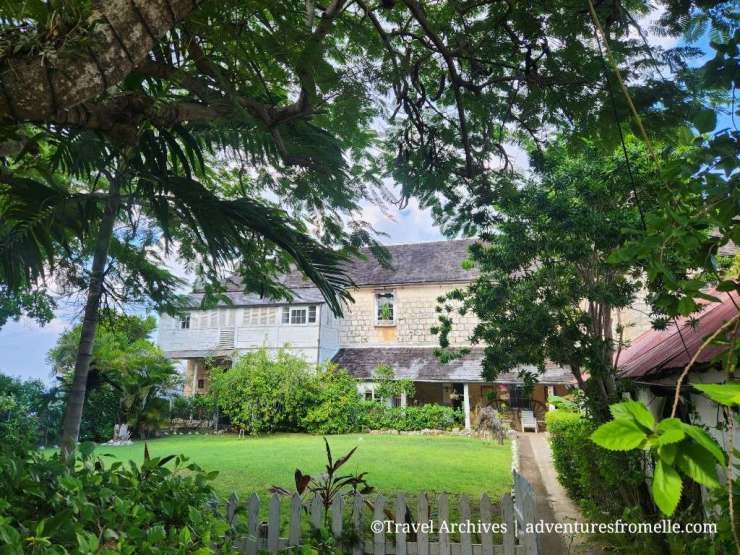
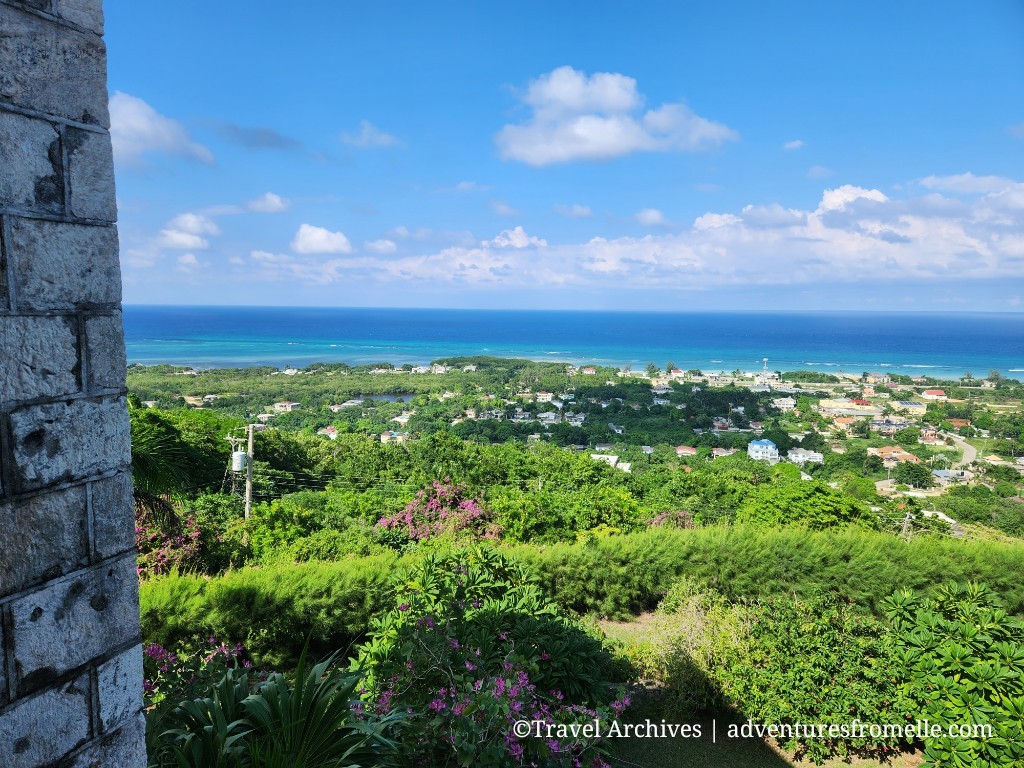
Perched on a hill high above Jamaica’s northwestern coast and overlooking the Caribbean Sea is the Greenwood Great House. Built by the wealthy Barrett family of UK’s Wimpole Street between 1780 and 1800, Greenwood was originally intended as a guest house. The Barretts amassed their wealth from the heinous trade of sugar and slaves, and traces of that brutality are still visible within Greenwood’s walls today. The Great House also offers a glimpse into the opulent lifestyle of the island’s elite during the 18th and 19th centuries, and houses an extensive collection of antiques, as well as the island’s largest collection of rare musical instruments and plantation library books. Read on for a journey through time as we explore the mansion and discover the stories hidden within its well-preserved walls. If you’re visiting Montego Bay, Jamaica, you can book a tour here.
Before we get started, subscribe for new articles every Friday!
Also, check out my books and GetYourGuide storefront for more travel ideas.

Where is Greenwood Great House + Cost to Visit (2026 Update)
Greenwood Great House is located at 435 Belgrade Avenue in Greenwood, St. James. In fact, they are situated on the border of the St. James and Trelawny parishes, and lie about 12km from Falmouth and 23km from Montego Bay’s Hip Strip. Look out for the turn off from the North Coast (A1) Highway into the community of Greenwood, and then you’ll have another 1.6km of bumpy uphill secondary road to get to the house. GPS and Google Maps will lead you there quite accurately, but I still appreciated the road signs next to every turn which confirmed that I was on track.
Tickets cost US$30 per person, while locals can pay the local equivalent of around JM$3,000. Pay at the house or reserve ahead like I did. They are open seven days a week from 9am to 4pm, with the last tour starting at 3pm. Walk-ins are welcome. Each guided tour lasts 45 minutes, after which you can have a beer at Level Crossing, their quaint on-site pub, or explore the grounds.
History of the Greenwood Great House
In 1655 Hersey Barrett, an officer in the expedition commanded by Admiral Penn and General Venables, was sent by Cromwell’s parliament to steal Hispaniola (present-day Haiti and Dominican Republic) from the Spanish. However, Hispaniola proved too fortified and difficult to capture. Not wanting to return to the UK empty-handed, they captured the easier prize of Jamaica instead. As reward, Hersey Barrett was granted lands in Jamaica and settled on the island. By the mid-18th century, the Barretts had become immensely wealthy, owning over 84,000 acres of land and more than 2,000 enslaved persons. Unlike most planter families in Jamaica at the time, the Barretts were relatively kind to their slaves. As a result, the Greenwood Great House was spared during the 1831 Christmas slave rebellion where more than 200 great houses in western Jamaica were set ablaze. This was one of the largest and most successful slave rebellions in history, and led to emancipation two years later.
Greenwood was one of several great houses owned by the Barrett family. They also owned Barrett Hall deeper inland and the Cinnamon Hill Great House. Originally the family home of English poet Elizabeth Barrett Browning’s great grand-parents, Cinnamon Hill was bought as a holiday home by Johnny Cash in the 1970s, the late American country and western singer.
Touring the Great House
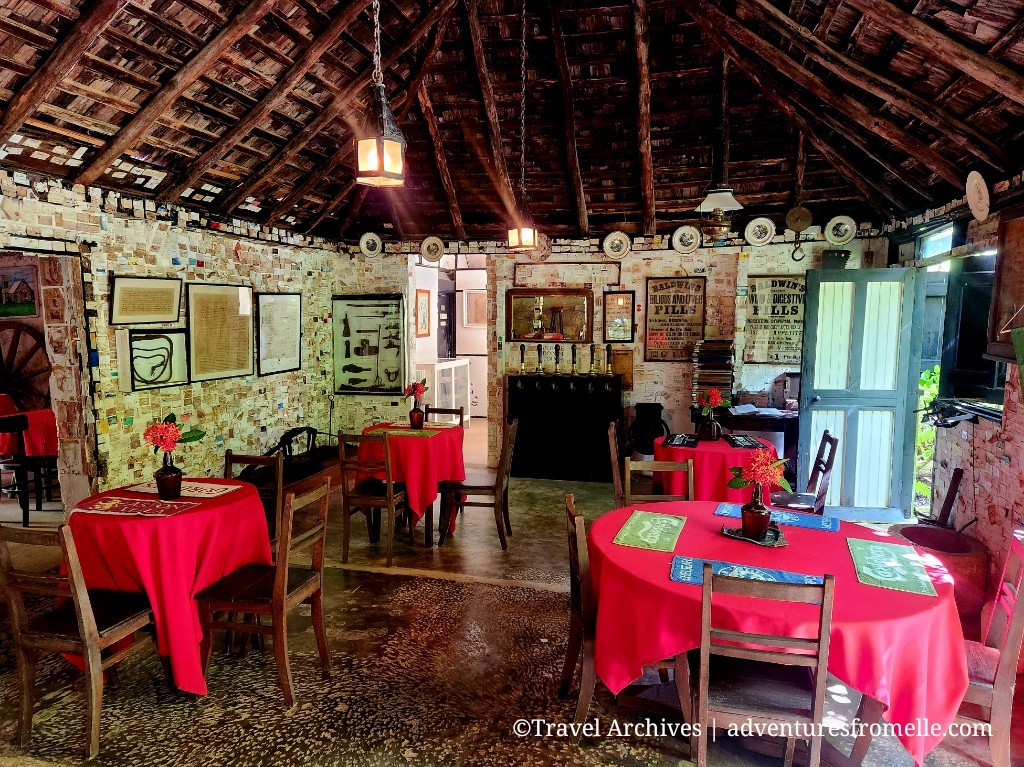
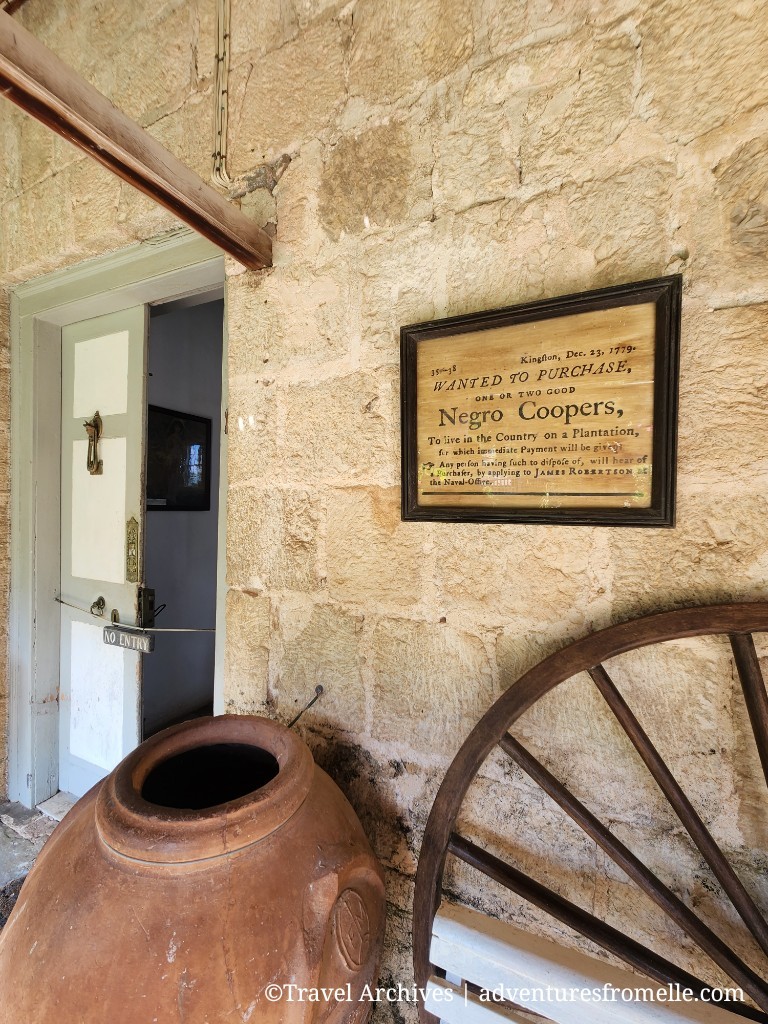
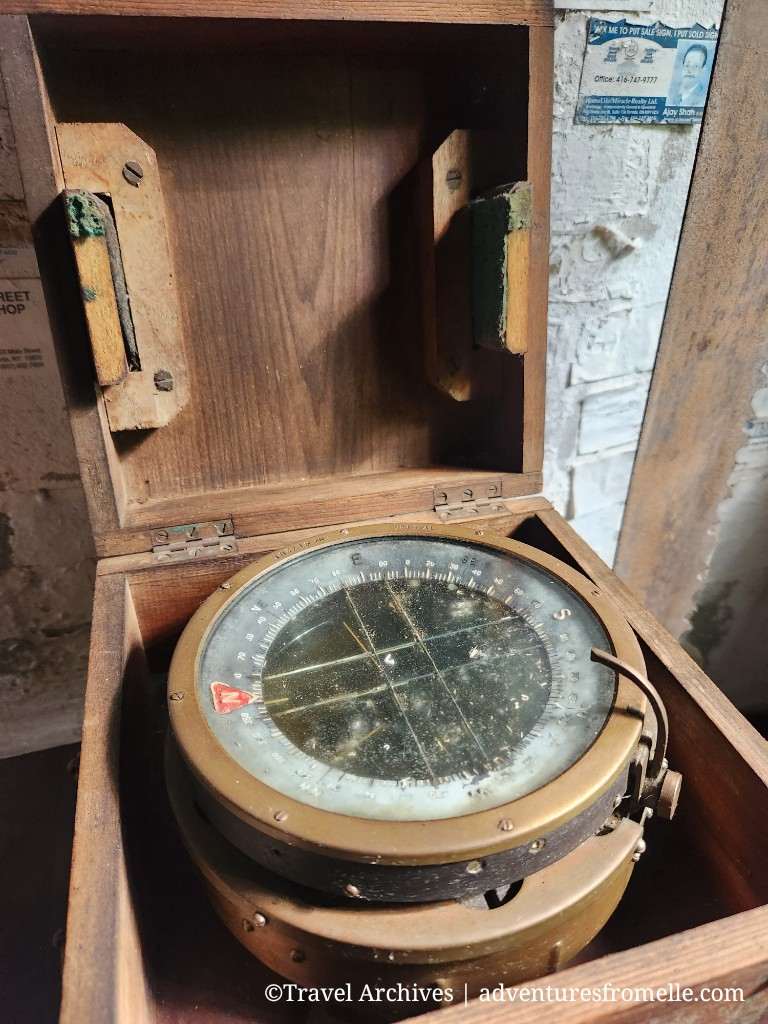
Ring the bell at the gate, after which a tour guide will come to let you inside. The tour begins at the Level Crossing pub, which is the former kitchen of the estate. Back in those days, kitchens were built away from the main house as a safety measure to prevent fires. The kitchen was connected to the back porch of the main house via a covered walkway known as the “whistling walk” and was so-called because the enslaved cooks and servers were required to whistle as they carried food from the kitchen to the house to prevent them from stealing bites of food. Today, the former kitchen houses earthenware jars, cast iron pots, old advertisements, brass musical instruments, china plates, a compass, shackles, chains and whips which were classic to colonial life in Jamaica.
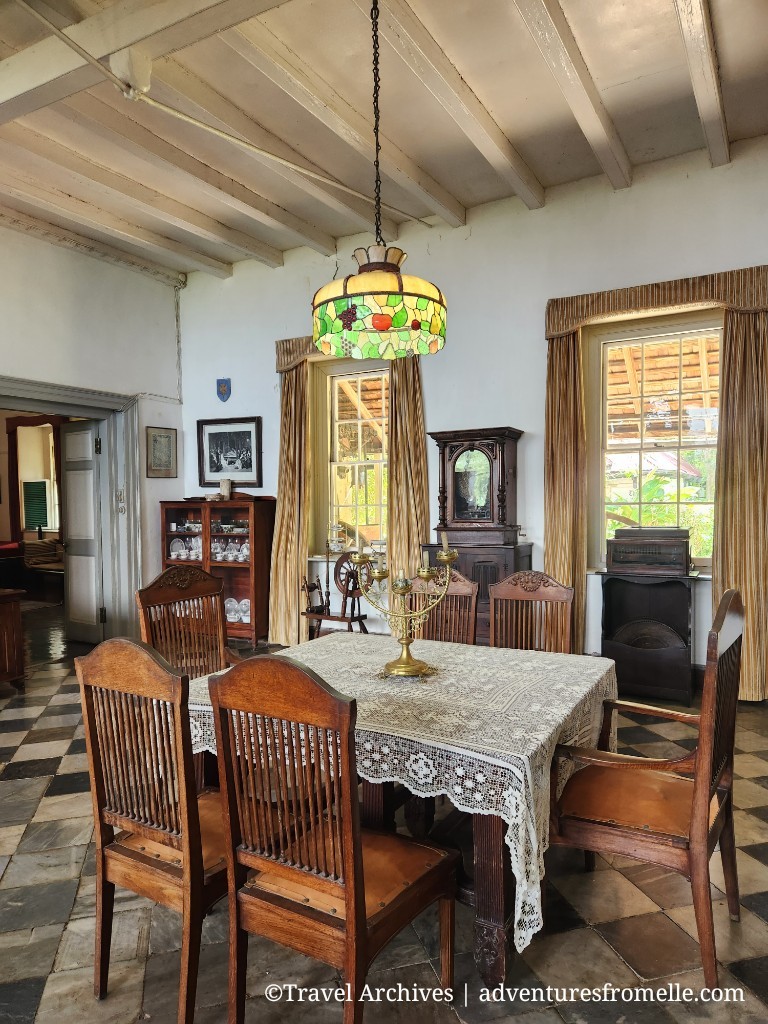
Next, our tour guide led us to the main house. The Greenwood Great House is constructed of stone and wood, with a cedar shingled roof and mahogany doors. The house is extensively furnished with much of the original furniture, busts, family portraits, china, crystals and memorabilia from the Barrett family. Greenwood has one of the finest collection of antique furniture on the island, and possibly the entire Caribbean. The former ballroom and dining hall doubles as a family library with over 300 books dating back as far as 1697. Among these books are a signed first edition of Charles Dickens’ “Domby and Son”, William Cobbett’s “Rural Rides” and Thomas Carlisle’s “French Revolution”.
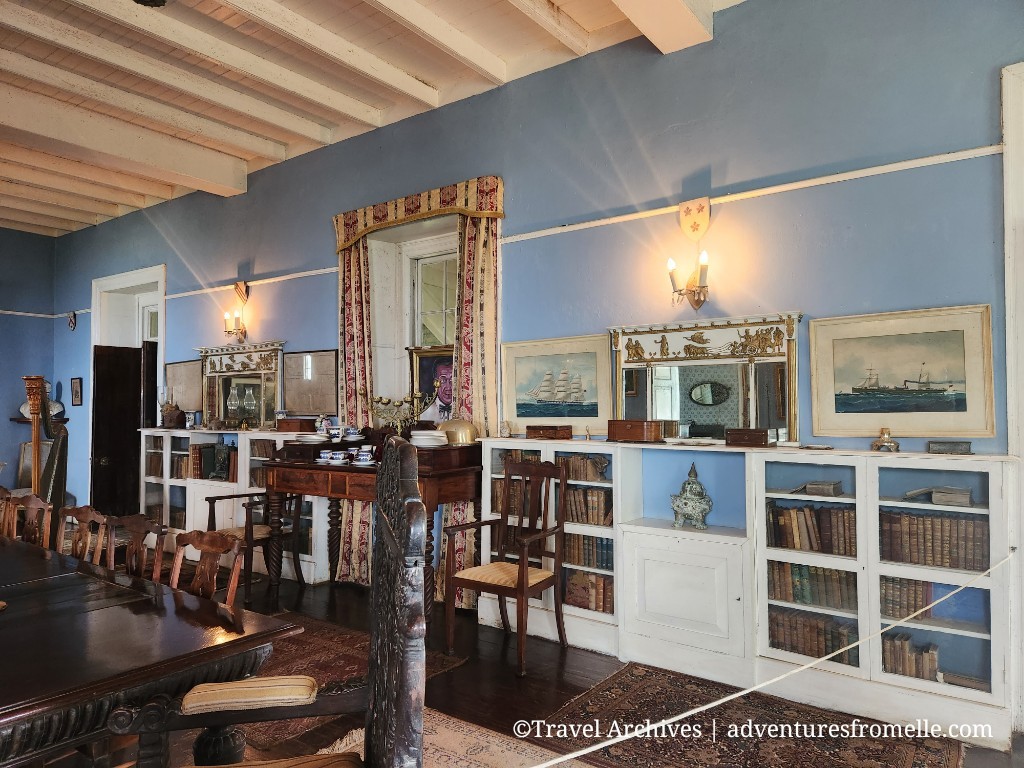
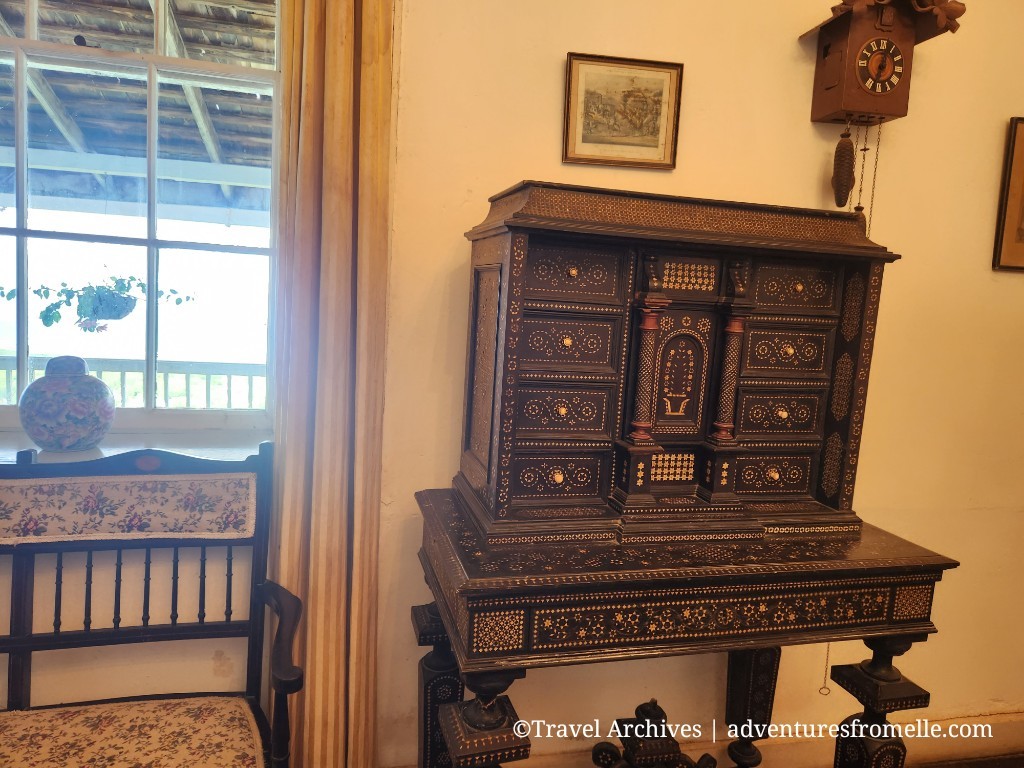
Greenwood’s most prized musical instruments include a harp made in London by Sebastian Erard in 1862 and a piano that once belonged to King Edward VII. The piano at Greenwood is inlaid with thousands of small pieces of wood glued together to form an intricate mosaic of patterns. There’s also a polyphon, a vintage upright music box that plays metal discs. I saw unique mahogany chairs emblazoned with the family’s coat of arms, fine solid wood tables and desks, some with secret compartments, as well as several paintings and photographs, two of which are said to contain apparitions. Does this mean that the Greenwood Great House should get a spot on this list of haunted places in Jamaica? You be the judge.
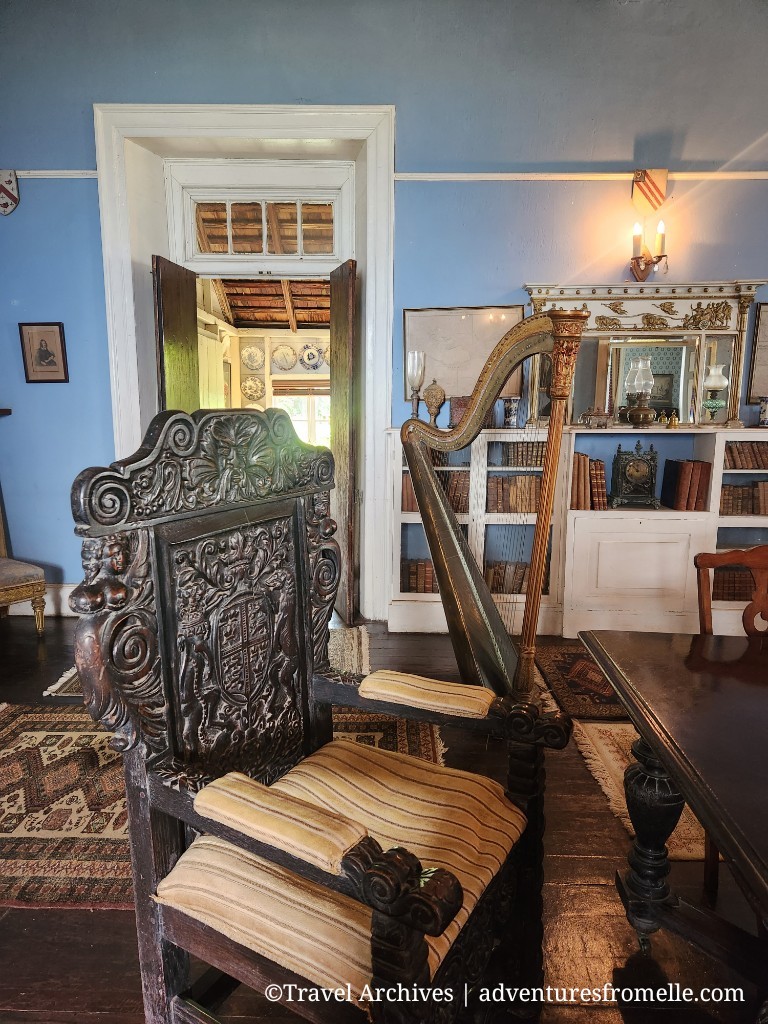
A one-of-a-kind harp and mahogany chair 
A piano once owned by King Edward VII 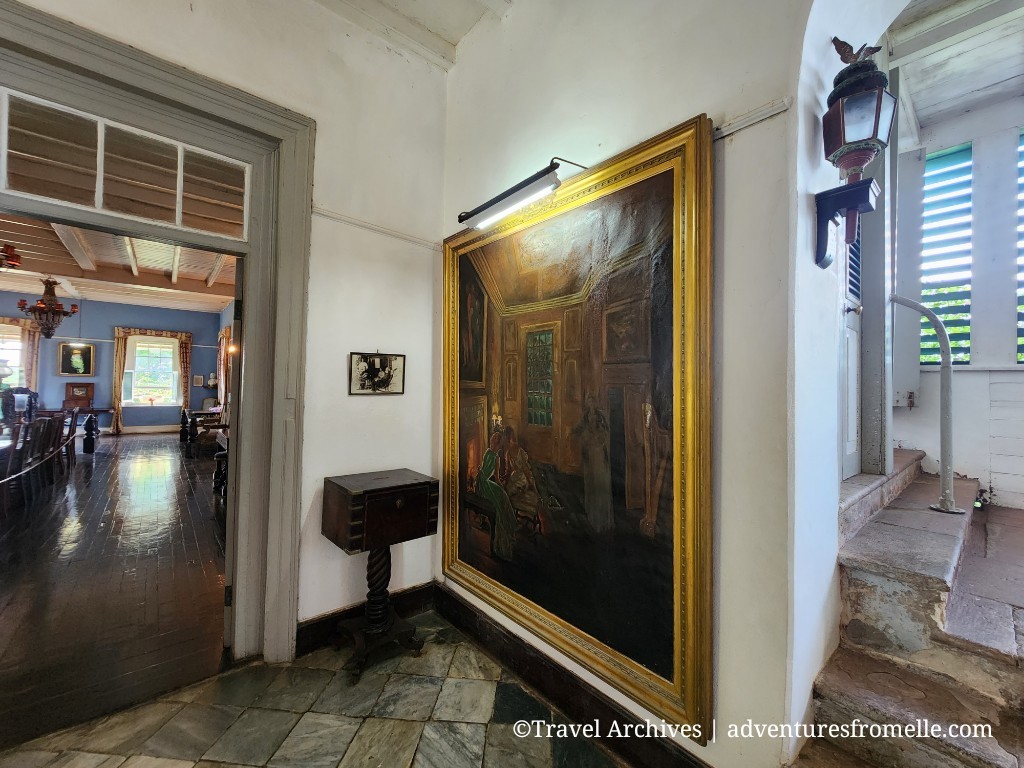
A photo & painting with the ghosts of Greenwood
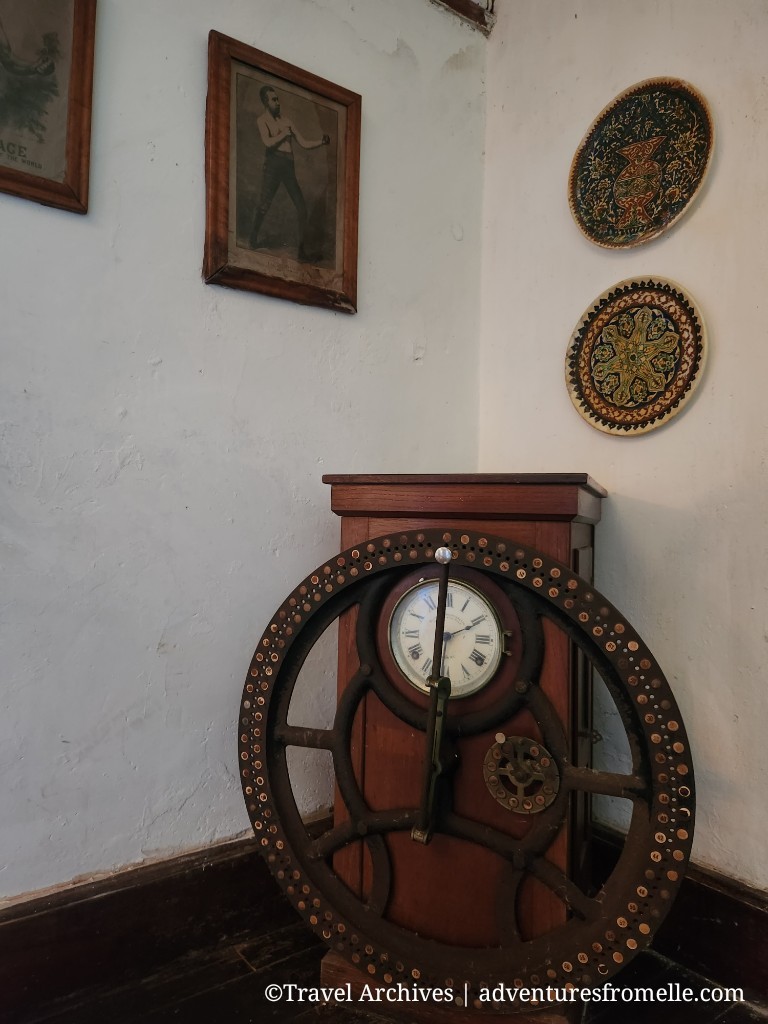

Other interesting things I saw throughout the house were a grandfather clock that tells the date and time and a time punch clock to ensure that workers were on-time. The bedrooms were located on the upper floor, the poshest of which is known as the Pink Room and contained two beds and a cradle. However, what stole the show for me on the top floor was the balcony which commands an unbroken 180° view of Montego Bay. While standing with back against the wall, one can appreciate the curvature of the Earth’s horizon. From the upper floor, one also gets a great view of three antique horse drawn carriages, including a hearse and mail wagon, parked in a covered pavilion to the front-left area of the house.

I’m surprised that this tour isn’t more popular as it was less pretentious, without the fluff and had more interesting things to see than I remember of my Rose Hall Great House tour some years ago. I suppose that’s because it isn’t as heavily marketed, and perhaps that’s intentional since the grounds are still occupied by the Bettons, its present-day owners. I can’t believe my partner and I were the only two tourists there on a Saturday! Nonetheless, I’m very grateful that they’ve allowed the public to tour the house as it’s certainly a splendid national treasure.
Wrap Up
Greenwood Great House has stood the test of time from its early days as a sugar plantation to its transformation into a grand residence and museum tour today. The mansion’s elegant architecture, historical significance, and meticulous preservation make it a captivating destination for history enthusiasts and curious travelers alike. Have you visited the Greenwood Great House before, or would you like to? Let me know in the comments section below. And, if you’re interested in visiting, reserve a tour here.
If you liked this post, you may also like:
- The Rose Hall Great House in Montego Bay
- The Seville Great House in St. Ann’s Bay
- The Langley Great House near Kingston
- The Colbeck Castle in St. Catherine
- What’s left of the Stewart Castle in Falmouth
Also, please don’t forget to subscribe. It’s free! 🙂 See you next Friday.
Find Elle on Facebook, Pinterest, Instagram, YouTube and Amazon.

 Adventures from Elle
definitely looks like it’s worth checking out Ro! I prefer this kind of history experience to just a standard museum. love the work and dedication that goes into keeping these sorts of places open and to the public
LikeLiked by 1 person
I think so too! This visit certainly brought me back to 3 centuries ago and I could almost imagine what life was like. I appreciate their efforts in keeping it open to the public as well. Thanks for reading!
LikeLike
Definitely needs marketing, never heard of it but has a lot of history similar to the Rose hall Plantation.
LikeLiked by 1 person
So true, but I have a feeling its owners leave it un-marketed intentionally since they still live there. Perhaps they don’t want the crowds. Thanks for reading!
LikeLiked by 1 person
A piece of Europe (and not-so-great colonization) in Jamaica– very fascinating! If I ever get to Jamaica some day, I’ll have to visit the Greenwood Great House. Thanks for sharing, Elle!
LikeLiked by 1 person
Awesome! It’s definitely one of our best great house tours. Despite the unfortunate history, I can appreciate its beauty 🙂
LikeLiked by 1 person