If you’ve been following my blog for some time, you’ll realize that I love history. I’m very fascinated by ancient civilizations, especially the people who lived in the Americas before Columbus changed World History forever in 1492. This explains why visiting the Incan citadel of Machu Picchu was high on my bucket list. Another group of people who fascinate me just as much are the Tainos, one of Jamaica’s first people. That being said, today I’ll talk about the Tainos and five Taino sites which still exist in Jamaica today.
Before we get into the article, please subscribe for new adventures.
Also, check out my book and GetYourGuide storefront for travel ideas.

Quick Taino Facts
In his diary, Columbus wrote this of the Tainos:
“They traded with us and gave us everything they had, with good will … they took great delight in pleasing us … They are very gentle and without knowledge of what is evil; nor do they murder or steal…Your highness may believe that in all the world there can be no better people … They love their neighbours as themselves, and they have the sweetest talk in the world, and are gentle and always laughing.”
Some quick Taino facts:
- The Tainos are believed to have migrated from South America to the Caribbean around 1200 AD. They inhabited Jamaica, Cuba, Hispaniola (now Dominican Republic and Haiti), Puerto Rico, the Bahamas, and the northern islands of the Lesser Antilles.
- They were skilled seafarers and farmers, cultivating tobacco, cotton, calabashes (gourds), pineapples, cassava, sweet potato, maize and yams.
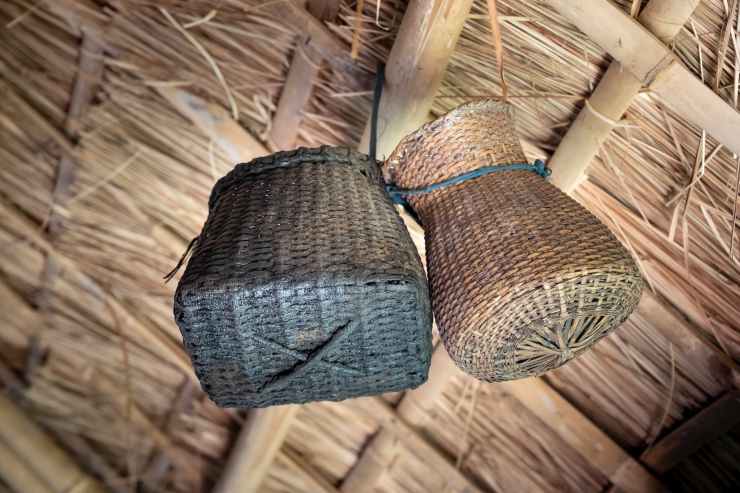
- They slept in hammocks, lived in bohios (circular thatched-roof huts) and constructed villages along Jamaica’s rivers and coastlines. At peak civilization in the 15th century, there were about 60,000 Tainos in Jamaica living in over 200 villages.
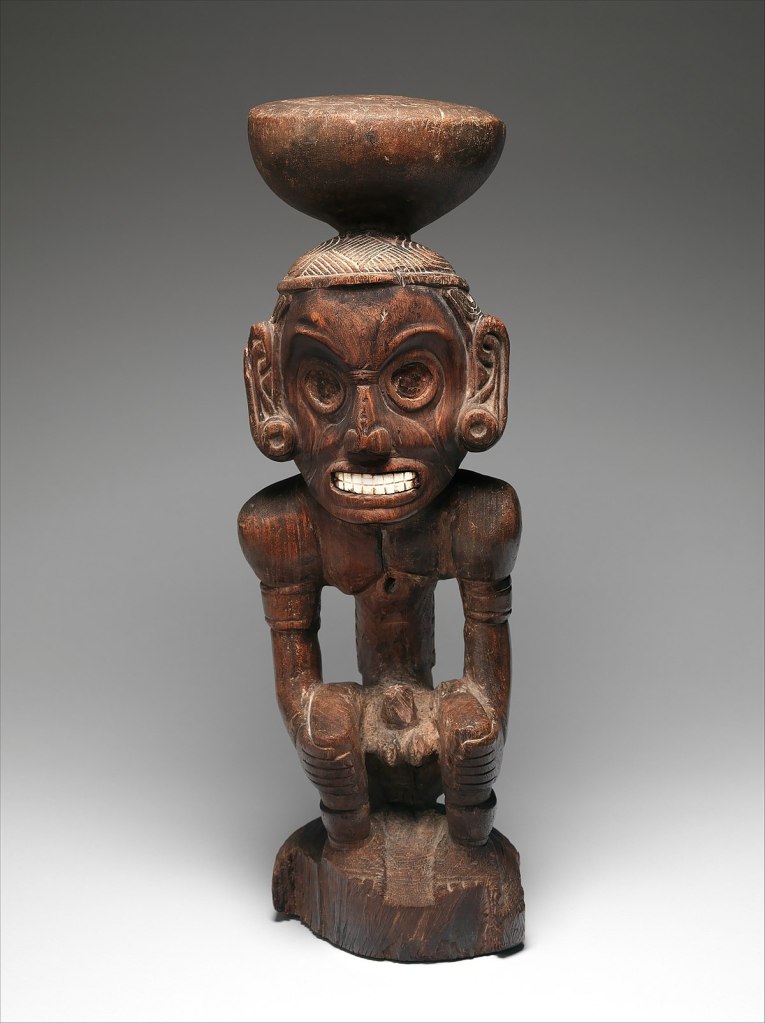
- They had a rich spiritual life deeply intertwined with nature, and made statues known as zemis to represent their gods. Their spiritual leaders would smoke tobacco to communicate with their gods, and they also believed in Coyaba, an afterlife where there would be no hurricanes, drought or sickness.
- Many of their Arawakan words have been incorporated into English and other languages such as barbacoa (barbecue), hamaca (hammock), kanoa (canoe), tabaco (tobacco), sabana (savanna) and juracán (hurricane).

Unfortunately, the arrival of Christopher Columbus in 1494 marked the beginning of the end for Jamaica’s Taino population. The Spanish colonizers brought diseases such as influenza, chicken pox, smallpox and measles to which the Tainos had no immunity. The surviving Tainos were enslaved to produce food for the Spanish and to work in gold mines– although they were eventually dismayed as no gold existed in Jamaica in mineable quantities. They were treated harshly and made to work long hours which resulted in deaths from exhaustion. Others opted to commit suicide and infanticide to escape their suffering and arrive at Coyaba (their afterlife) while the remainder were killed in cruel games which saw hundreds of Tainos torn apart by bloodhounds, decapitated or impaled by swords as sport to entertain the Spanish settlers.
A people without knowledge of their past history, origin and culture is like a tree without roots.
– Marcus Garvey
Do Tainos Still Exist in Jamaica?
By time the British arrived in 1655, it was thought that Jamaica’s indigenous Taino population was extinct. However, a few managed to escape into Jamaica’s inhospitable mountains. They were later joined by runaway enslaved Africans who intermarried and formed joint settlements. This group of runaway Africans with variable Taino presence is now known as the Jamaican Maroons, and their population survives in four remote Maroon villages today.

Thus, while no discernible Taino group exists in Jamaica, a study published in 2017 proved that Taino maternal DNA is still present in 0.5% of Jamaica’s population. So yes, Tainos still exist in Jamaica! This led to Jamaica electing Robert Pairman as cacique (YukayekeYamayeGuani) in an elaborate ceremony in 2019, Jamaica’s first Taino chief in over 500 years! This ceremony took place inside the Asafu Yard at the Charles Town Maroon village in Portland. I really wish I could’ve attended the ceremony, but I only learnt of it after the fact. At the momentous ceremony, Pairman was handed a miniature duho (stool) from the Institute of Jamaica, a mayana (ceremonial axe) from a Puerto Rican Taino elder and several indigenous chiefs assisted in placing a feather headdress (cachucha) on his head.
Fun Fact: Jamaica got its name from a Taino word for the island (Xaymaca or Yamaye), which means Land of Wood & Water.
Five Taino Sites in Jamaica
By this point, I’m sure you’re itching to see how can you explore what’s left of the Tainos today. Here are five Taino sites in Jamaica. Honorary mention goes to the Rio Nuevo Taino Site in St. Mary. The south portion of this site was completely destroyed a few years ago to make way for a coconut field (the land is privately owned) while the north portion is somewhat intact except for a road which cuts through it. A few others exist today, but little information is available about them online.
1. Mountain River Cave

Mountain River Cave & Cudjoe Falls are located in Cudjoe Hill, near Guanaboa Vale in St. Catherine and contain Taino petroglyphs and pictographs which are said to be between 500 and 1300 years old. On their visits, the Tainos drew many pictographs (paintings) from a mixture of guano and ash. There are at least 148 identifiable pictographs in the cave and they represent aspects of the Tainos’ quotidian life. These pictographs are now in varying stages of decay but some are still quite visible. The cave was declared a national monument in April 2003.
Read more: Mountain River Cave & Cudjoe Falls
2. White Marl Taino Midden & Museum

My mother took me here as a child, and while my memories of the museum are blurry, I’m very grateful that I got to visit. Unfortunately, the museum was closed in 2008 due to crime in the surrounding community of Central Village and efforts to reopen or relocate the museum have fallen through so far. Nonetheless, archaeologists have been able to conduct long-term research here, the most recent being carried out up to 2018 by the Department of History and Archaeology of the University of the West Indies, Mona. The White Marl Taino Midden and Museum is considered to be the most valuable Taino site in Jamaica and one of the most important in the Caribbean.
The museum is built in the shape of a Taino hut and contains relics which were dug up on the property– pottery, wood carvings, jewelry, animal bones and utensils. Other pieces of Taino artwork including the Bird Man, the Pelican and Snake carving and the Male Figure were successfully reclaimed from the British Museum by the Jamaican government for display at White Marl. Excavations of burial grounds on site have revealed many skeletons in good condition and are thought to pre-date the arrival of Columbus by several hundred years. Some trinkets from this museum were moved to the Institute of Jamaica, located in Downtown Kingston.
3. Two Sisters’ Cave
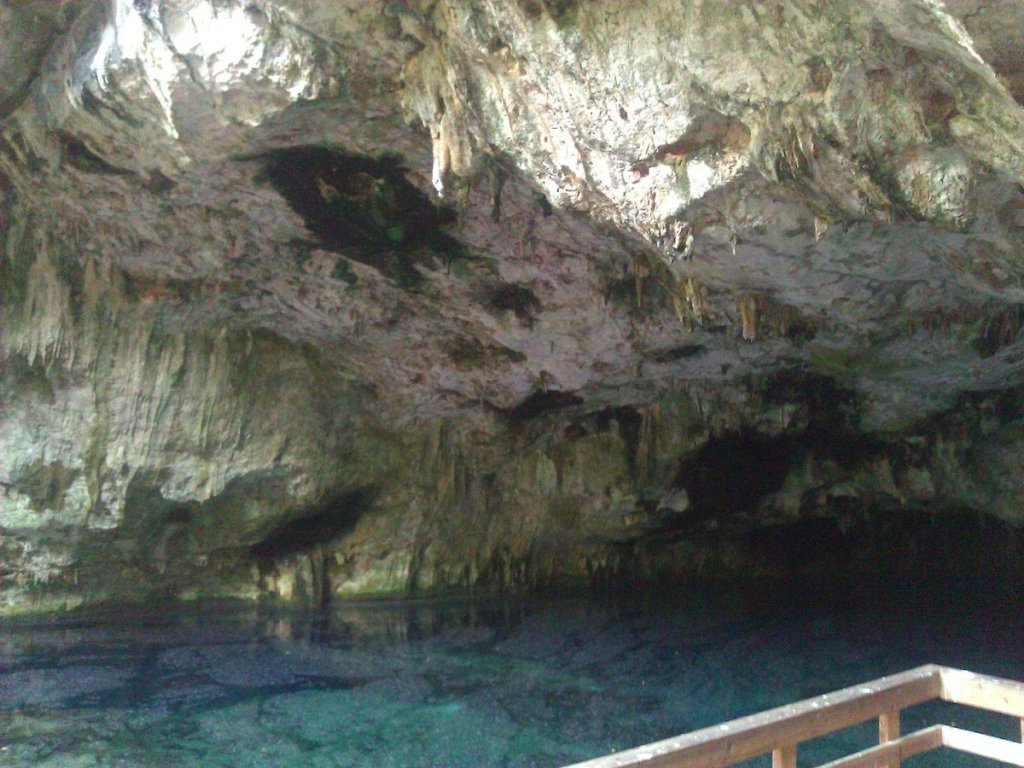
Unfortunately another closed spot on this list is the Two Sisters Cave located in Hellshire, St. Catherine. By now, you may have noticed a trend. Most of Jamaica’s intact Taino sites are located in St. Catherine. The Two Sisters Cave is a pair of limestone caves which contain large sinkholes and fresh water, which are thought to have served as a source of domestic water for the Tainos. There is a network of natural caverns and tunnels which would have provided ideal hideaway places too. The caves contain a single petroglyph of a human face, and a duho (ceremonial stool) was also recovered here which is now on display at the National Gallery of Jamaica. This site was closed due to poor visitation.
4. Seville Heritage Park

Seville Heritage Park in Saint Ann’s Bay marks one of the first encounters between the Old and New World. This park and great house is located on what was once Maima, a large Taino village. In fact, Christopher Columbus and his men lived at Maima for over a year after getting shipwrecked on their Caribbean voyage of 1503 to 1504. In 1509, the Spaniards permanently displaced the Tainos by establishing Sevilla la Nueva at Maima, the first permanent European settlement in Jamaica and one of the earliest European settlements in the Caribbean. Pottery and other Taino relics have been unearthed at this site and are on display inside the great house which is open to tours. Three model bohios (Taino homes) are on display here, and the entire park lies on Jamaica’s tentative list for UNESCO World Heritage Site inscription.
Read more: Seville Heritage Park
5. Green Castle Estate

I’m sorry to announce that yet another place on this list is closed, but it is what it is. The Green Castle estate closed to the public in September 2022 and seems to have been a delightful spot for birdwatching, hiking, swimming and exploring ruins from yesteryear. The estate is home to a former Taino site and midden dated to one millennium ago. Taino skeletons and pottery shards dated to circa 900AD have been discovered at Green Castle, and it is said that Columbus initially tried docking here but was driven out by hostile locals and ended up docking further west at Discovery Bay. I hope one day to tour this 1600-acre property which has changed hands several times over the centuries and is now a cattle, organic fruit and orchid farm.
Wrap Up
It’s sad that we have statues of Christopher Columbus and a Columbus Park but very few active sites which pay tribute to Jamaica’s earliest people, the Tainos. I hope more can be done to honour them someday. I also hope that you enjoyed learning about the Tainos today too. Share your thoughts with me in the comments below. And, if you’ve never used GetYourGuide, download the app then enter ADVENTURESFROMELLE5 to save 5% off your first excursion. 🙂
If you enjoyed this post, don’t forget to subscribe.
You may also like:
- All About the Irish in Jamaica
- The Untold Story of Germans in Jamaica
- Forgotten Footprints: Welsh Legacy in Jamaica
- Ital Food: What Rastas Can Teach Us About Health
‘Til next time.
Find Elle on Facebook, Instagram & lend your support to keep me on the road.

 Adventures from Elle
Thanks for another great article, Rochelle! Fascinating historical data, and so sad in a number of ways. There is a Taino historical site fairly close to my place in Woodside, St. Mary. A cave in nearby Rock Spring contains a Taino petroglyph locally and originally referred to as “One Bubby Susan’, but now properly and correctly named ‘Atabey’, the Taino Earth Mother.
Robert Pairman, ‘Cacique’ (YukayekeYamayeGuani), is quite familiar with that site and the Taino presence in that area.
Jamaica! So much to learn and enjoy!
LikeLiked by 1 person
That’s wonderful! I’ve been meaning to visit Woodside for years! Is it possible to just show up or are reservations required? I would love to see that petroglyph! So much interesting history to discover in Jamaica, thank you so much for reading
LikeLike
❤️
LikeLiked by 1 person
thanks for this one Ro – it’s the first I’ve heard of ‘Tainos’ and sheds a little more light on the history of Jamaica. As you say, sad that Columbus statues remain with little to nothing on the earliest inhabitants of Jamaica
LikeLiked by 1 person
I’m happy you got to learn of the Tainos and their history. Always a pleasure to share, and I hope one day we can honor their legacy a bit better (even better if we take down the Columbus statues too). Thanks for reading!
LikeLike
Such an interesting read. I had never heard of the Taino people before and I definitely didn’t know anything about their history. It’s so sad that Taino groups no longer exist but at least their DNA remains which means they’re still part of the Jamaican people today.
LikeLiked by 1 person
Thank you! While it’s sad what happened to them, I’m happy to know that their DNA still exists in some of us. Thanks for reading!
LikeLiked by 1 person
My pleasure and yeah that’s really cool. At least all is not lost.
LikeLiked by 1 person
Thank you for sharing Taino history in Jamaica! Very cool!
LikeLiked by 1 person
You’re most welcome. Thanks for reading!! 🙂
LikeLiked by 1 person
I’m glad to be back!
LikeLiked by 1 person
Very fascinating, Elle! I’ve actually vaguely heard of the Taino people, and it’s really sad that the majority of them were decimated due to European colonialism (a very ugly part of history). But it’s great to learn that there are descendents out there and still thriving today!
LikeLiked by 1 person
Thank you! I’m really happy you’ve heard of them, even if vaguely so. I didn’t really think anyone outside of the Caribbean and perhaps historians have heard of them. Their history is definitely sad but I’m glad they were resilient enough to survive somehow. Thanks for reading! 🙂
LikeLiked by 1 person
I really do love this blog! It’s so detailed and well-explained! Makes me want to visit Jamaica again after so long. Haven’t been there since ’91 when I was 15. You should create your own podcast about your travels and experiences; I know I’d love to listen to it!
LikeLiked by 1 person
Thank you so so much! If I ever have a bit of free time, I’ll consider starting one 🙂 thanks for reading! I hope you revisit soon
LikeLike
I definitely will!😀😀😀
LikeLike