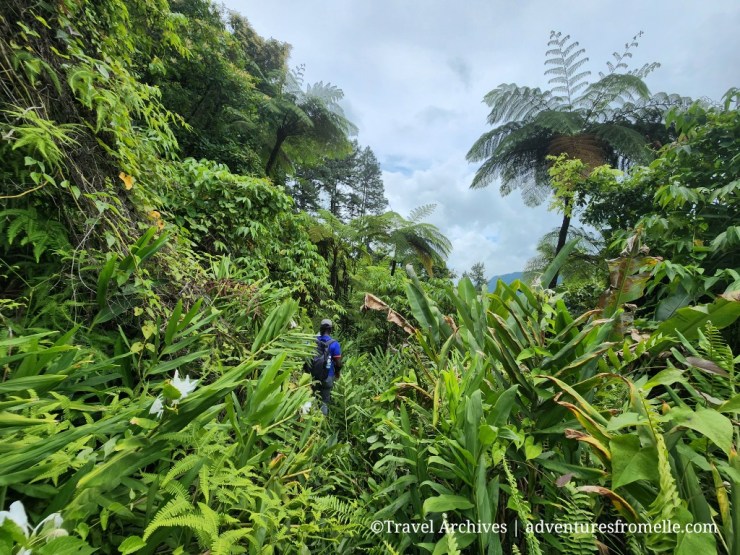
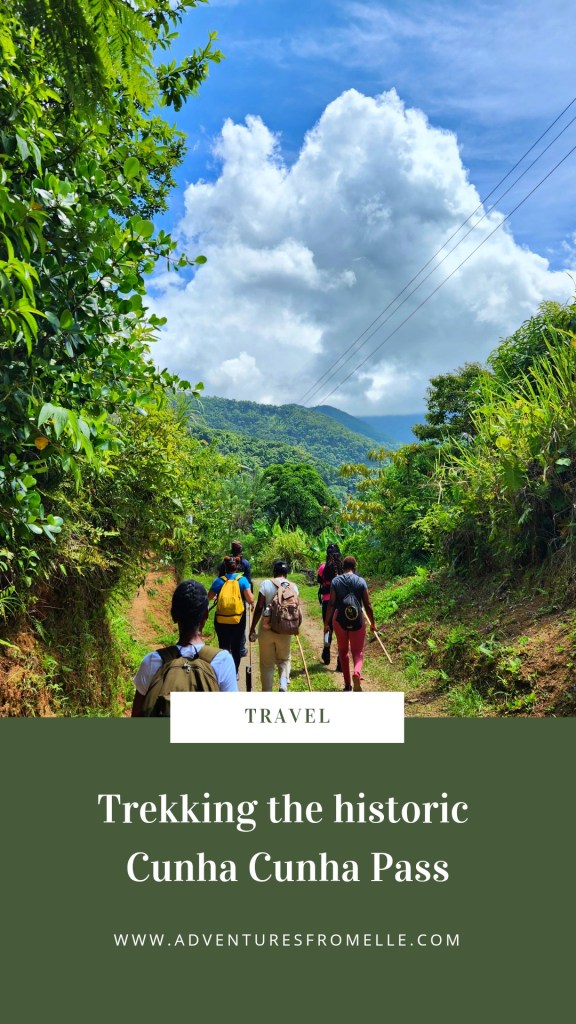
Have you ever done a hike which you know will forever be etched in your memory? I first heard about the Cunha Cunha Pass trail in high school history classes, as it’s an important Maroon trail filled with rich history. I’ve had it on my list to visit for years, but my compact car is not built for the treacherous roads which lead to Hayfield, St. Thomas– the start-point of this hike. That being said, the opportunity to visit Cunha Cunha Pass with Trekkers Adventures Jamaica knocked on Emancipation Day last month, and I answered the call! Here’s how it went + everything to know about this Jamaican national monument.
Pssst! Subscribe to stay in the loop.
Also, check out my book and GetYourGuide storefront for more travel ideas.
What’s Inside
- History of Cunha Cunha
- Hiking the Cunha Cunha Pass
- Ambassabeth Eco-Lodge in Bowden Pen
- Ending in Millbank
History of Cunha Cunha Pass
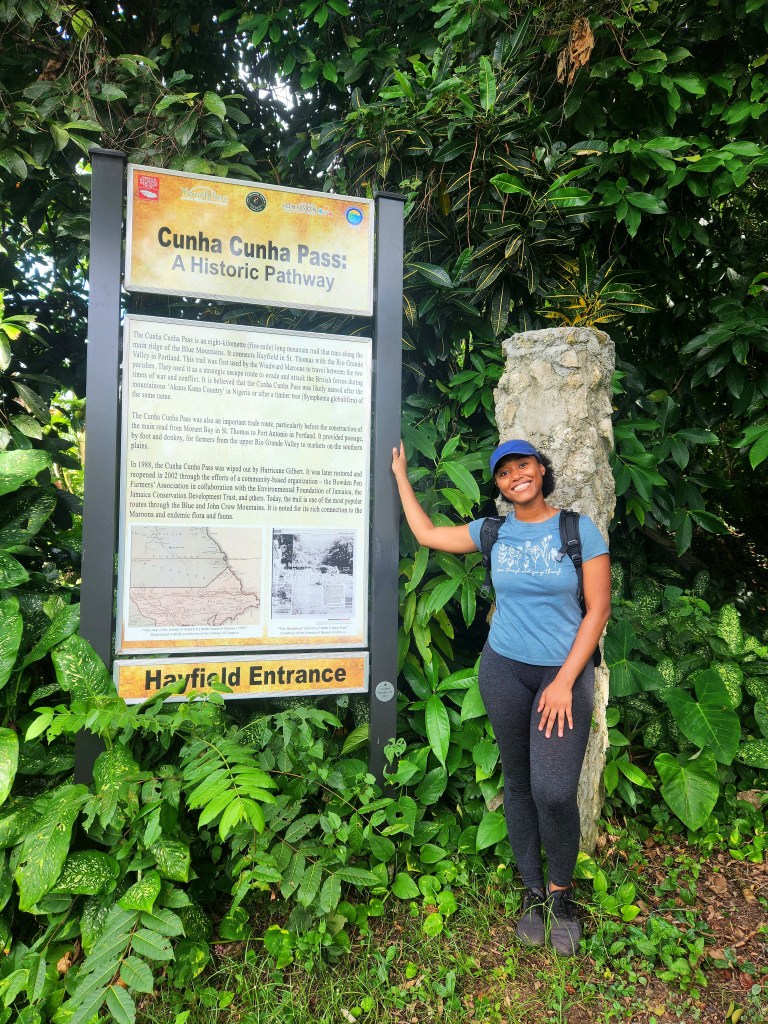
Cunha Cunha Pass is a 5.5 mile (9km) trail which connects the St. Thomas parish with my favourite parish, Portland. It is one of Jamaica’s oldest trails, created in the 1600s by enslaved Africans who ran away from the plantations to the thick impenetrable forests of the Blue Mountains to regain their freedom. These runaways established villages in the mountains, the largest of which became known as Nanny Town, named after its matriarch and Jamaica’s only heroine, Nanny of the Maroons. However, these Maroons lived in terror as they were plagued by British soldiers who constantly went in search of them in the hopes to capture and kill or re-enslave them as an example to other runaways. As such, Nanny Town was eventually abandoned after being destroyed twice by British soldiers in 1734 and 1738.
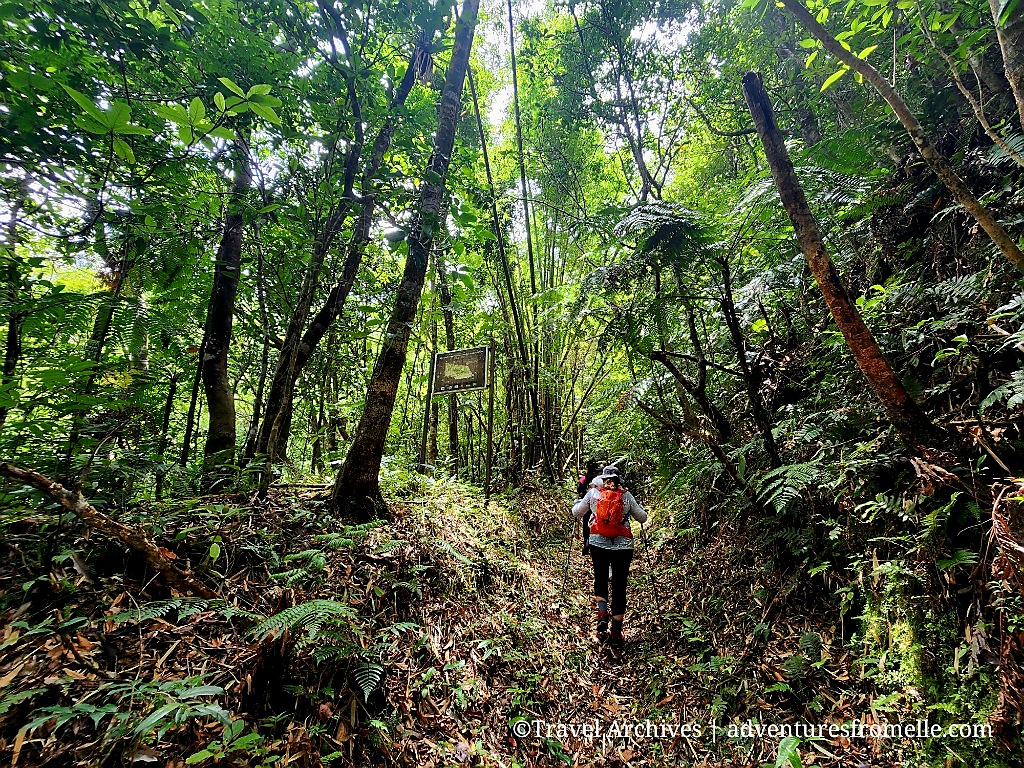
The Cunha Cunha Pass became an important trade, transport and escape route for the Maroons, as it consisted of several side-trails leading to other important districts namely Hayfield, Bowden Pen, Millbank and the Corn Puss Gap which made my top 10 list of funny Jamaican place names last year. According to oral history, the site once ended at a plantation which the Maroons could not or “cunha cunha” pass, hence the name. However, an alternate suggestion was that the Cunha Cunha Pass was named for the mountainous ‘Akuna Kuna Country’ in Nigeria from which these Africans originated and the terrain was similar. Another is that Cunha Cunha was named after a timber tree (Symphonia globulifera) by the same name. Who knows?
Following the abolition of slavery in the 1800s, Cunha Cunha remained relevant for farmers as it provided passage by foot and donkey for produce grown in the upper Rio Grande Valley to markets on the southern plains. After the road which connects Morant Bay to Port Antonio was built, use of the Cunha Cunha Pass dwindled. It was nearly wiped out in the Hurricane Gilbert of 1988, but was restored and reopened by the community-led organization Bowden Pen Farmers’ Association, in collaboration with the Environmental Foundation of Jamaica, the Jamaica Conservation Development Trust (JCDT) and others, in 2002. In 2011, the trail was listed as a national monument, four years before the wider Blue & John Crow Mountain National Park got inscribed as Jamaica’s first and only UNESCO World Heritage Site to date in 2015.
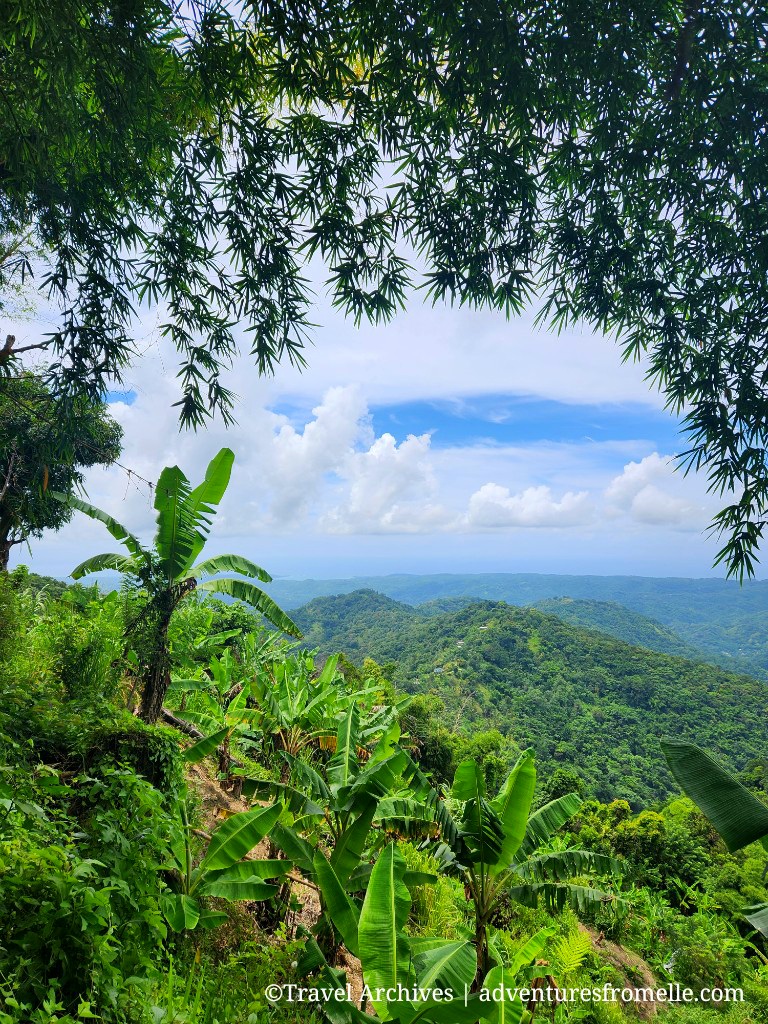
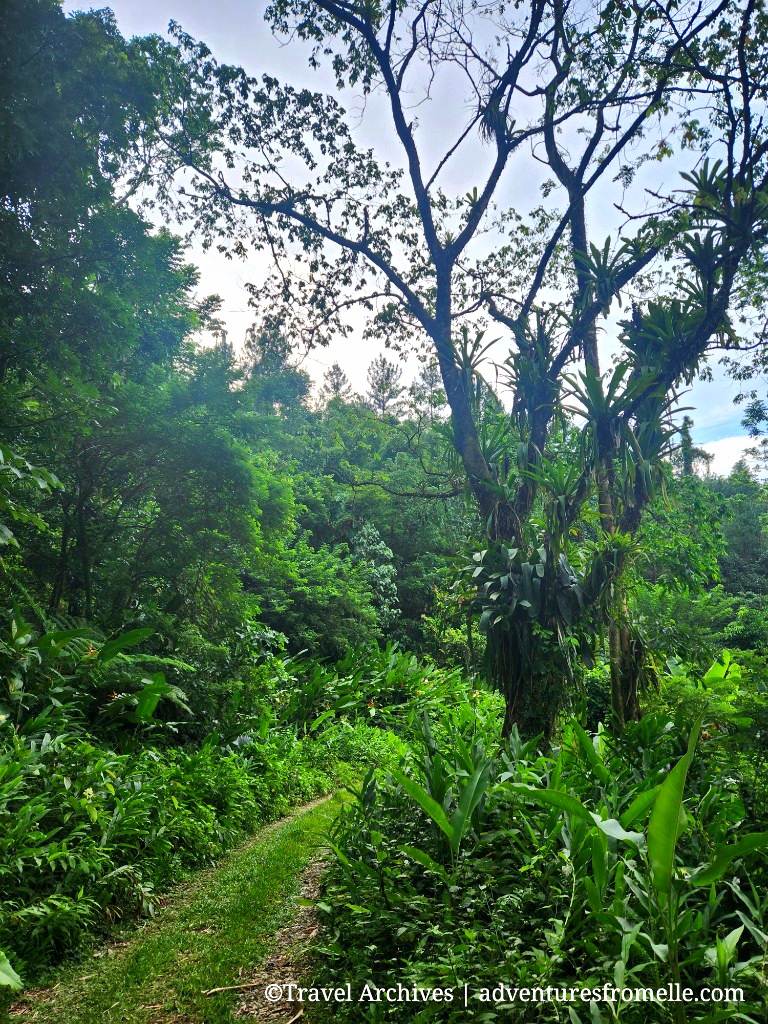
Today, Cunha Cunha is used for recreation by adventure-seeking locals and tourists. The trail brings one up close with Jamaica’s flora such as tall towering bamboo, banana trees from farms hugging the steep hillsides, beautiful flowers, ferns, fruits, pine trees and even a few bromeliads and interesting fungi. The only fauna you may come across are birds and the majestic endemic Jamaican Swallowtail butterfly, the largest butterfly species in the Western Hemisphere. I was fortunate enough to see one which we accidentally disturbed and sent him flapping away into the expansive St. Thomas valley. You’d think it was a bird! Wild boar and imported deer roam these hillsides too but you’re unlikely to see them on a pleasure visit.
Hiking the Cunha Cunha Pass
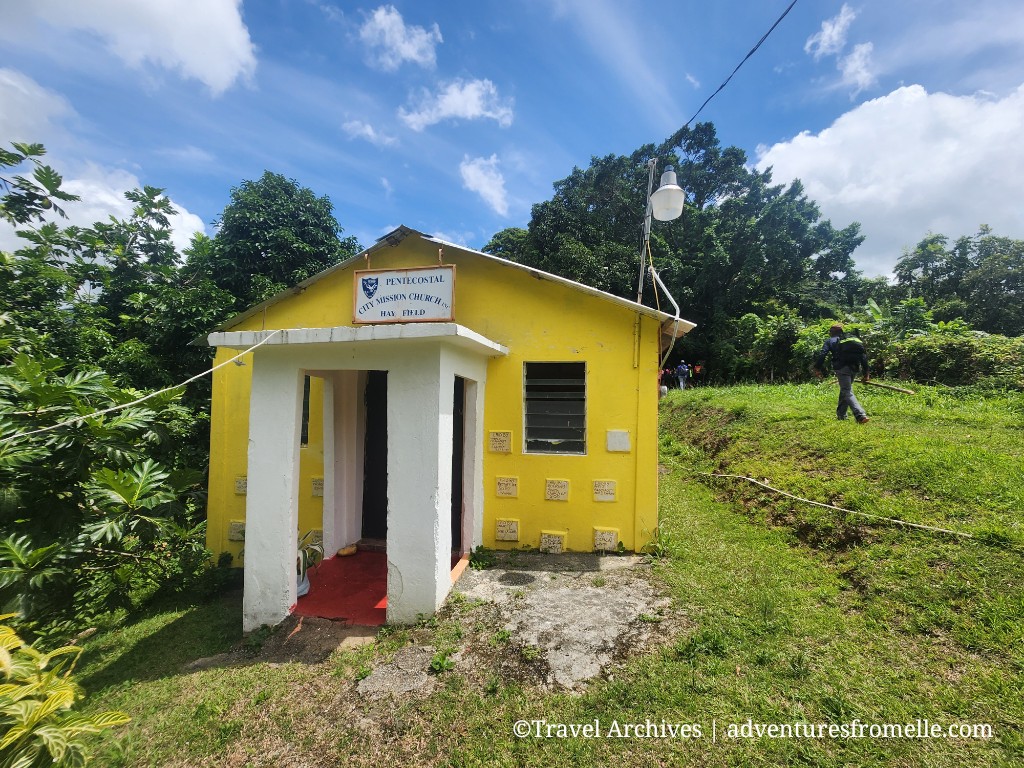
Trekkers Adventures had me up for an early (and on-time!) 6am start. We drove for nearly three hours from Kingston, including two pit stops for street food and a bathroom break. Our hike began in Hayfield at the start of the trail near to the Pentecostal Church, but not before our enterprising guide who is also a farmer and hunter from the community, sold us refreshing jelly coconuts to ensure we started the hike well hydrated. You’d never get a jelly coconut for $100 (less than 1 USD) in Kingston! Anyway, Cunha Cunha is a moderate intensity hike (I’d give it a 4 or 5 out of 10) and starts out uphill before becoming fully downhill. It starts out very wide too then quickly becomes narrow, navigable only by deft footwork and single file.
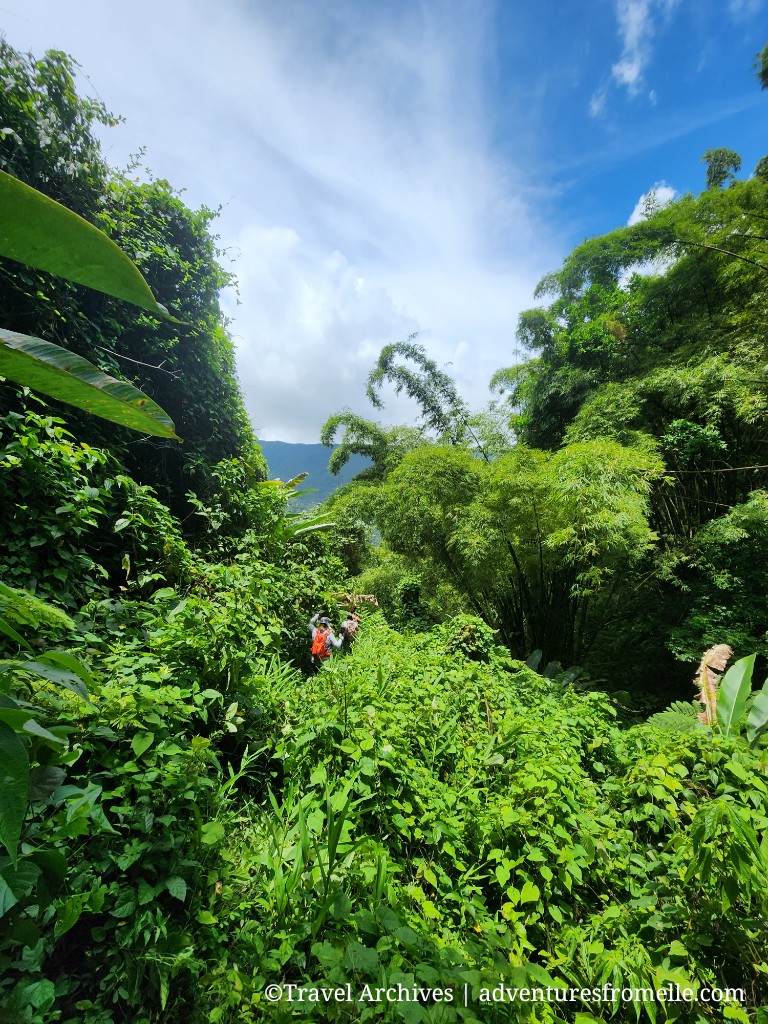
Some parts of the trail were almost impassable; I was walking through thick weeds which were taller than me in many parts. Nonetheless, I persevered and made it to the journey’s lunch and river stop at Ambassabeth just under 3 hours later. As if the overgrown weeds weren’t enough proof that the trail is barely utilized these days, the mosquitoes completed the story. I’ve never seen so many mosquitoes in my life! They were HUNGRY! Mosquito repellant and long sleeves are a must! Legend has it that my ankles (the only skin I forgot to slather in repellant) will itch from the bites forever.
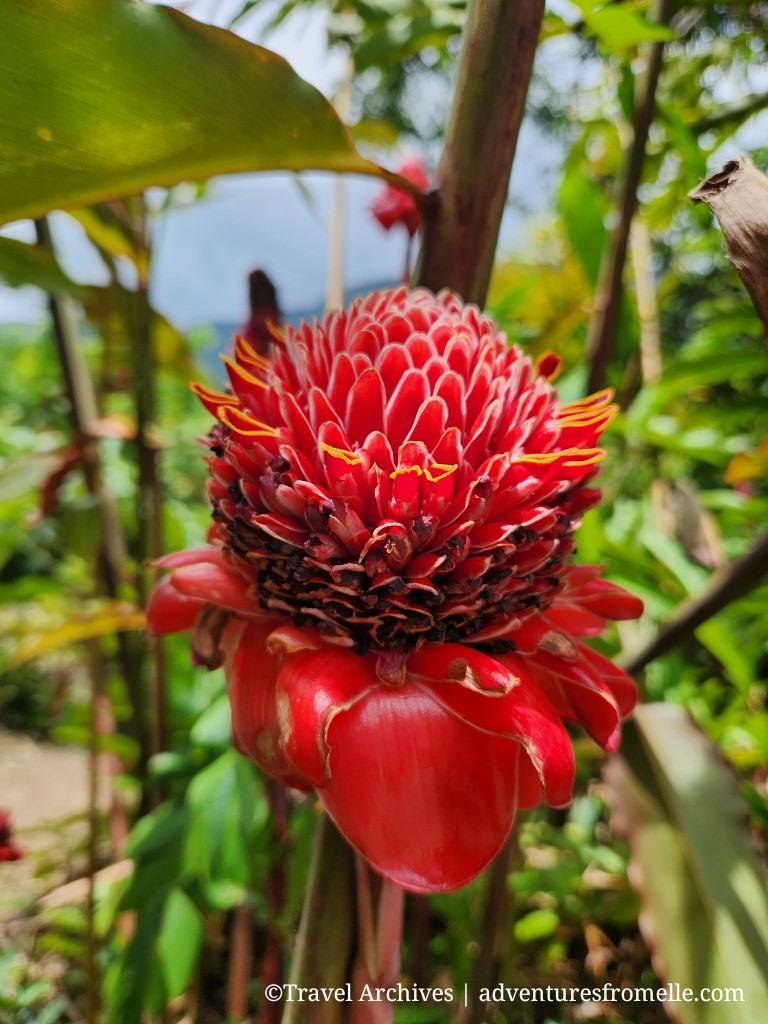
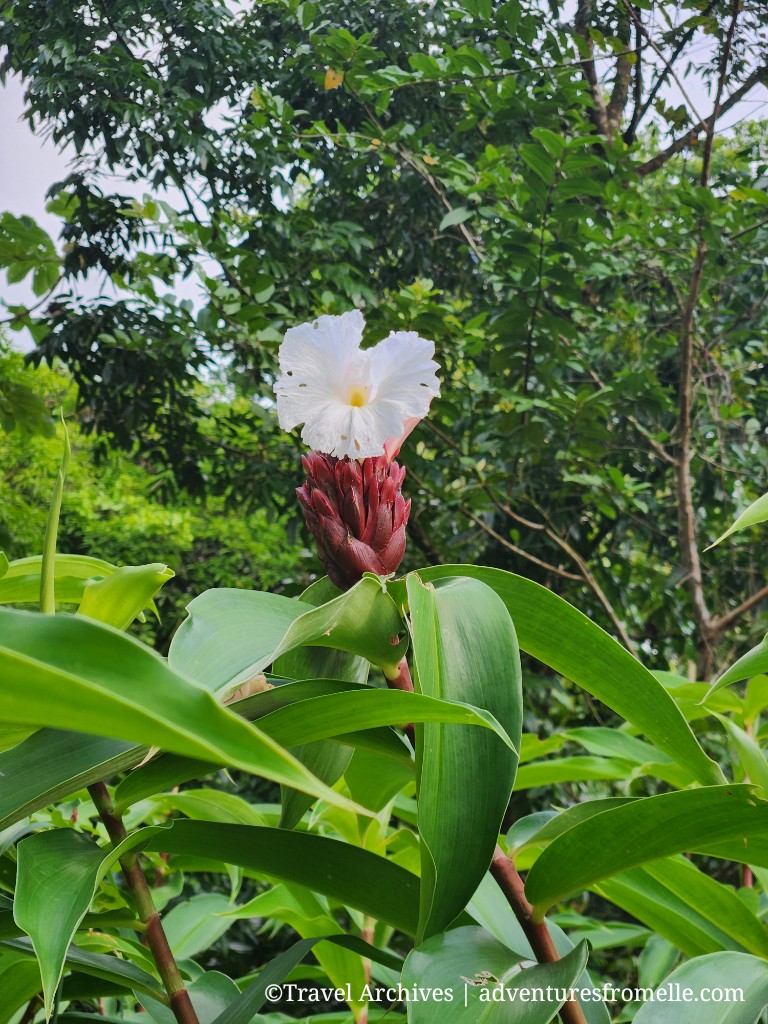
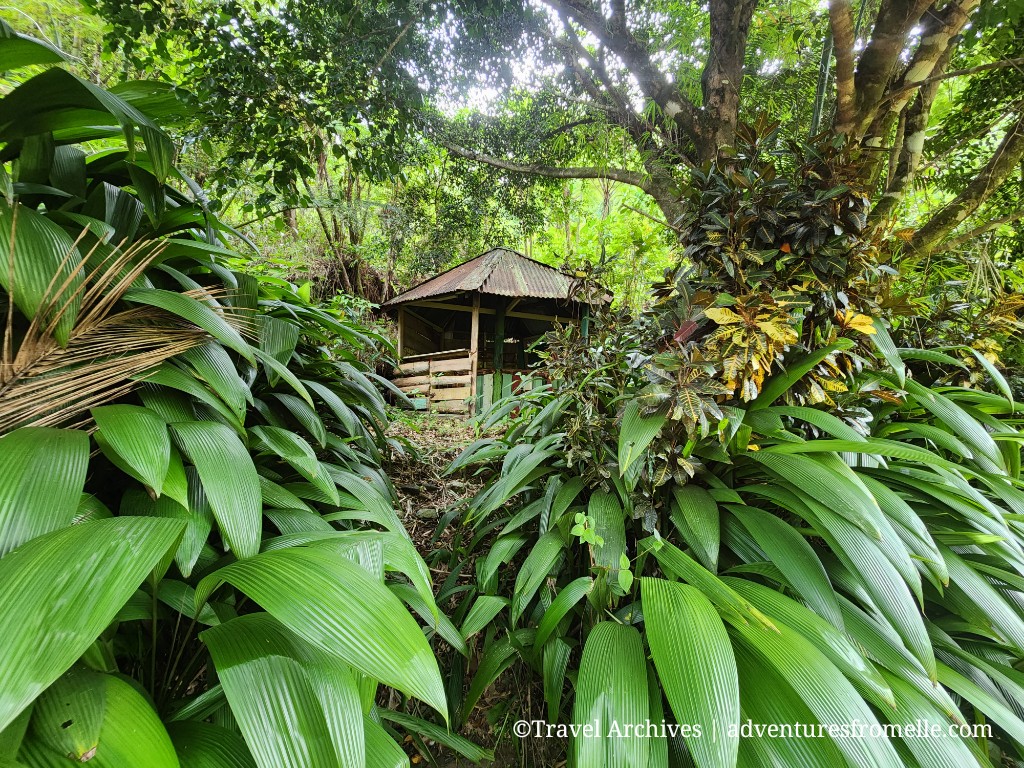
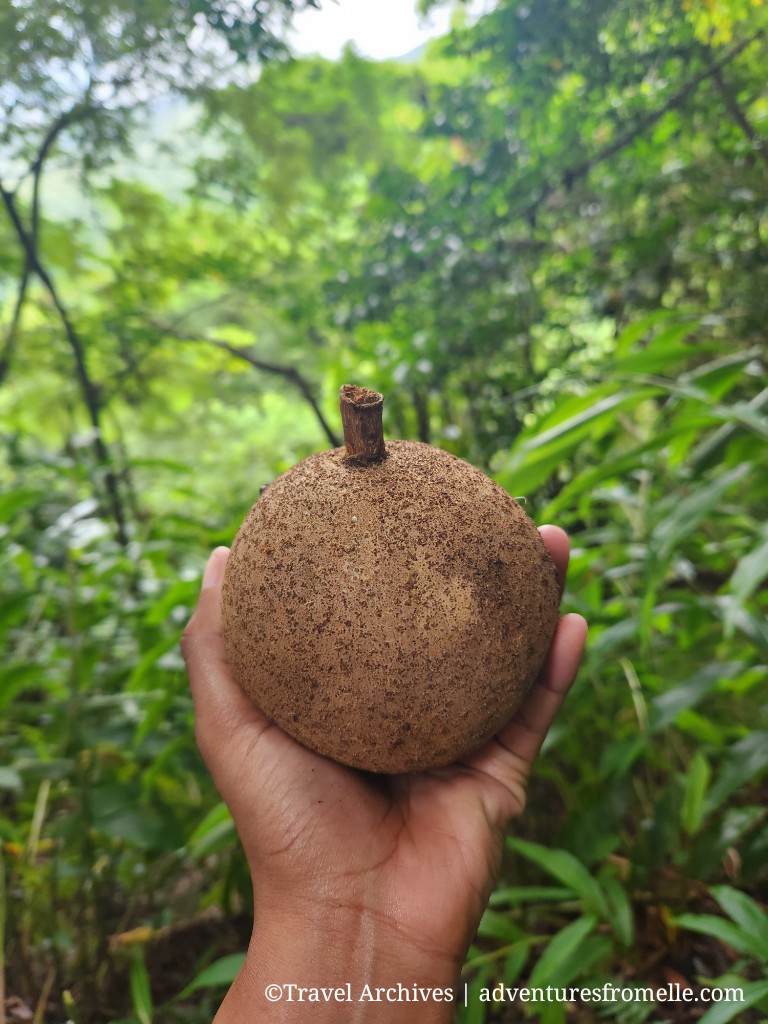
Anyway, along the way, I was treated to jaw-dropping views of the Blue Mountains and I even saw my first Mammee apple which only grows in this corner of Jamaica. My guide said it was no good because it was on the ground but I took it home anyway, and got to try the part which was still good. Its sweet yellow flesh tasted like a tangy custard– quite delicious and refreshing! Mammee apples look like naseberries (sapodillas) but are much larger and taste closer to a custard apple. I also saw two other new fruits but my guide didn’t know much about them so I left them alone.
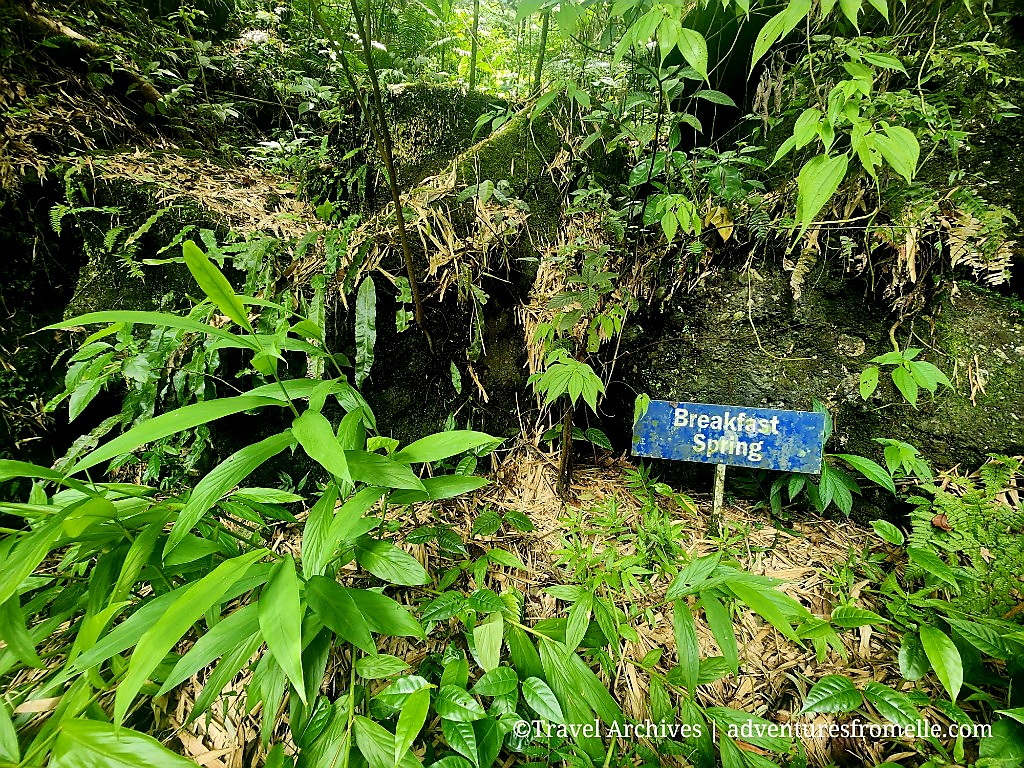
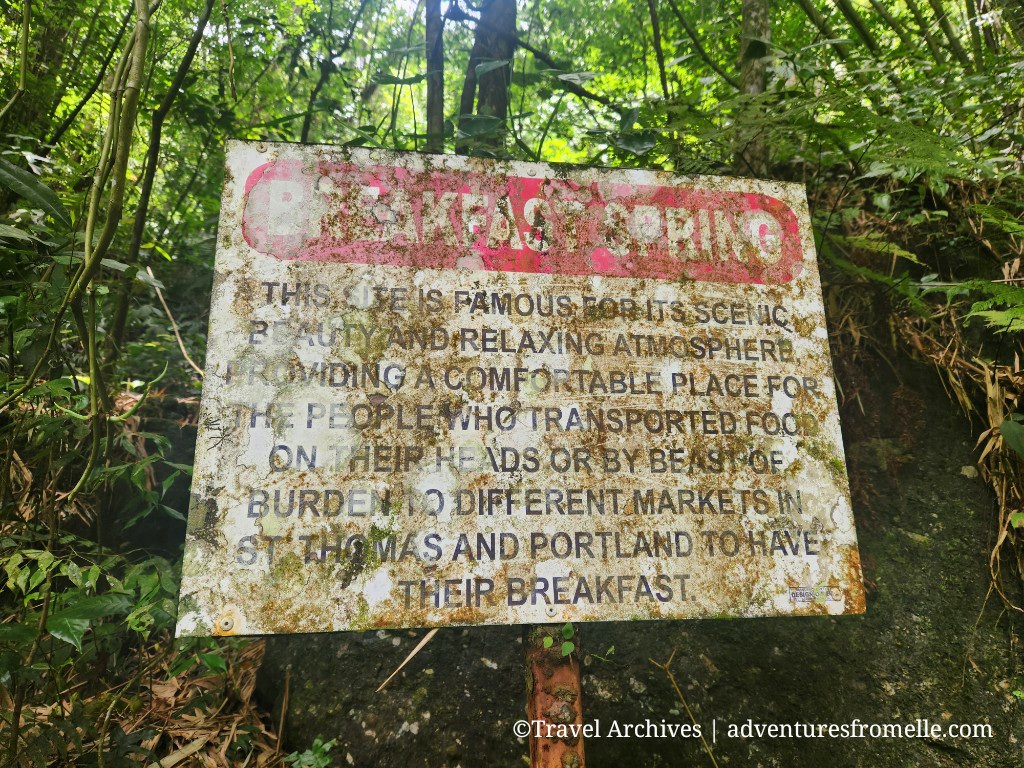
We definitely passed some interesting remnants of the trail’s glory years on the way such as these rusted signs, an old lookout point, a dried up spring and even a sign commemorating Contingent, a land grant in the area which was gifted by the Crown to Jamaican World War I veterans.
Ambassabeth Eco-Lodge in Bowden Pen
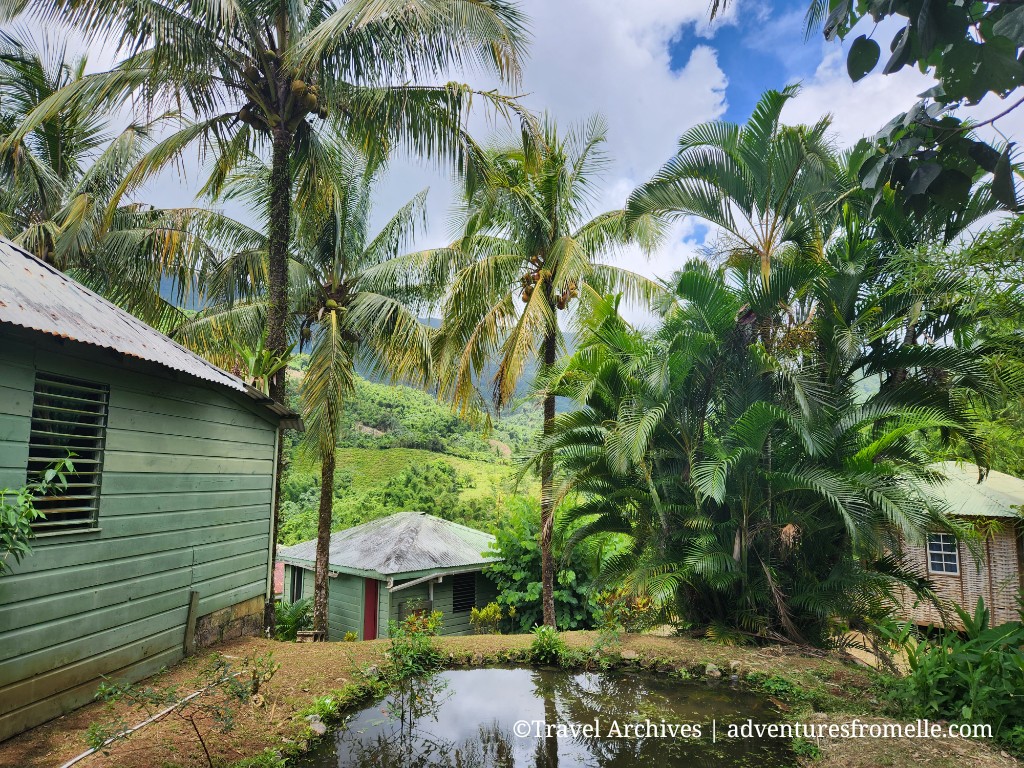
We arrived in Ambassabeth hungry and on schedule but as island time would have it, cooking was only getting started. I used the time to explore around the cabins then make my way down to the river to cool off and soothe my mosquito bites. The river wasn’t anything special but the conversation I had there with several older Trekkers was. Many of the Trekkers were well-travelled and it was fun listening to their stories, while sharing mine. We talked about everything from their safari tours in Kenya to reflecting on Jamaican life and culture.
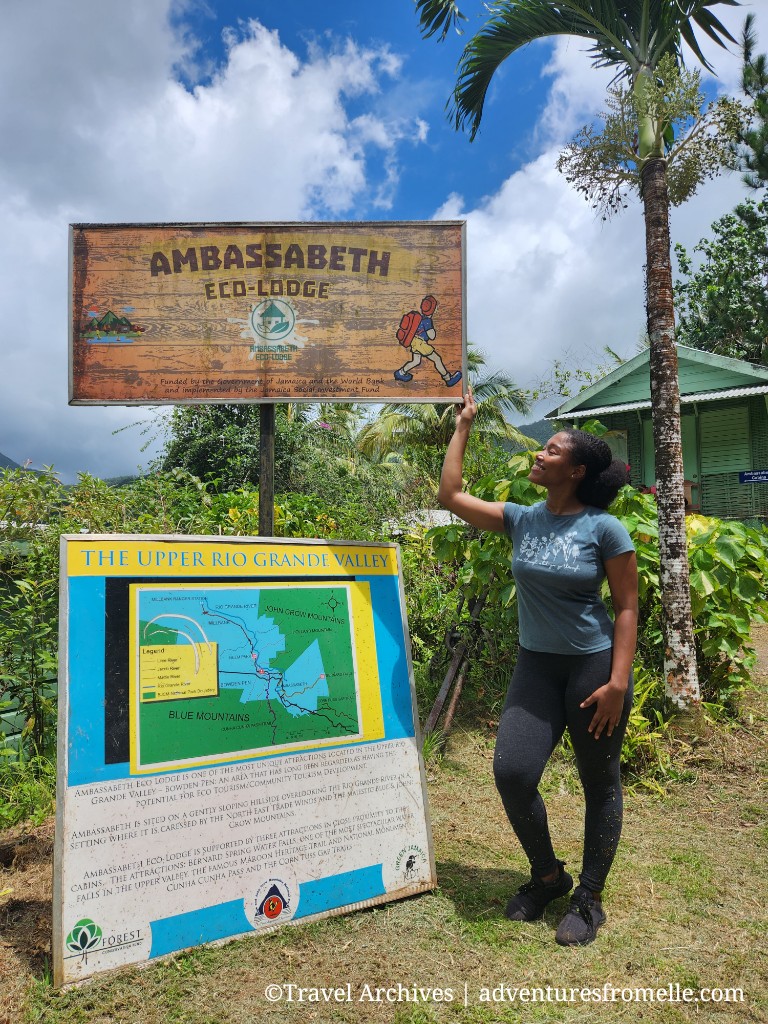
My leggings took half the forest with it! 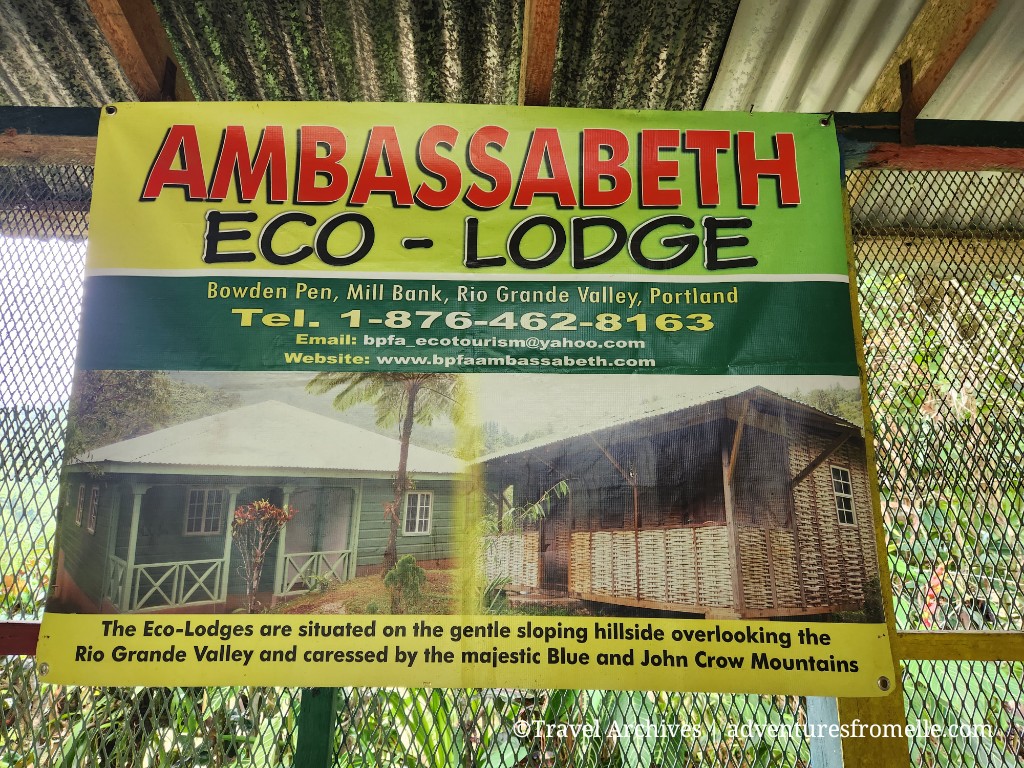
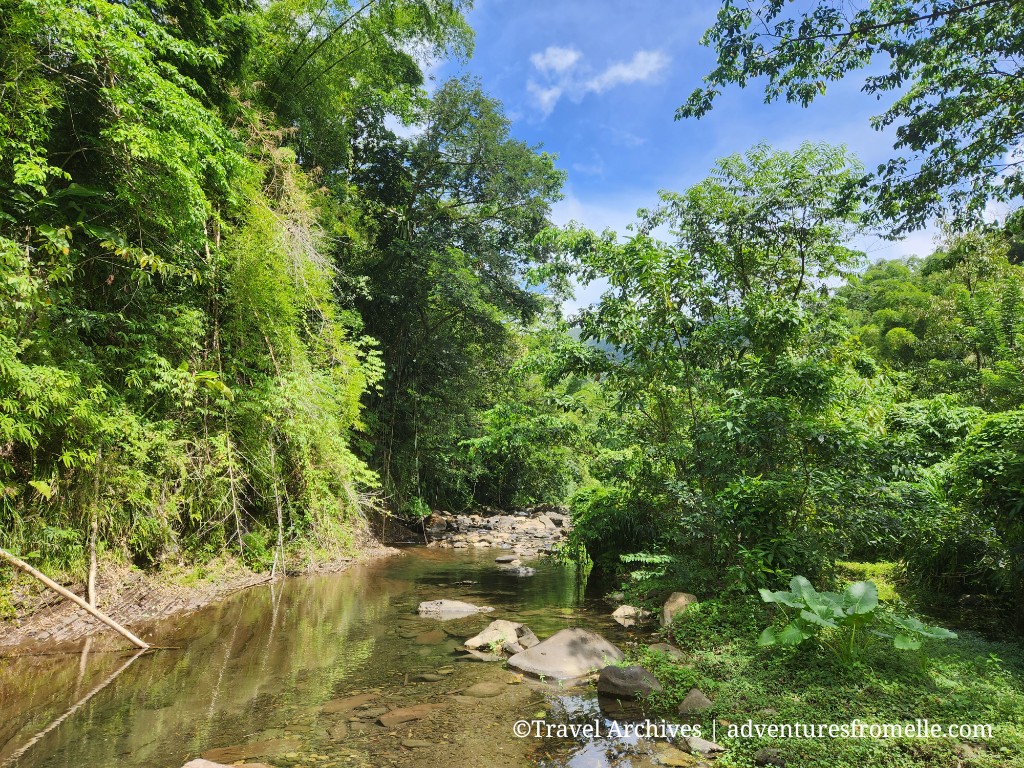
The river- nothing impressive but still refreshing. 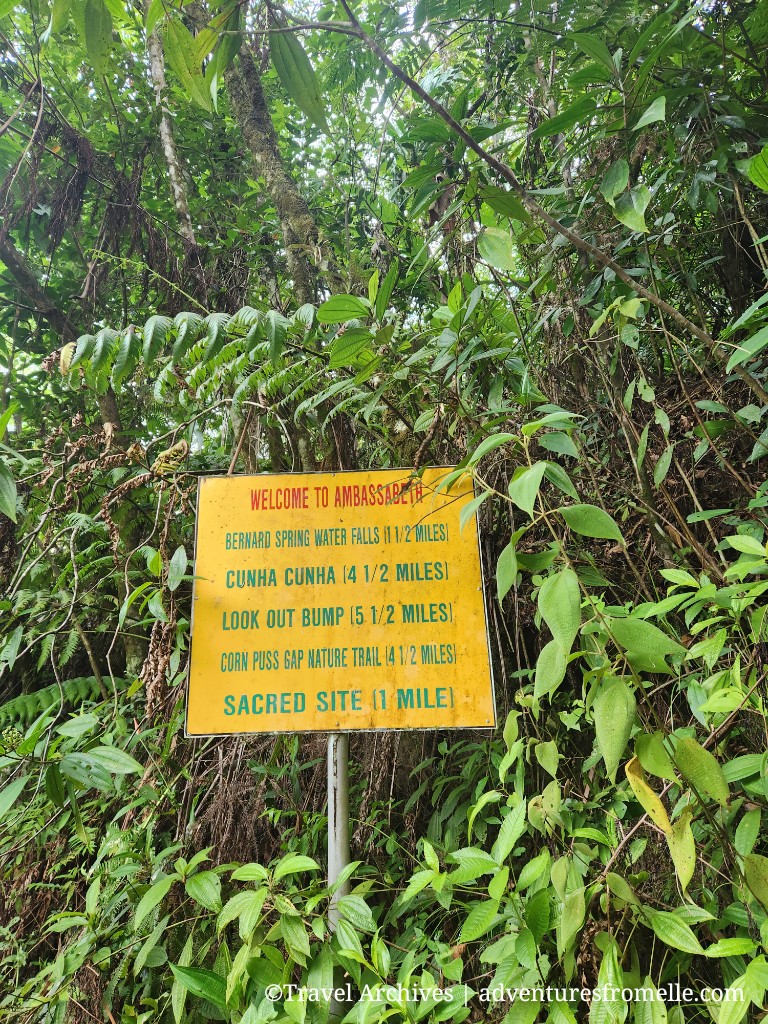
Eventually, lunch was ready. The menu: janga (crawfish) and chicken foot soup, fried chicken, steamed fish, fried fish, mushrooms, olives, homemade cranberry pepper jelly, breadfruit, rice and peas, pear (avocado), pasta and refreshing pineapple juice which was heavy on the ginger! I love that our gracious hostess Melissa catered to vegans and pescatarians along with us omnivores. Our lunchtime entertainment came from a Millbank Maroon music group whose vibrant drumming electrified the crowd– and one of the cooks, and the hostess’ daughter, ha! It was entertaining to watch but by now, we were well off schedule and had to cut the performance short. Libations of white rum were poured for the ancestors.

Ending in Millbank
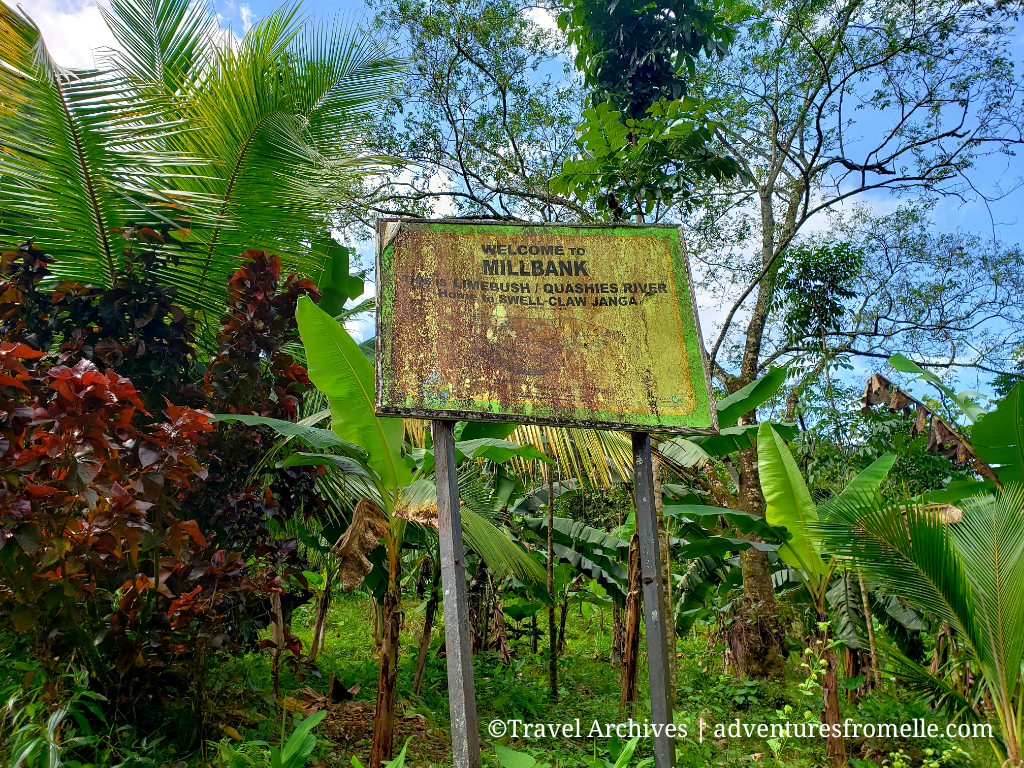
I must return to Ambassabeth one day to check out the Corn Puss Gap and Bernard Spring Waterfall trails. I said something similar two years ago when I visited Millbank for the first time, and it didn’t dawn on me that I would someday return to the community at the end of a hike from St. Thomas. But, that’s exactly how it went. Instead of returning from whence we came, we pushed on for another 2.5miles (4km) to the community of Millbank where our driver Mr. Face was waiting on us. Terribly off schedule, we got cold drinks from two community bars then hurried on our way– back to the hustle and bustle of Kingston. I was tired, dirty and maybe a little smelly, but satisfied knowing that Emancipation Day 2023 has been my most meaningful one yet.

Wrap Up
The Maroons weren’t always on the good side of history after they signed the Windward Maroon Treaty in 1739 which saw them returning new runaway enslaved Africans to their masters. Nonetheless, despite my mixed feelings about the Maroons, I’m always in awe at their resilience in conquering these inhospitable places and making them their own. I shiver to think that my ancestors did these hikes soundlessly, barefooted, naked and only with moonlight as guide because smoke or fire would give away their locations to British soldiers. I can’t help but feel respect for their sacrifices and bravery to live a life which every human being deserves– one of dignity, and free.
Would you hike the Cunha Cunha Pass? What was your favourite part about this travelogue? Talk to me in the comments below! Also, I’m quite grateful to Trekkers Adventures Jamaica which facilitated the last-minute signup of my partner and I, and took us under their wing like family. Check them out.
If you enjoyed this post, you will also like:
- Visiting Bath Mineral Spring
- Hiking to Bull Head Mountain, Jamaica’s geographic centre
- Visiting the Waterfalls of Millbank
- Hiking to the historic Tacky Falls
Before you go, don’t forget to subscribe. ‘Til next time.
Find Elle on Facebook, Instagram & lend your support to keep me on the road.

 Adventures from Elle
Hi Dear, thanks for the history and the adventure. I enjoyed the trek with you just by reading. Not sure I could manage that hike though.
LikeLiked by 1 person
I’m happy to hear that 😊 thanks for reading. I’ll find a shorter/easier hike for you one of these days
LikeLike
It’s one thing to hike a pass for the lush nature, but also another to learn about its rich and difficult history! The Cunha Cunha Pass is a unique hike for both aspects, and you really got to experience first-hand what you’d learned in history textbooks! Certainly a hike from Emancipation Day you won’t forget!
LikeLiked by 1 person
It truly was! The guy that organized this hike was very clever in choosing that day. Cheers to finally being on the road again 🙂 thanks for reading Rebecca!
LikeLiked by 1 person
Wow, what a beautiful place with such a complicated history. Getting there sounds so challenging, I can’t imagine doing so in the middle of the night with no shoes on my feet.
LikeLiked by 1 person
Me either! It was sad to imagine their journey. I’m really happy our people have come a long way and now we can make the trek as a leisurely trek. Thanks for reading 🙂
LikeLiked by 1 person
Now listen to me! I love everything about this….. Everytime I read something about this parish (of which I reside for more than perhaps half my life and have strong connections to, thanks to my maternal grandparents) I am completely in bliss of how not just Jamaican culture but this historic parish is rich…. It’s my hope that others may take to the time, look pass the bad roads and come explore…. Thankfully they’re getting highway now so hopefully there’ll be less complaining. Thanks for exploring and writing about one of my favorite parishes. Hope you’ll find time soon to return and do some more!!!!
LikeLiked by 1 person
Oh wow that’s lovely! I love St. Thomas, I’ve always thought of it as a hidden gem 💎. There’s quite a lot to do and a lot of history if you know where to look. I’m excited about the new highway– the residents deserve it and it will make accessing the parish much easier. I still have the lighthouse, Old Pera Beach & windmill, Stony Gut & Stokes Hall greathouse on my St. Thomas bucket list. I still feel like there may be more gems which even I haven’t heard of 🙂 thanks for reading Richelle!
LikeLiked by 1 person
This was awesome! Thanks for sharing!
LikeLiked by 1 person
You’re most welcome! I’m happy you enjoyed. Thanks for reading 🙂
LikeLike
Beautiful adventure!!
LikeLiked by 1 person
Thank you! I truly was
LikeLiked by 1 person
it looks like the hike would be a bit of a challenge. Good work in doing it Ro!
LikeLiked by 1 person
It truly was, and the humidity and mosquitoes were brutal. Thankfully I conquered! 😀 thanks for reading Andy!
LikeLike
What a great adventure, Elle! You are brave for tackling a trail that sounds pretty hard, not to mention mosquito infested, but you did it. Your photos of the scenery are gorgeous, and the rest stop at the Eco Lodge sounds delicious and fun. Have a wonderful weekend!
LikeLiked by 1 person
Thank you so much! I sure will as it’s my birthday tomorrow ☺️ The mosquitoes surely caught me off guard, and right now Jamaica is having a dengue virus outbreak so I gotta be more prepared. I won’t forget to spray my ankles with repellent ever again ha!
LikeLiked by 1 person
Happy Birthday to you, my friend. I wish you the best year ahead!
LikeLiked by 1 person
Thank you so much! I really appreciate it 🙂
LikeLiked by 1 person
I’ve lived in St Thomas all my years when I lived in Jamaica, and I’ve never been to Maroon or Nanny Town, not sure which it is called. Never heard of Cunha Cunha, thanks for the history and it sounds like an interesting trek.
LikeLiked by 1 person
Oh wow! Well it’s quite remote, very deep in the hills. Nanny Town was abandoned centuries ago but trails still lead to, from and around the area. It is worth the trek 🙂 thanks for reading!
LikeLiked by 1 person
Good description on your adventure. Thank you 🌍🙏
LikeLiked by 1 person
I’m happy you enjoyed! Thanks for reading 🙂
LikeLiked by 1 person
You are, indeed! You are welcome, Rochelle 🙏😊
LikeLiked by 1 person