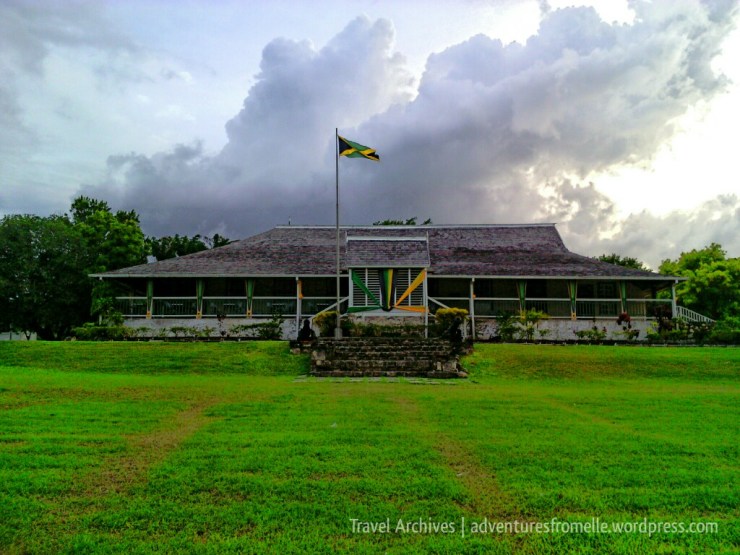
Seville Heritage Park in Saint Ann’s Bay marks one of the first encounters between Old and New World. Unless you’re Jamaican or took Caribbean history classes, you’re likely hearing for the first time that English-speaking Jamaica was first colonized by the Spanish hence the town Sevilla la Nueva was named for Seville, Spain. Christopher Columbus first set foot in Jamaica in 1494 making the already well-known inhabited island first known to Europe. In 1503-4 he lived at the well-developed Taino town of Maima for over a year with his men after getting shipwrecked. However, it wasn’t until 1509 that Sevilla la Nueva was established becoming the first permanent European settlement in Jamaica and changing Jamaican, European and World History forever. Today, let’s talk about the history of the Seville Great House & Heritage Park, as well as why you should visit.
Fun Fact: Seville Heritage Park is the annual location for Jamaica’s Emancipation Jubilee.
Before we get into the article, please subscribe for new adventures.
Also, support the writer & her website by purchasing her books on Amazon.

New Seville was founded by Juan de Esquivel who arrived with 80 families and destroyed Maima in their wake. The first Africans were free men and navigators who assisted the Spanish until later in the 1500s when they forcibly imported a West African slave labour force after almost entirely wiping out the thousands of Tainos they encountered. After a bloody fight and acquisition of Jamaica in 1655, the British settled in Seville too. They retained its Spanish name but converted Seville into a sugar plantation. This heinous clash of 4 cultures explains why Seville is currently one of two places on Jamaica’s tentative list for UNESCO World Heritage Site inscription. Today, the property has fallen into government hands so guided tours are available which allows one to time travel for an hour.
Directions to Seville Heritage Park & Great House
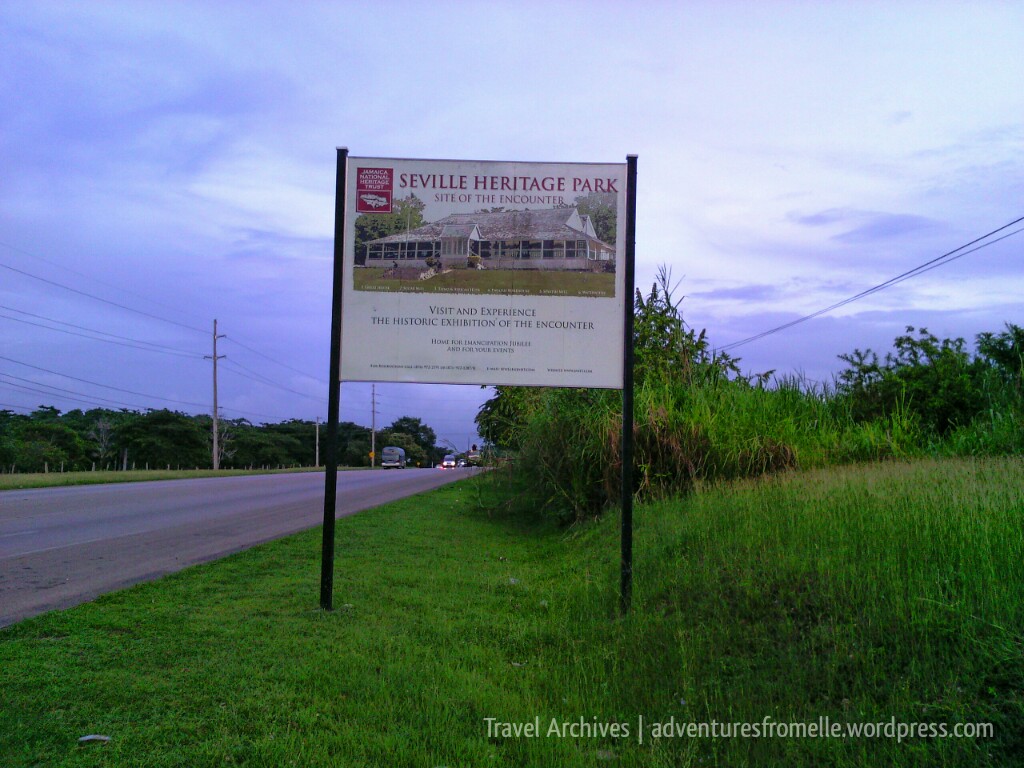
Coming from the direction of Ocho Rios, Seville is located on the first left just after passing the St. Ann’s Bay roundabout and Church River. There’s a sign which says 0.5km to Seville Heritage park after which you’ll see the above sign a few seconds later if you’re driving. Turn there.

Admission prices to Seville Great House are included in the photo (left). They’re open Mondays to Fridays from 9am to 5pm and closed on all public holidays. Thankfully, parking is available on the lawn behind the Seville Great House because the great house itself is a long drive from the main road. That’s because great houses had to be perched high as a lookout spot for danger from privateers and revolts. Walk-ins are welcome! The tour commences after paying at the ticket booth which is the front room inside the greathouse. This is another instance where my UWI student ID earned me a tertiary student discount. The last tour commences at 4pm but try to go earlier than 4 if you want time to wander around on your own after the tour ends. That’s the only thing I’d have done differently since I never got to go back inside and read the beautiful displays word for word.
Seville Great House
The great house tour commences in the Taino room which features pottery and other remnants found on the property by modern-day archaeologists as well as a colourful backdrop depicting their history. The Tainos are a group of Amerindians who mainly inhabited the Greater Antilles of the Caribbean and dwelled along rivers and the coast for their livelihood. They were an intelligent bunch but with peculiar customs e.g. keeping zemis (demi-gods) in their homes, worshipping gods of nature, having a shaman who inhaled tobacco smoke until he was knocked unconscious then coming back with visions he believed to be from the gods which were then used to govern their lives and having a polygamous cacique (leader) who could have many wives. These wives thought it an honour to drink cassava juice and be poisoned just so they could be laid to rest with their cacique husband should they outlive him.
However, these indigenous people taught the world how to barbecue, how to build houses strong enough to withstand hurricanes, how to remove the poison from cassava and how to smoke tobacco (although now we know the health risks). Today, there’s no distinct Taino group left. Few managed to escape to the islands’ mountainous interiors where they were later joined by African runaways and intermarried to produce a new ethnic group. Some also intermarried with European settlers. So what had happened to them?


They died in 3 ways. Overwork from Spanish enslavement, from diseases like influenza and smallpox newly introduced by the Europeans but sadly and chiefly from murderous games which saw them getting impaled or beheaded by Spanish on horseback. It was a competitive sport, much as how one would have rodeos except with the murder of real live human beings. That accounted for the largest Taino death toll. Some chose to commit suicide and infanticide to escape and reach coyaba (heaven or afterlife, they believed in no hell) rather than endure the evil.
When the Taino labour force had dwindled from hundreds of thousands to mere hundreds, the Spanish replaced them with West African slave labour. If you’re unaware of the difference between chattel slavery as opposed to domestic slavery, kindly look up the difference. Simply put, African chattel slaves were property who could be bought, sold, bred, maimed or murdered at will. Chattel slavery was an economic, social & political system endorsed both by law and by the Christian church for 300+ years until Emancipation, granted in 1833 but not coming into full effect until 1838. When the British captured Jamaica in 1655, the system of chattel slavery as practiced on Seville and throughout the whole nation continued, just under a new master. The Spanish house was torn down and upon its foundations was constructed a grander house, typical of British sugar plantation greathouses throughout the Caribbean.
The heinous bloody Jamaican history recounted at Seville was spot on accurate and told throughout 5 rooms inside the greathouse tour. The artefacts found on the property from the 4 civilizations are artfully displayed in glass cases or mounted, a few of which are captured below.


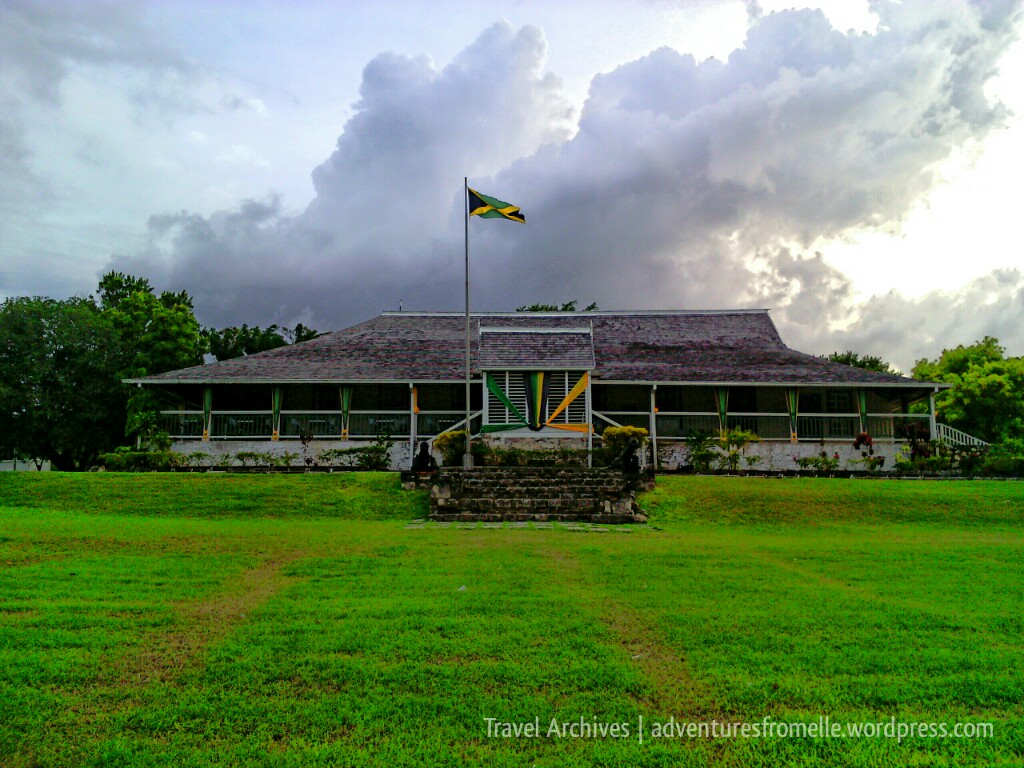
On a lighter note, do you know why the Seville Great House only has one floor? It’s one of a kind as all Caribbean greathouses have at least 2 stories. The reason is that a hurricane blew off the top storey and the owner chose not to rebuild it. It was constructed from wattle and daub but maybe if they had gotten Taino advice it would’ve lasted, right? 😅
Exploring the Seville Heritage Park
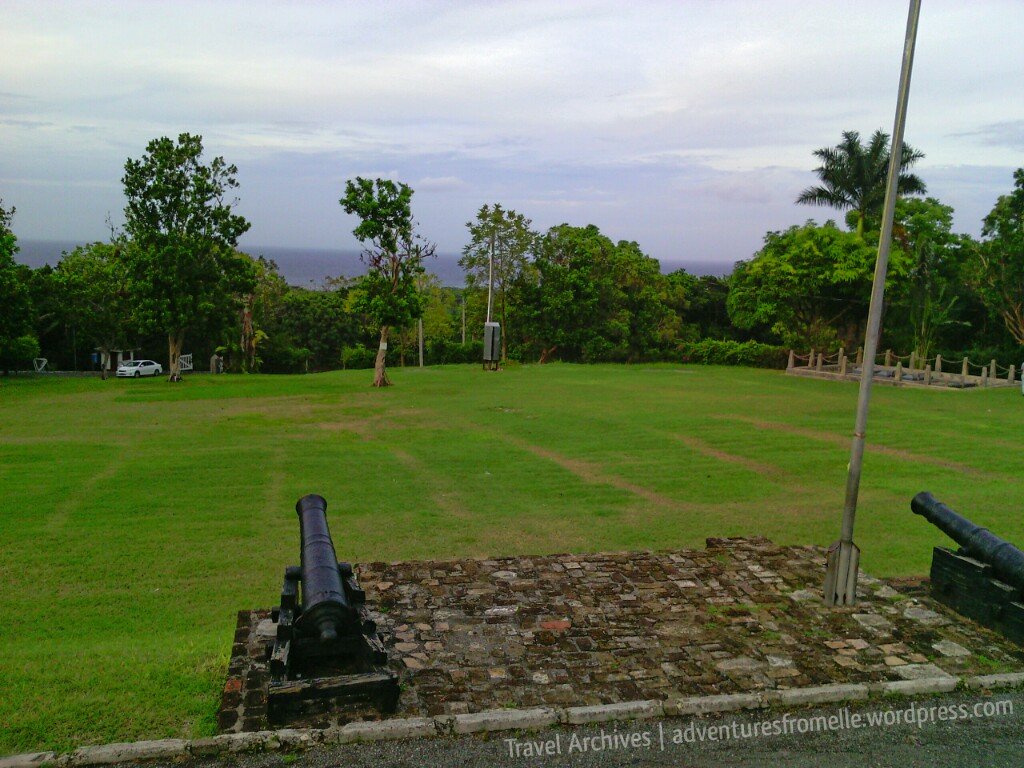
When land was first divided among the new British settlers, it was lavishly done with over 30,000 acres distributed to Captain Richard Hemmings alone, the absentee planter who owned Seville Great House. Check out all the treasures I discovered outdoors, both on the guided tour and while wandering without a guide.
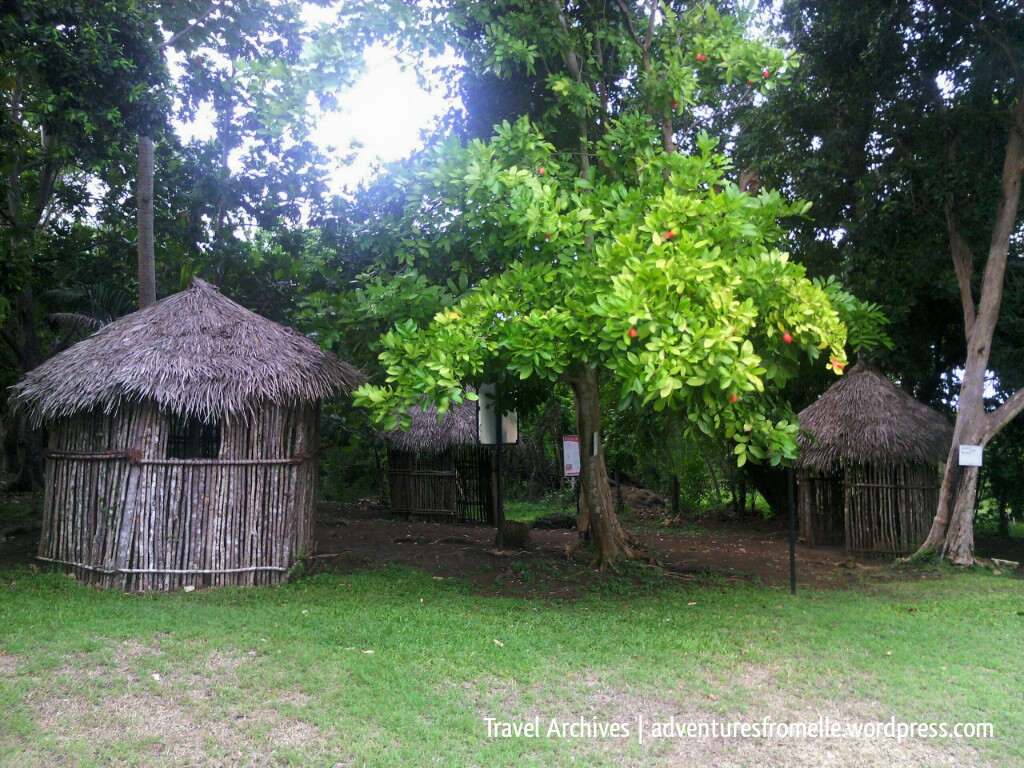
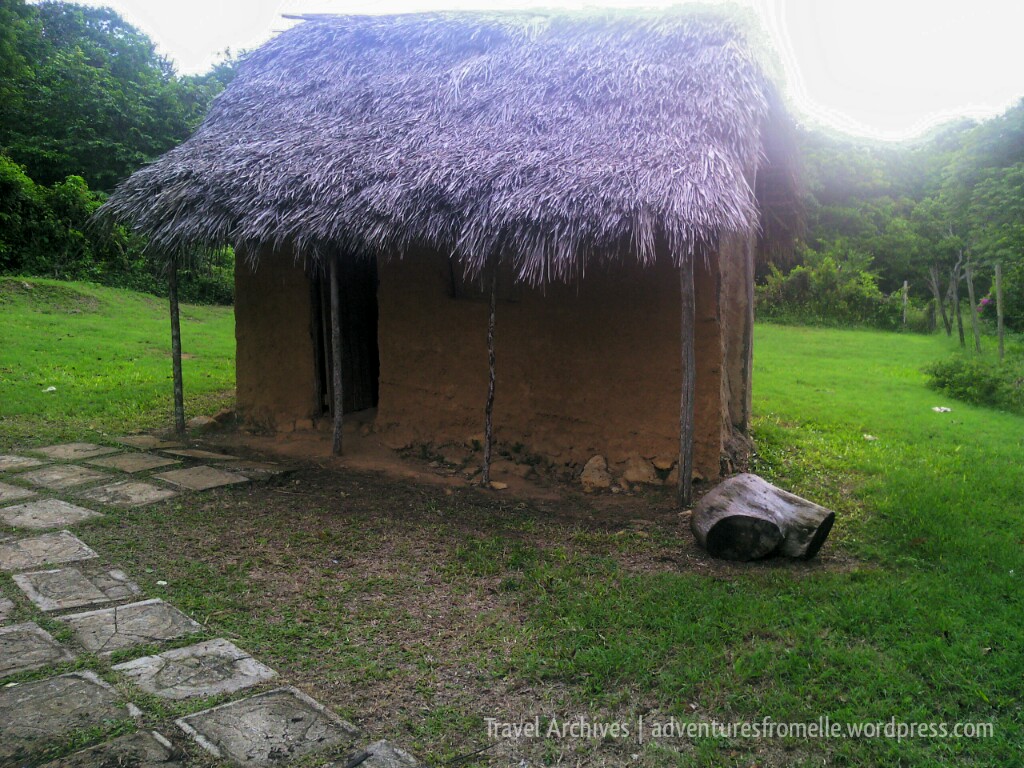
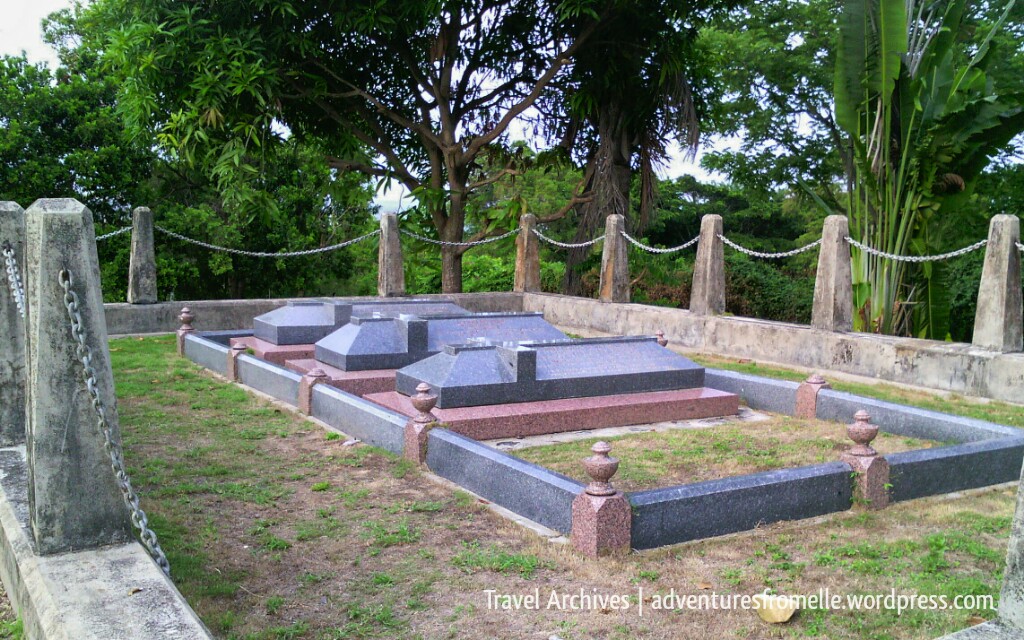
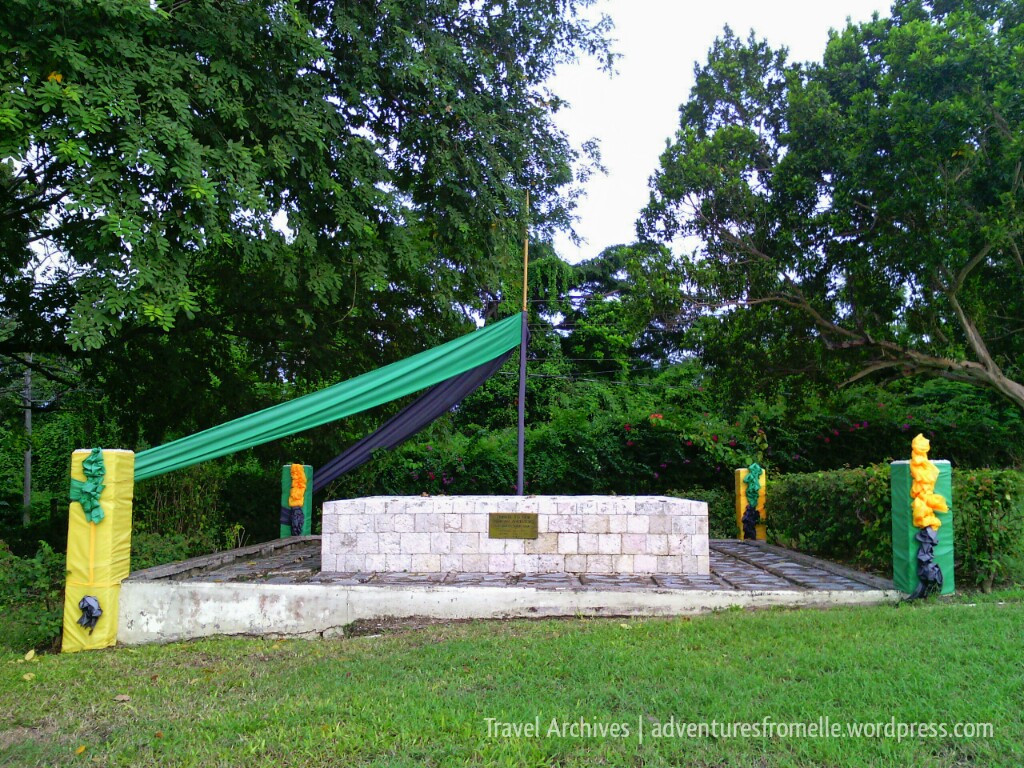
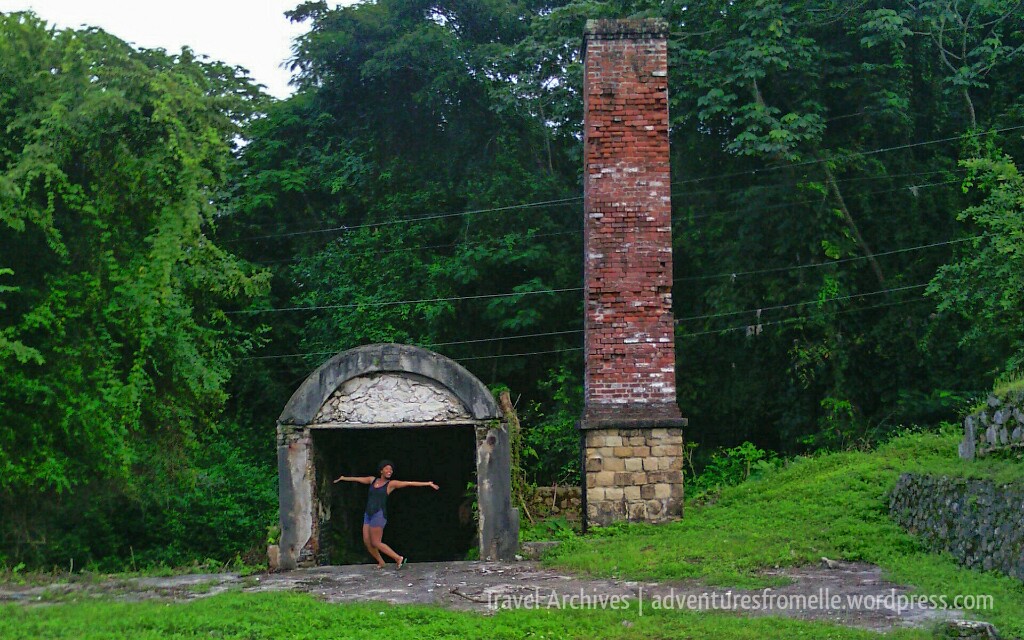
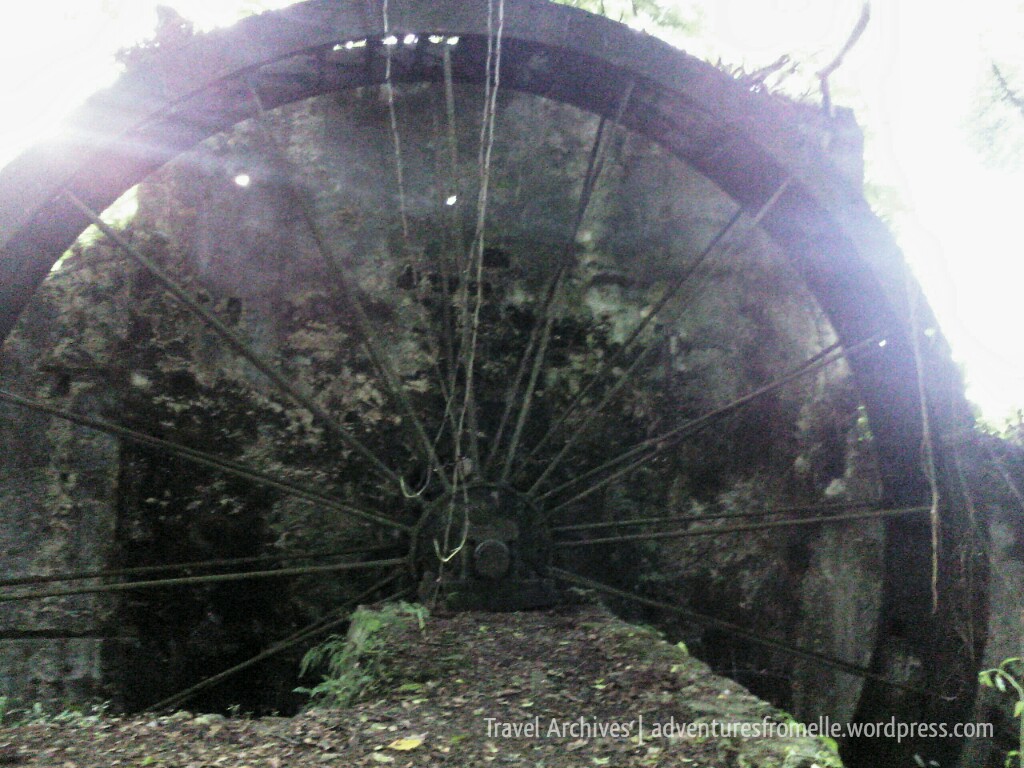
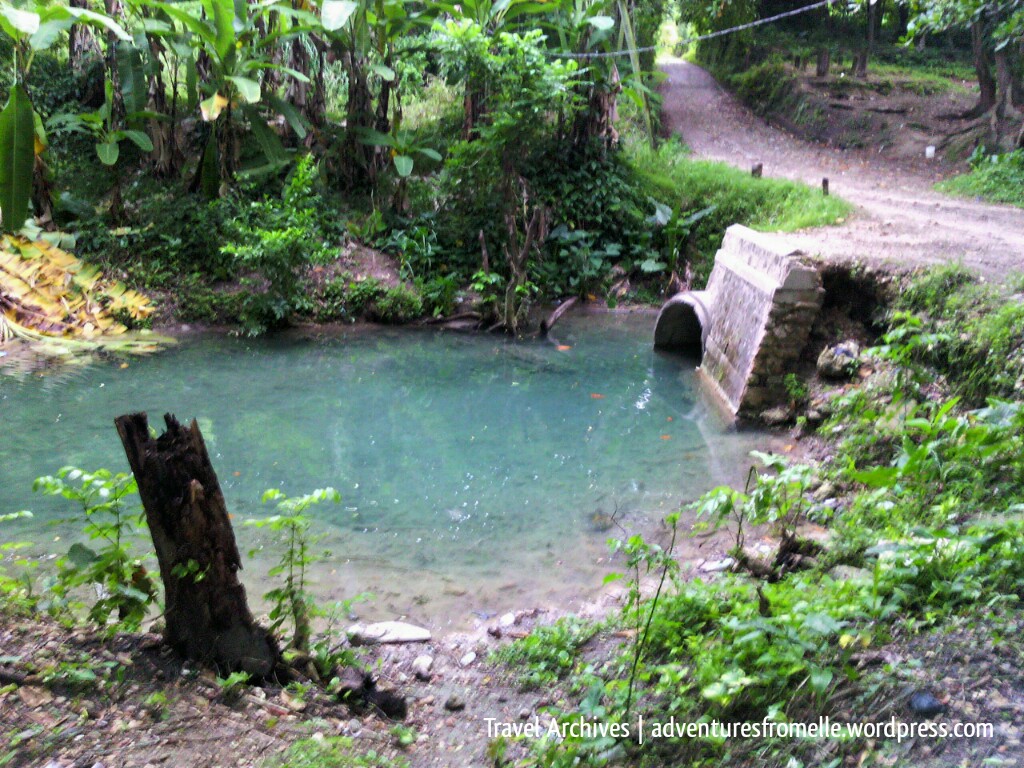
Wrap Up
It’s great to step back in time with tours like these. I spent a rewarding 2 hours here, learnt quite a bit and got a Jamaican history refresher too. Thus, I highly recommend the Seville Great House & Heritage Park for anyone interested in experiencing Jamaica’s story in a way that only Seville can tell. Also, given this history, I wonder why would Saint Ann’s Bay have a statue of Christopher Columbus. I have zero respect for him and am appalled at countries which dedicate one whole day to a murderous moron. But that’s for a separate discussion. Adam Ruins Everything explains my disdain perfectly.
‘Til next time. ✌
Explore Next: Green Grotto Caves

Find Elle on Facebook, Pinterest, Instagram, YouTube and Amazon.

 Adventures from Elle
Wow…………………………..awesome place….
LikeLiked by 1 person
Thanks for reading and commenting 💕. The views were very nice yes
LikeLiked by 1 person
The annual Independence Celebration held here is a must-see for Jamaicans and foreigners alike.
LikeLiked by 1 person
So I’ve heard :). Hopefully I get a chance to see it live one year
LikeLiked by 1 person
this is nice! keep on trodding!
LikeLiked by 1 person
Thanks very much, and for reading & commenting 🙂
LikeLike
I visited in high school but I don’t remember it being this beautiful.
One more place to visit 🙂
LikeLiked by 1 person
Haha, funny enough my brother visited the same week I did on a school trip (he’s 9) and said it was sooo boring. I guess when we’re younger history doesn’t mean as much to us
LikeLiked by 1 person
Yeah I think so lol. When I went, we were supposed to write an essay on it. I think it was a part of my SBA. So I was focused on getting what I needed to find for the essay and completely missed the view.
LikeLiked by 1 person
Lol well it’s about time u visit again, this time only to take in the view 🙂
LikeLike
I will 🙂
LikeLiked by 1 person