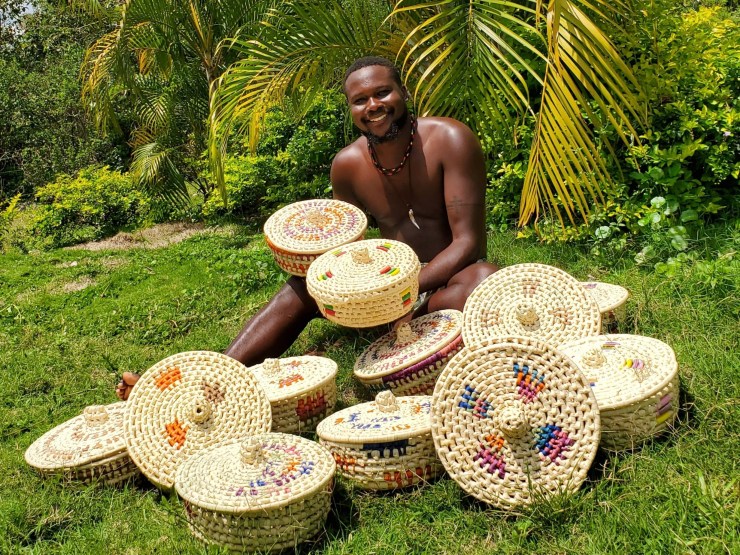
Weaving is an integral part of Jamaica’s cultural heritage and reflects the island’s diverse traditions and influences. Traditionally, Jamaican weavers utilize natural materials to craft their baskets and woven items such as straw, commonly obtained from dried palm leaves which grow abundantly in Jamaica and provide the weavers with a sustainable and eco-friendly resource. Jamaican weaving techniques have been passed down through generations, with each community or family of weavers often having its signature style. While basket weaving remains an essential cultural tradition, it faces some challenges in the modern era. It’s often said that our cultural traditions are dying as the younger generation appears less interested in learning traditional crafts. However, I recently had the opportunity to interview a young Jamaican weaver who is maintaining this traditional craft. Here’s what Shane Miller from New Market, St. Elizabeth had to say.
Before we get into the article, please subscribe for new adventures.
Shane, tell us about yourself.
I am a handweaver by nature but also a chemistry student at the University of the West Indies. I hope to become a chemistry teacher one day but I love art, so let’s see.
What Inspired Stevos Weavos Handcraft?
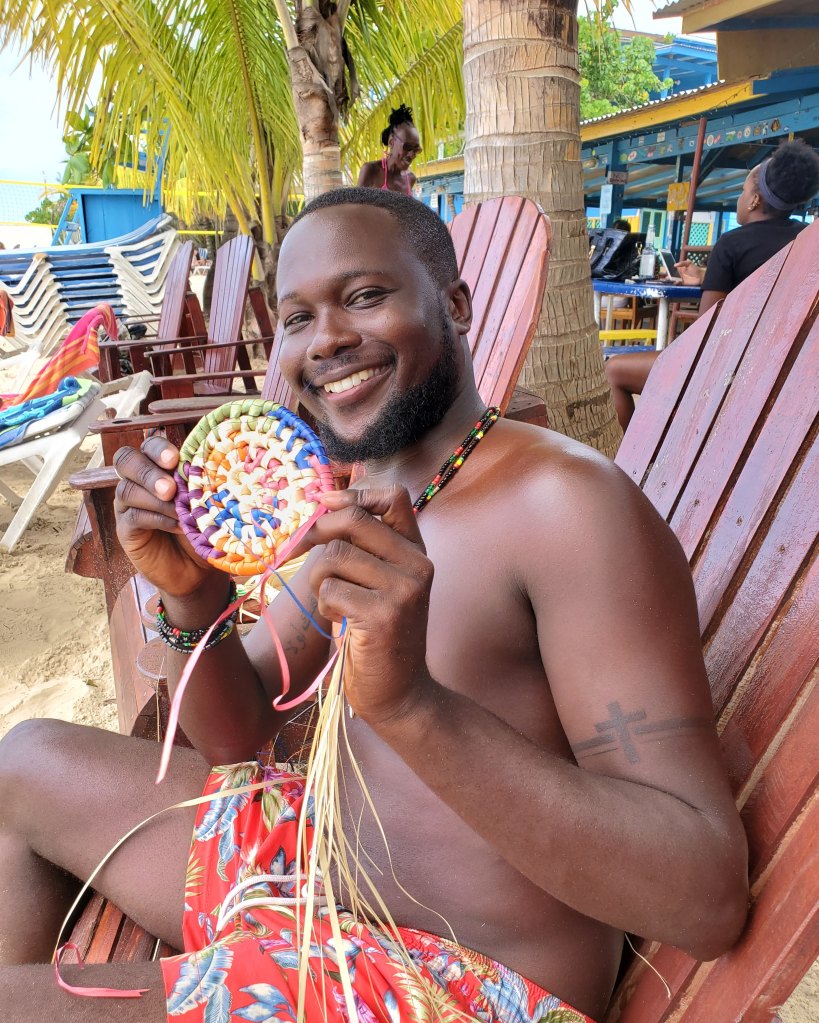
In the pandemic, I had a lot of free time as I paused my lessons and set out to find a job or do something to occupy my time. Then, in that moment the thought of weaving came about. I previously posted a few pictures online but I didn’t take it seriously until I realized that people were actually responding to the post. I am still in shock to this day by the warm responses and orders I have received. [The skill of weaving] is a family-based art but a lot of us do not do it as a business. Some of us just have the talent and that’s it. As for me, social media plays an integral part in establishing the whole concept. Also, my friends encouraged me to continue with the skill as they saw it as a lucrative opportunity for me. Finally, the potential of the business gives me hope. The things that can be created from a single palm leaf is unmatched to no other.


Balancing Stevos Weavos Full Time
I was very concerned about the idea of doing a full-time business as I wasn’t a ‘fan’ of the business related subjects in school. But, when I began to receive the reviews and exposure on television and in the Gleaner, I knew in those moments that it is something that I should continue. Also, I plan on getting some workers after I finish my studies. I want to be able to work in the field that I’ve studied or to do my Masters in special education. But, as for the business , there are a lot of people I know that can weave but they do not have the market for their product. I want to get a few of them to work for me while I continue my career goals.
The Future of Stevos Weavos
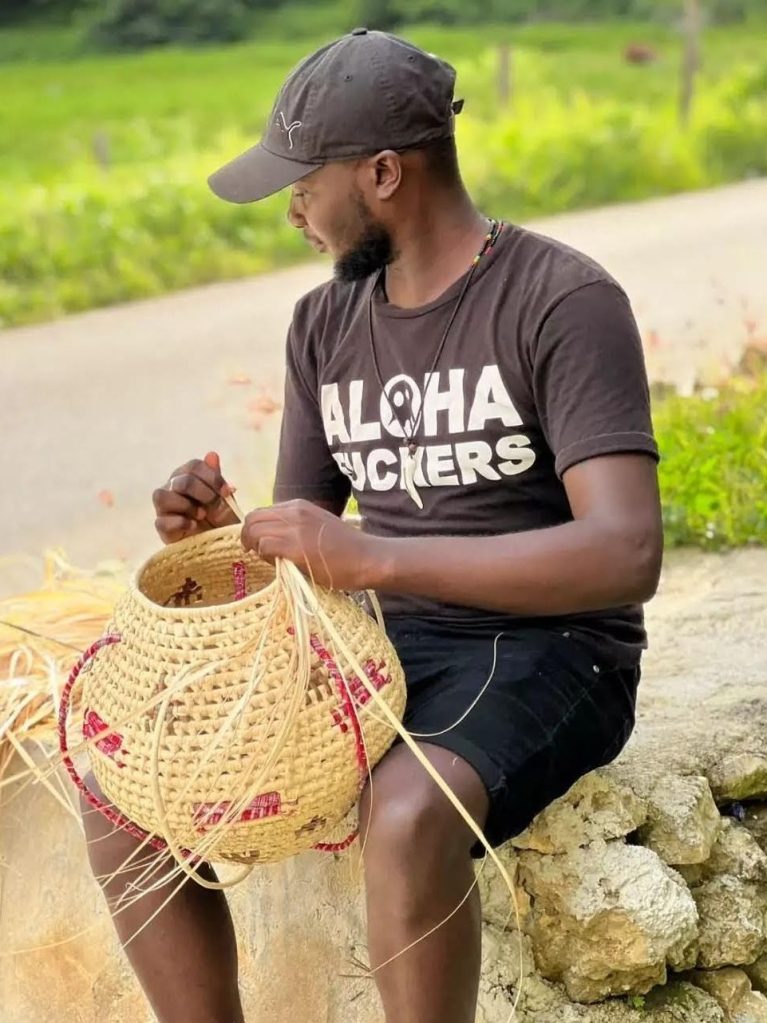
As it relates to upcoming projects, I am planning on going into the international market such as on Amazon and Etsy. That is what I’m working on at the moment. As for local ideas, I have some other pieces I want to try as they are uniquely designed by other artists but not in my material . I want to create some mats out of board where I will weave around the edges but still retain the shape of the cut out board (shapes like triangle, circle, octagon, Africa or our map) etc.
Wrap Up
How cool is this story! It’s great to witness this revival of interest in Jamaican weaving. If you enjoyed Shane’s story and would like to get in touch with him + buy his products, check out these links:
- WhatsApp Catalogue
- Phone: +18763122670
Check out past interviews on Adventures from Elle.
‘Til next time.
Find Elle on Facebook, Pinterest, Instagram, YouTube and Amazon.

 Adventures from Elle
how awesome! To learn the skill and become so good in a few years! Super impressive!
LikeLiked by 1 person
I know right! Super impressive indeed 🙂 thanks for reading!
LikeLike
Very creative. I’ve learned how to crochet via YouTube. It’s great to have many skills.
LikeLiked by 1 person
I agree. And wow, I didn’t know that that’s where you learnt. If I ever find myself with a bit of free time, I’ll check it out. Always loved seeing crochet pieces so it’d be cool to learn from YouTube
LikeLike
Props to Shane for both his craftsmanship and having the gumption to start this endeavour. It’s always great to hear about something positive coming out of the pandemic. I really like his creations and wish him best for the future, whether it be as an artist or chemistry teacher. Or both! Cool article, Rochelle.
LikeLiked by 1 person
I agree! This is definitely one of the few good outcomes of the pandemic, and I love seeing people make something positive out of a bad situation! 🙂 thanks for the well wishes, I’ll pass them on to him. Thanks for reading!
LikeLiked by 1 person
What beautiful craft! It’s very impressive just how much work and dedication it takes to weave, especially with getting the specific materials and resources to make it happen! The handbags look particularly gorgeous, and it’s great you’re showcasing local art and craft with us, even across the world!
LikeLiked by 1 person
Thank you! Yes, it’s amazing how much effort goes into making these lovely craft. I wish more visitors would stock up on these instead of the mass-produced souvenirs which aren’t made in Jamaica.
Thanks for reading!
LikeLiked by 1 person
Beautiful, beautiful weaving. 👌
LikeLiked by 1 person
Agreed! Thanks for reading 🙂
LikeLike
Wow. Thanks for sharing these crafts.
LikeLiked by 1 person
You’re most welcome! Thanks for reading too 🙂
LikeLiked by 1 person
Wow, that’s so amazing. We actually have something similar in Kenya too. Local people here make weave similar things.
LikeLiked by 1 person
That’s so cool! Weaving in Jamaica definitely has African influence 🙂
LikeLiked by 1 person
Wow, Shane is an amazing artist! His weaving is incredible, but it’s also incredible that he wants to be a teacher.
LikeLiked by 1 person
It truly is! I find his story very inspiring, and I also love that he learnt the skill from his mother. Thanks for reading! 🙂
LikeLiked by 1 person